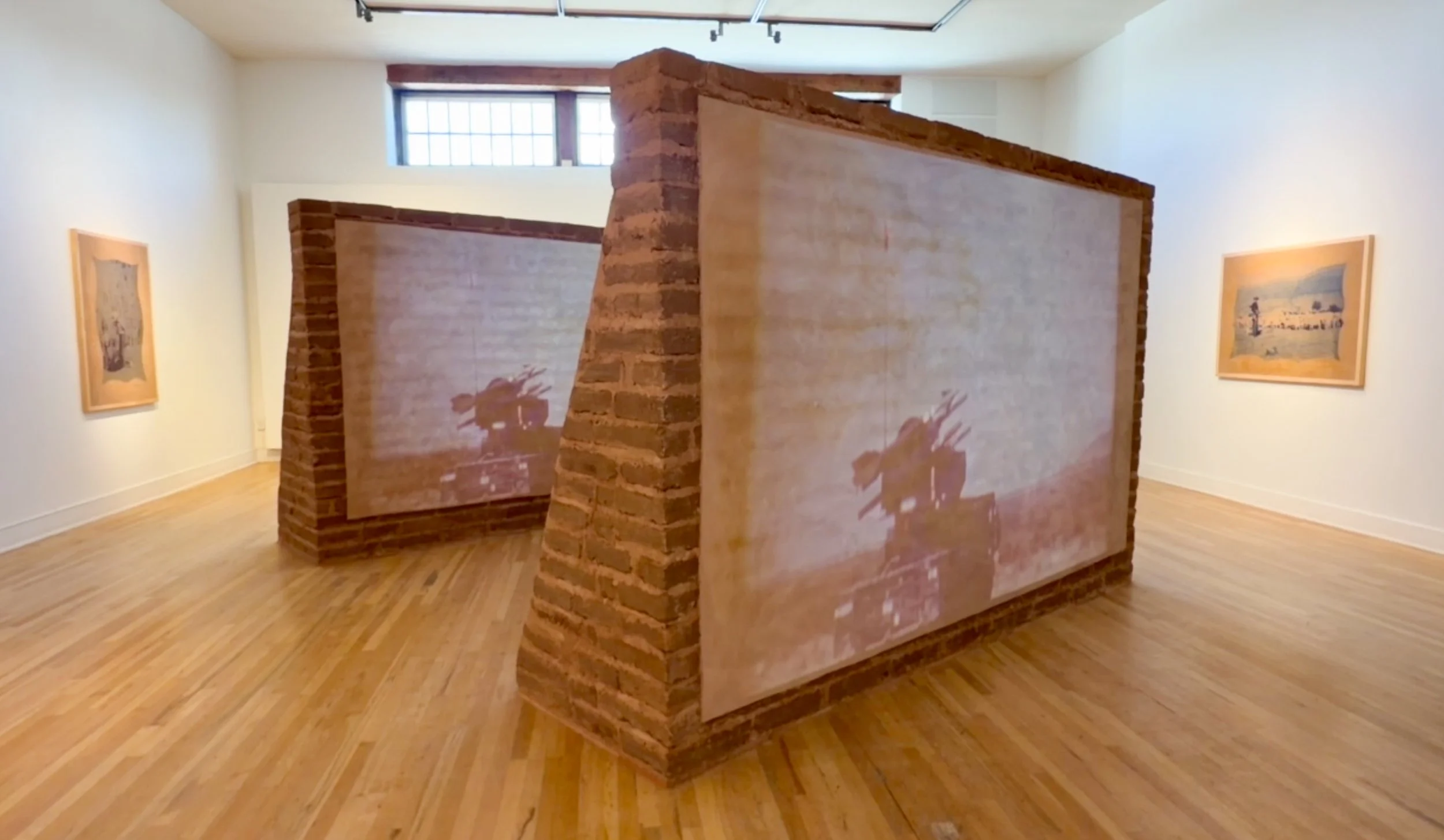
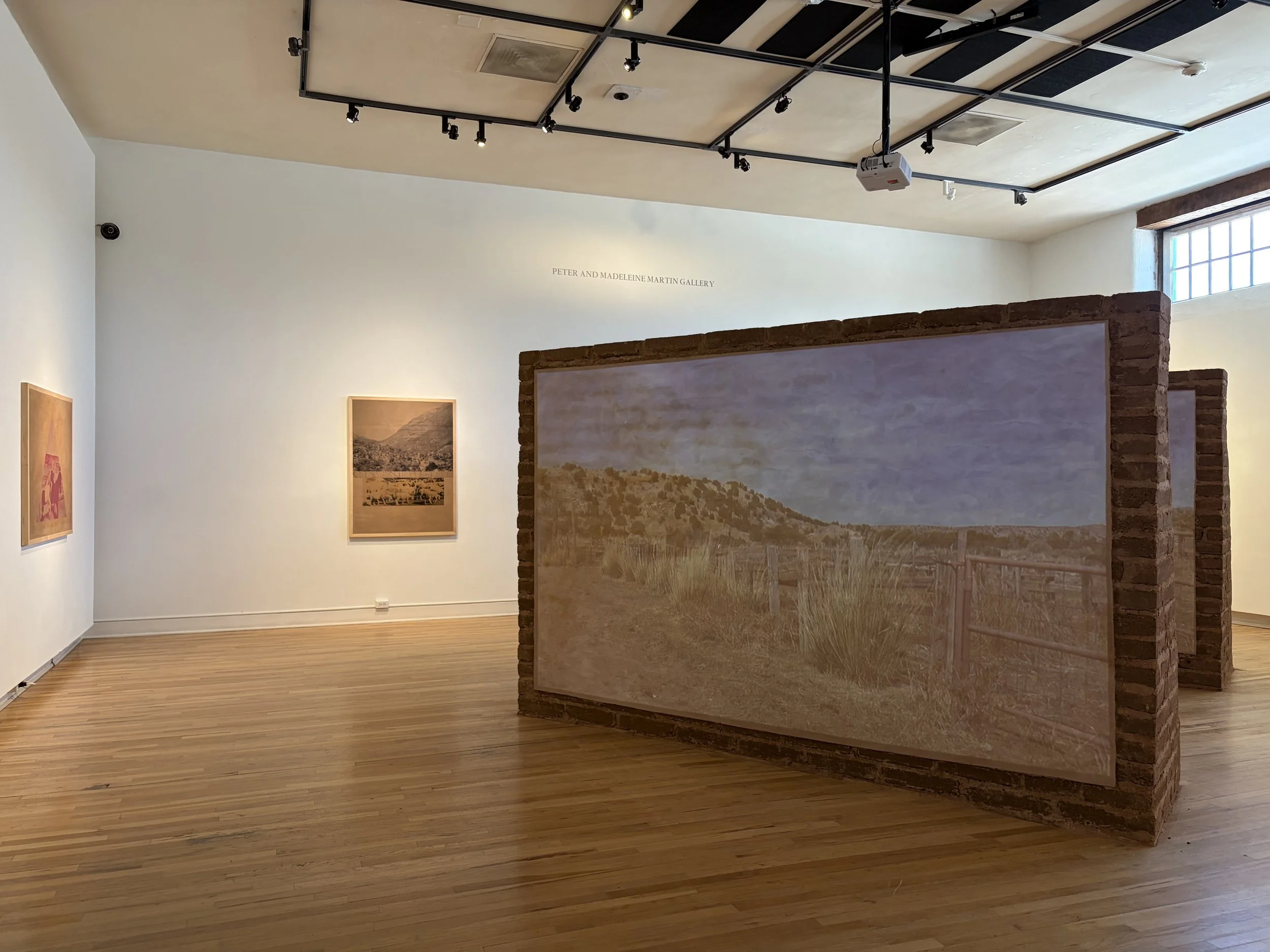
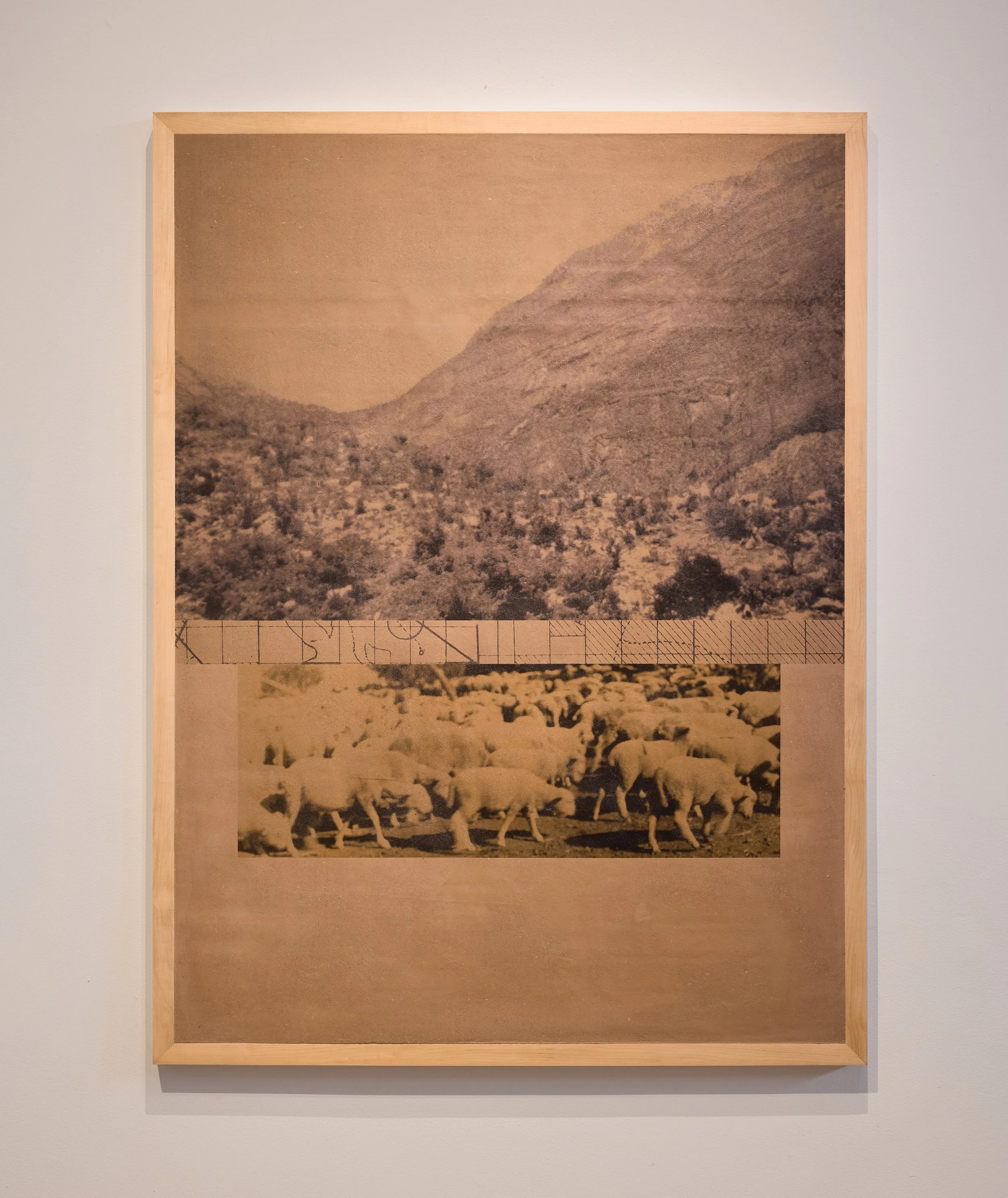
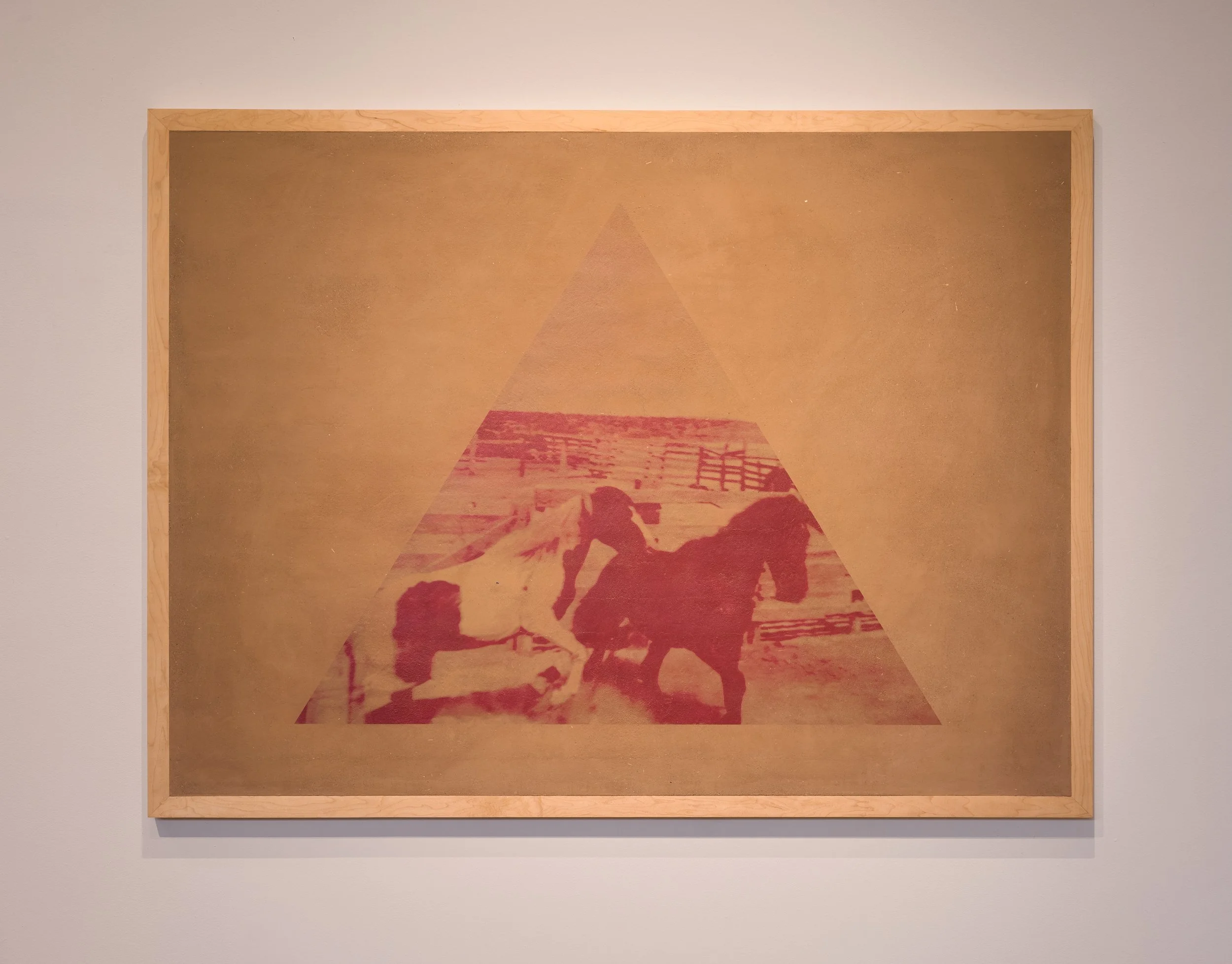
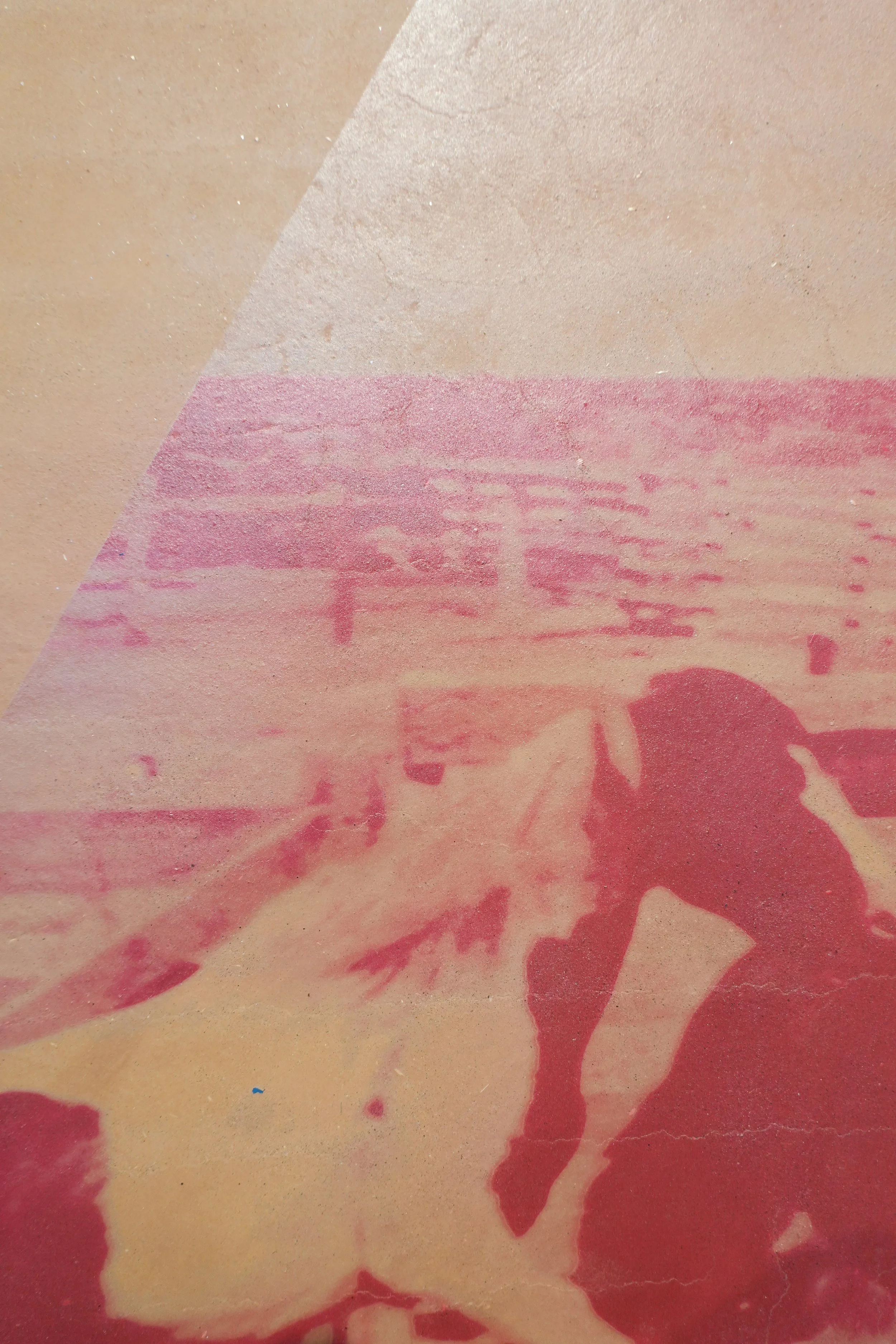
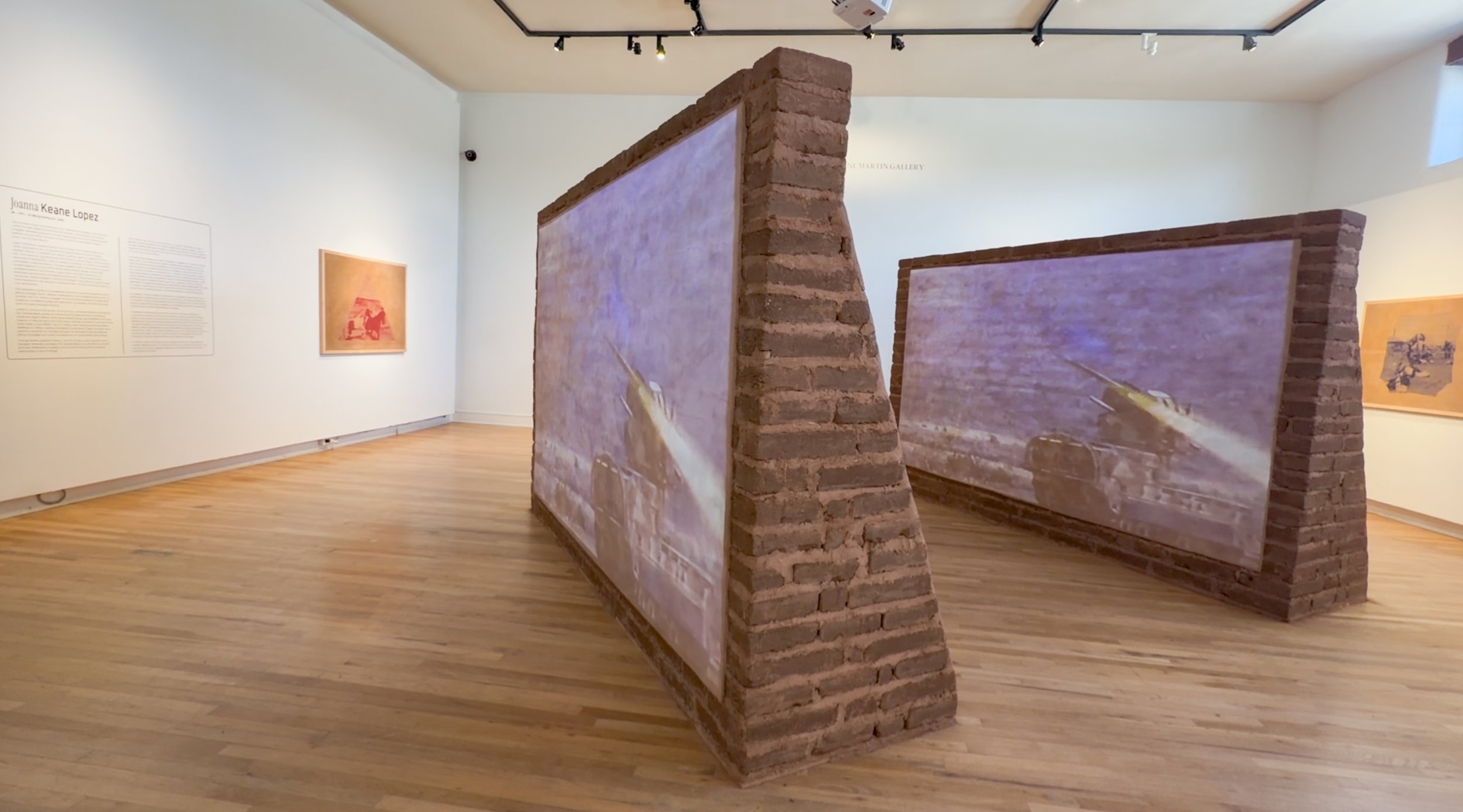
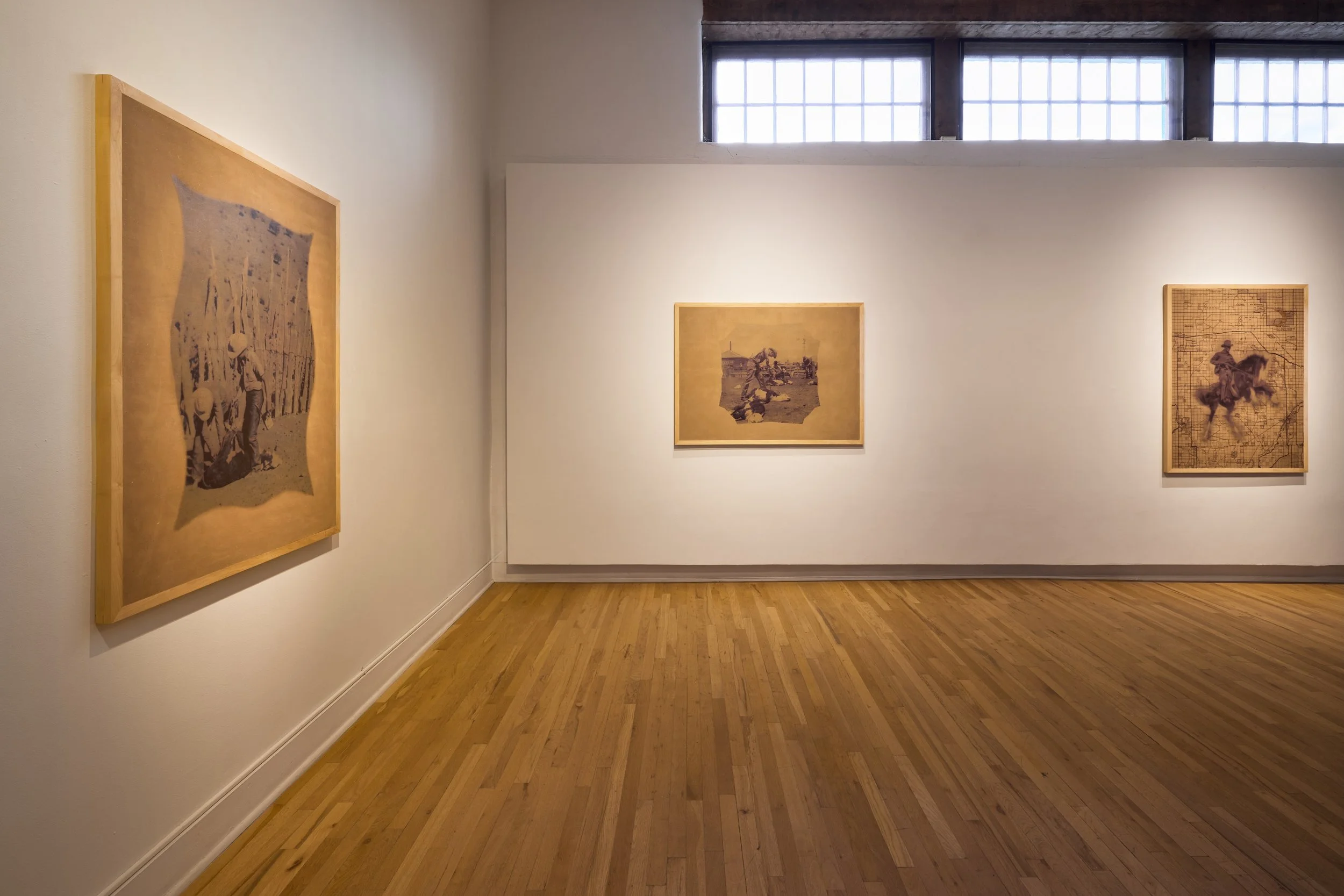
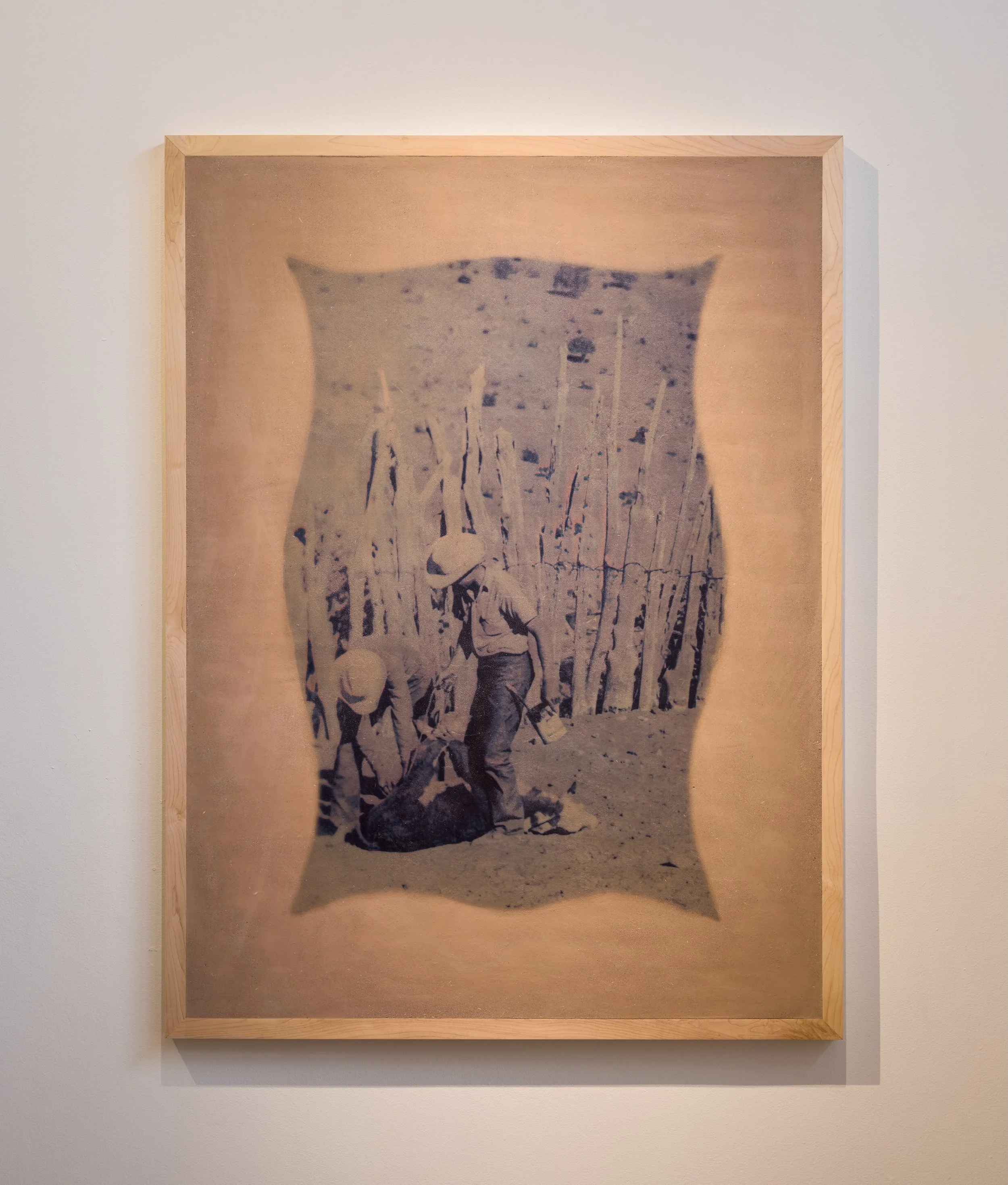
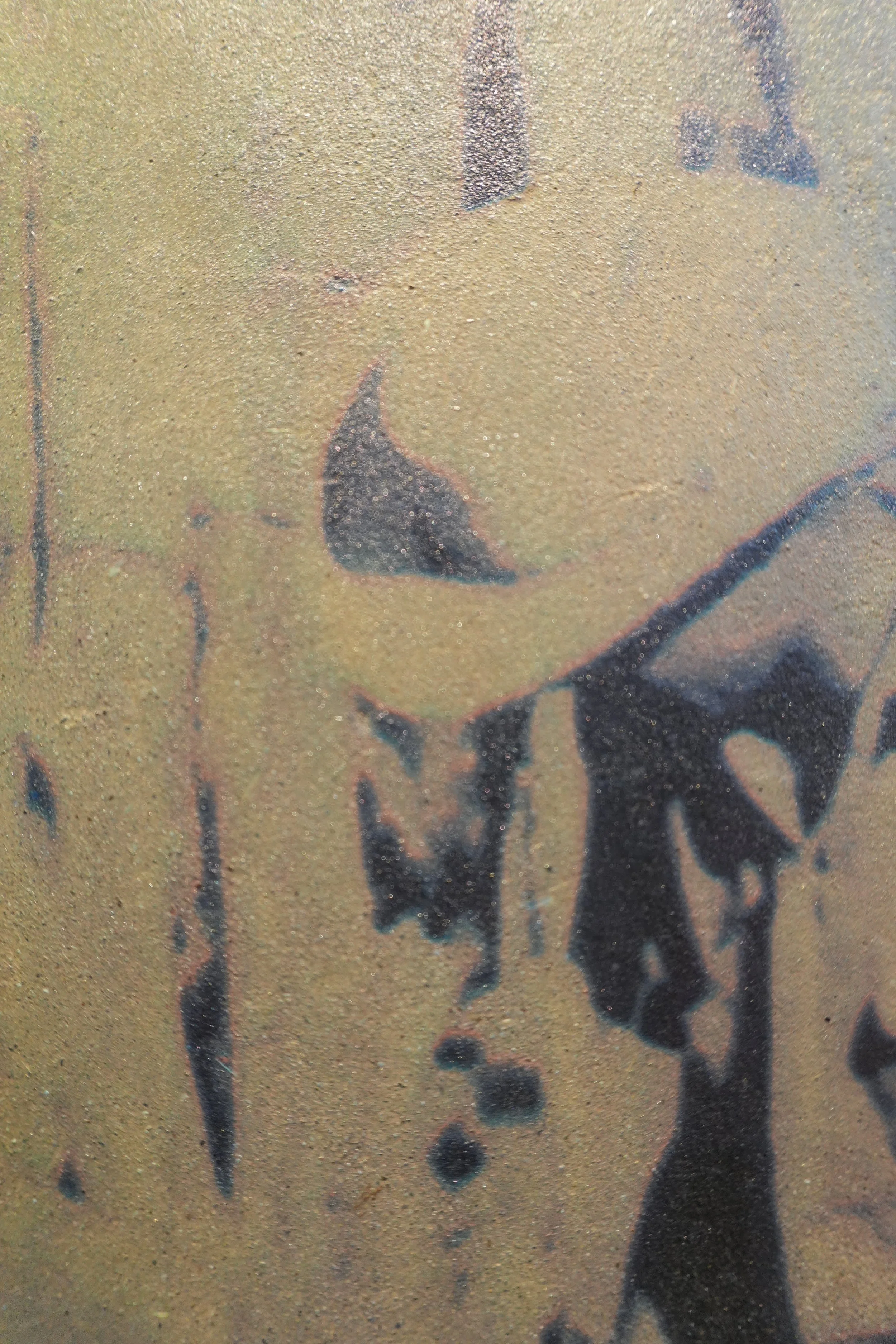
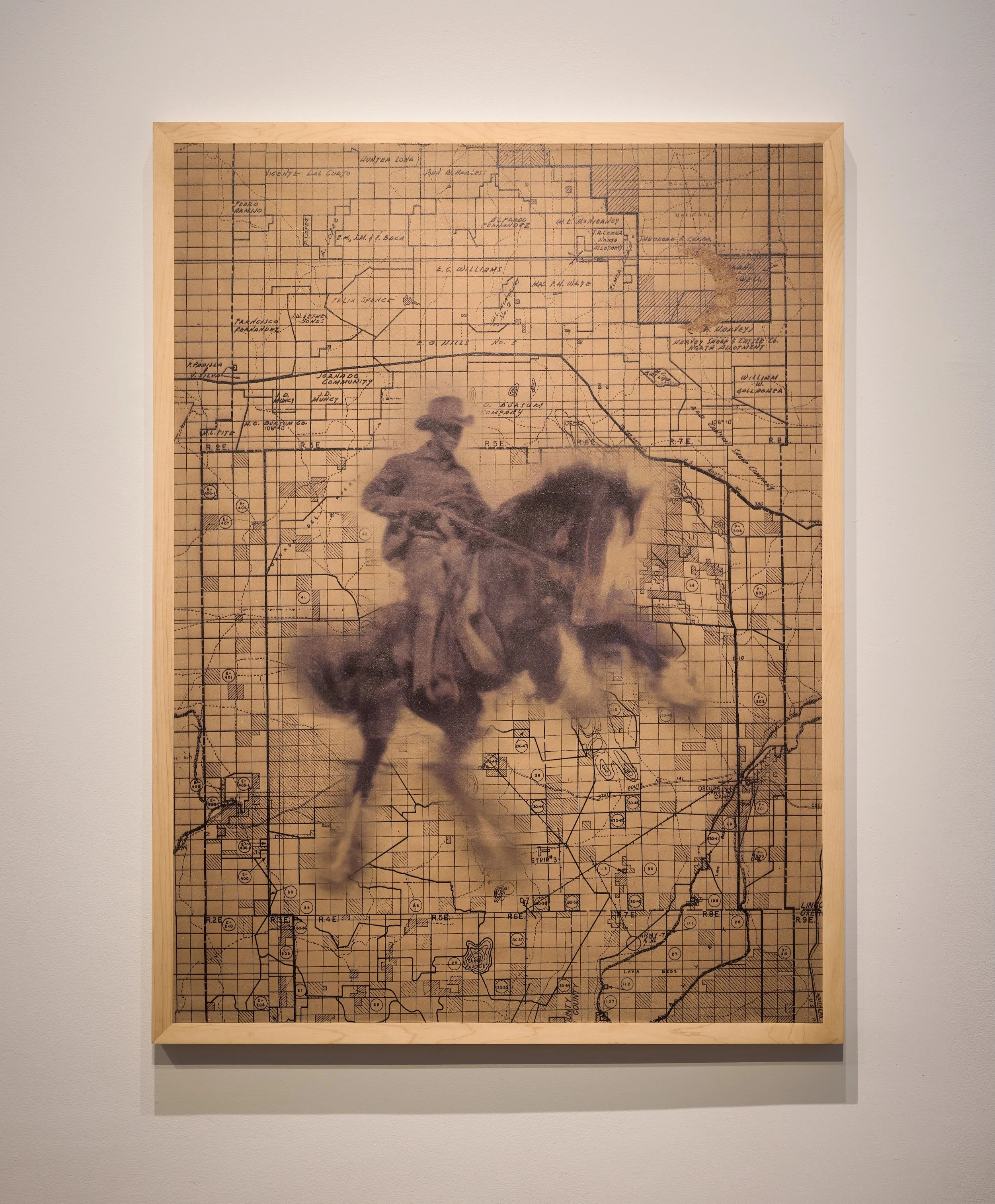
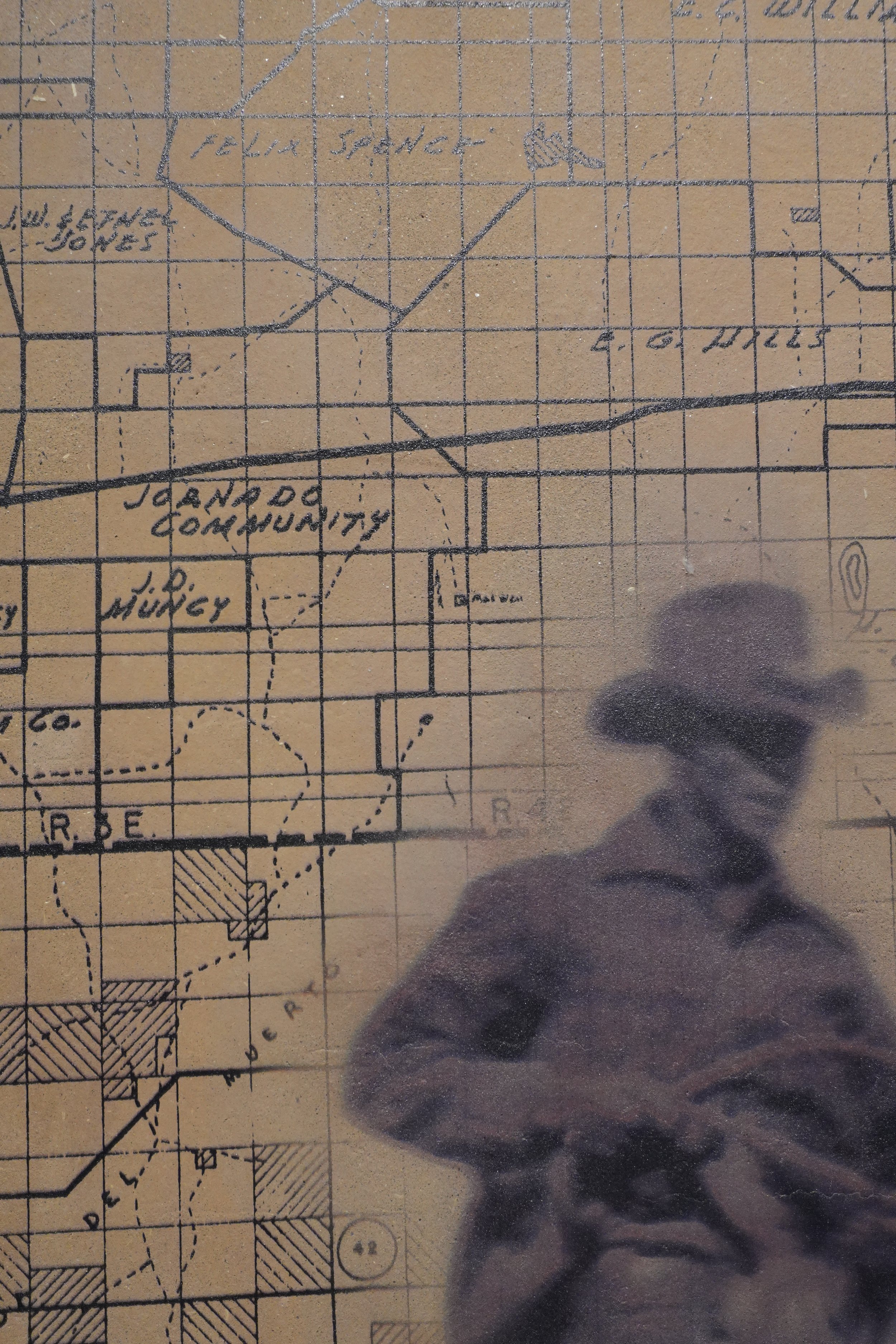
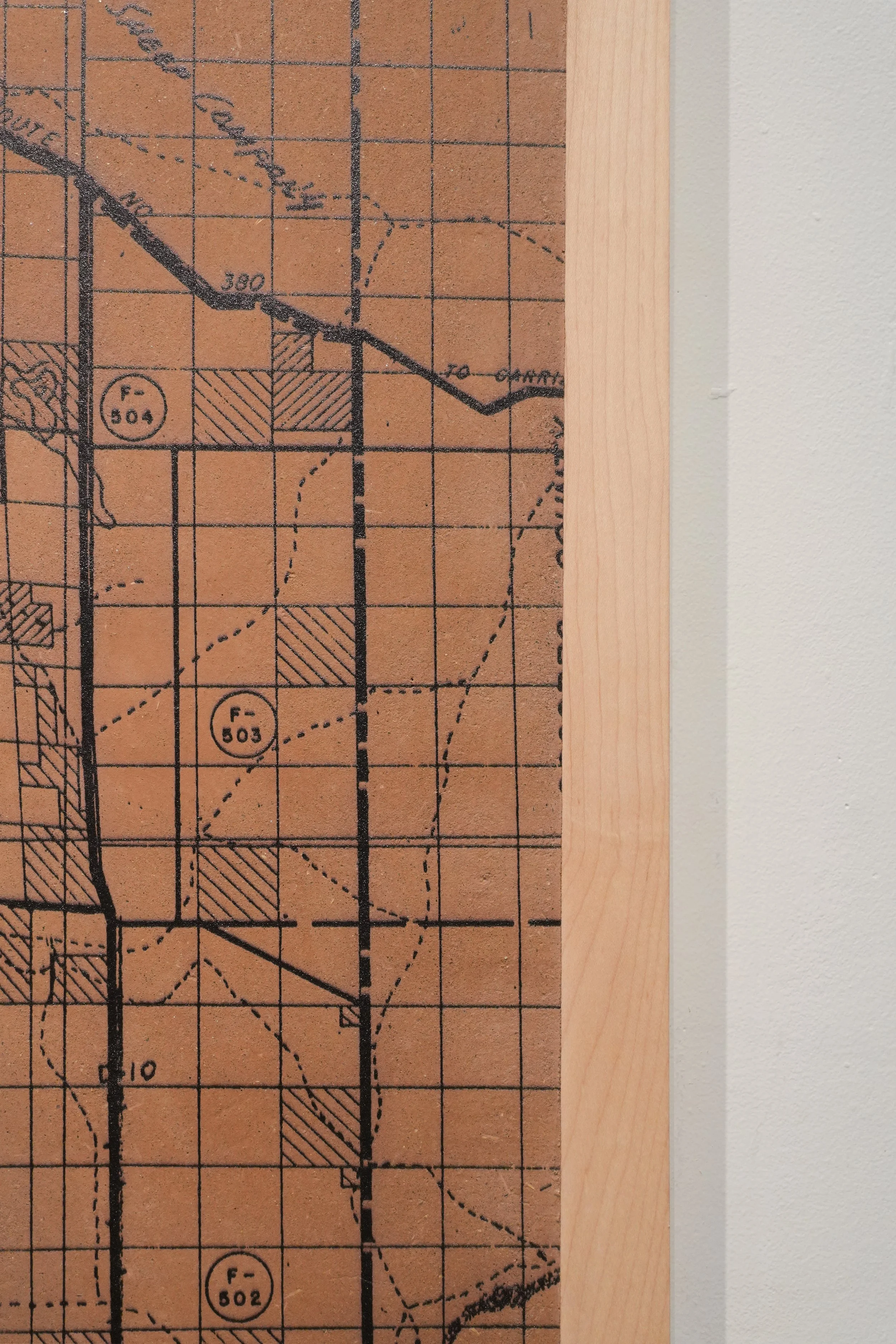
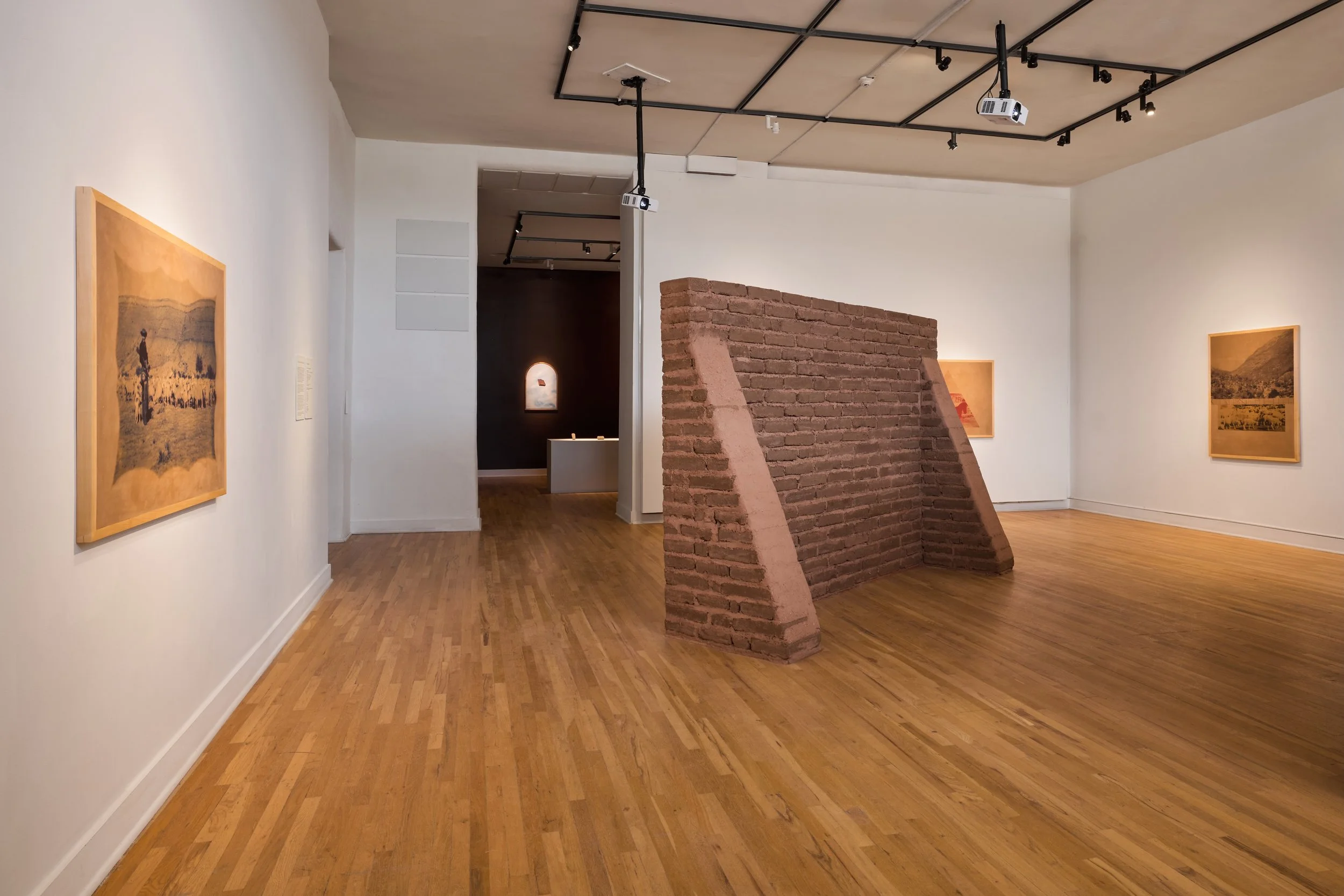
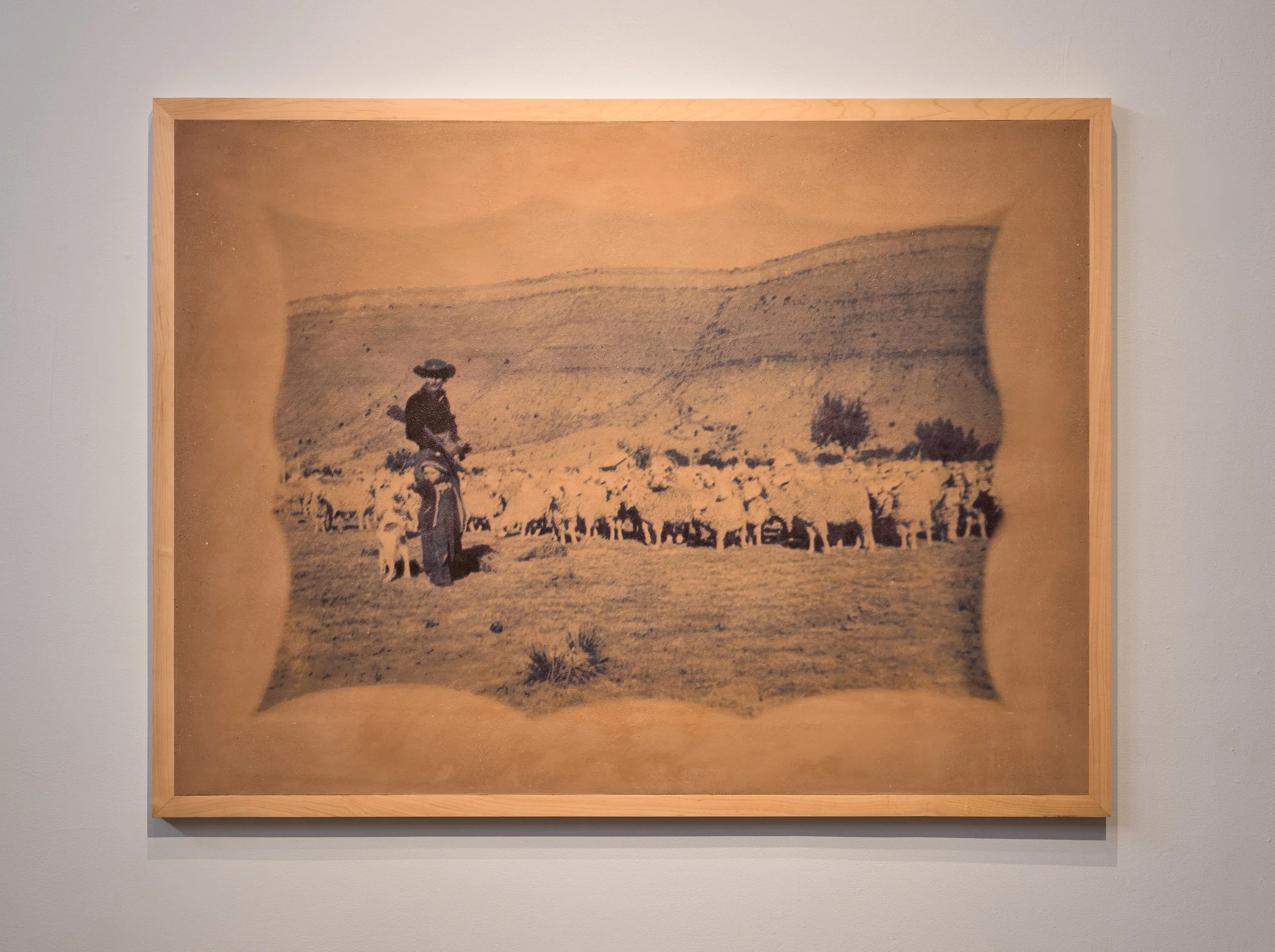
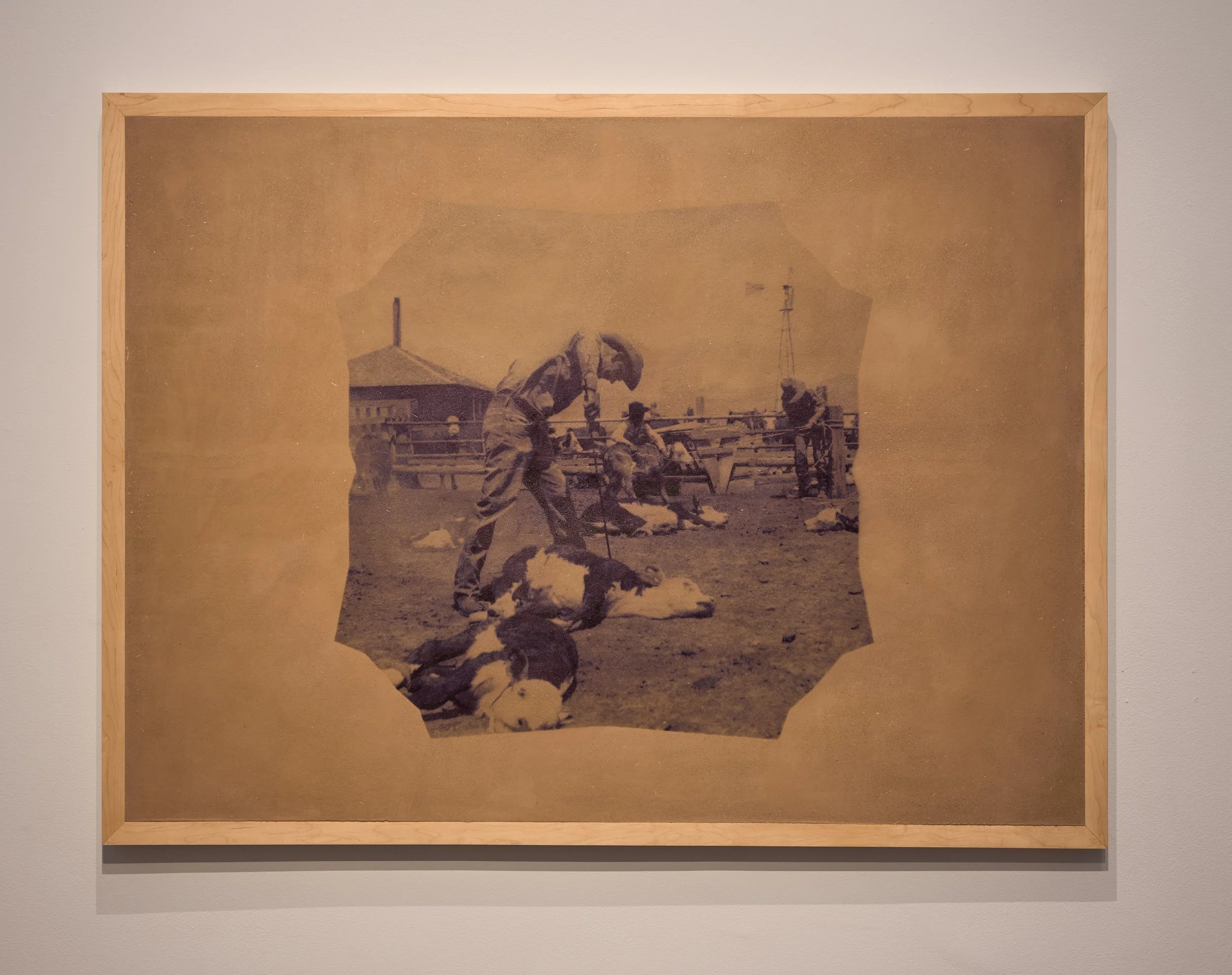
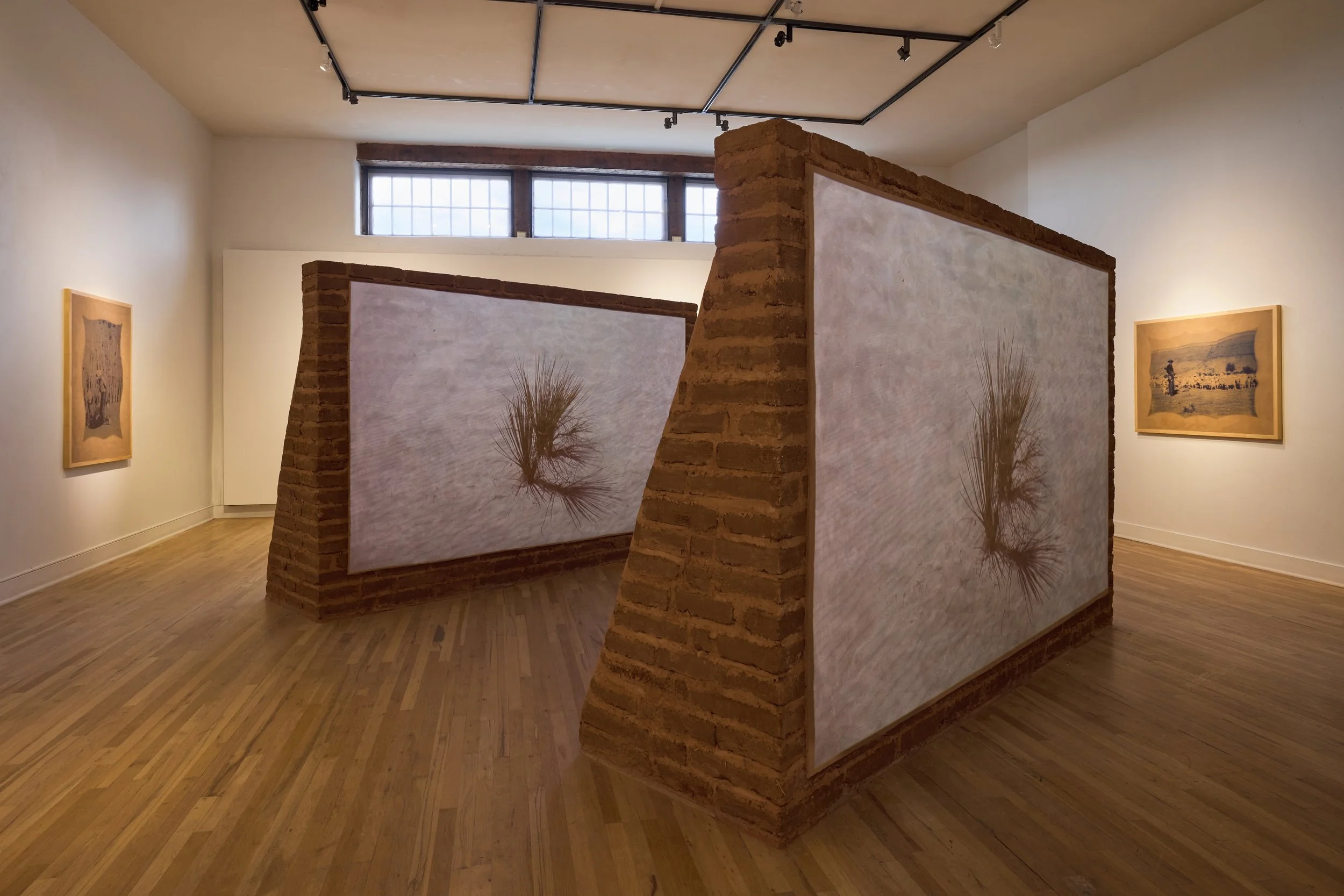
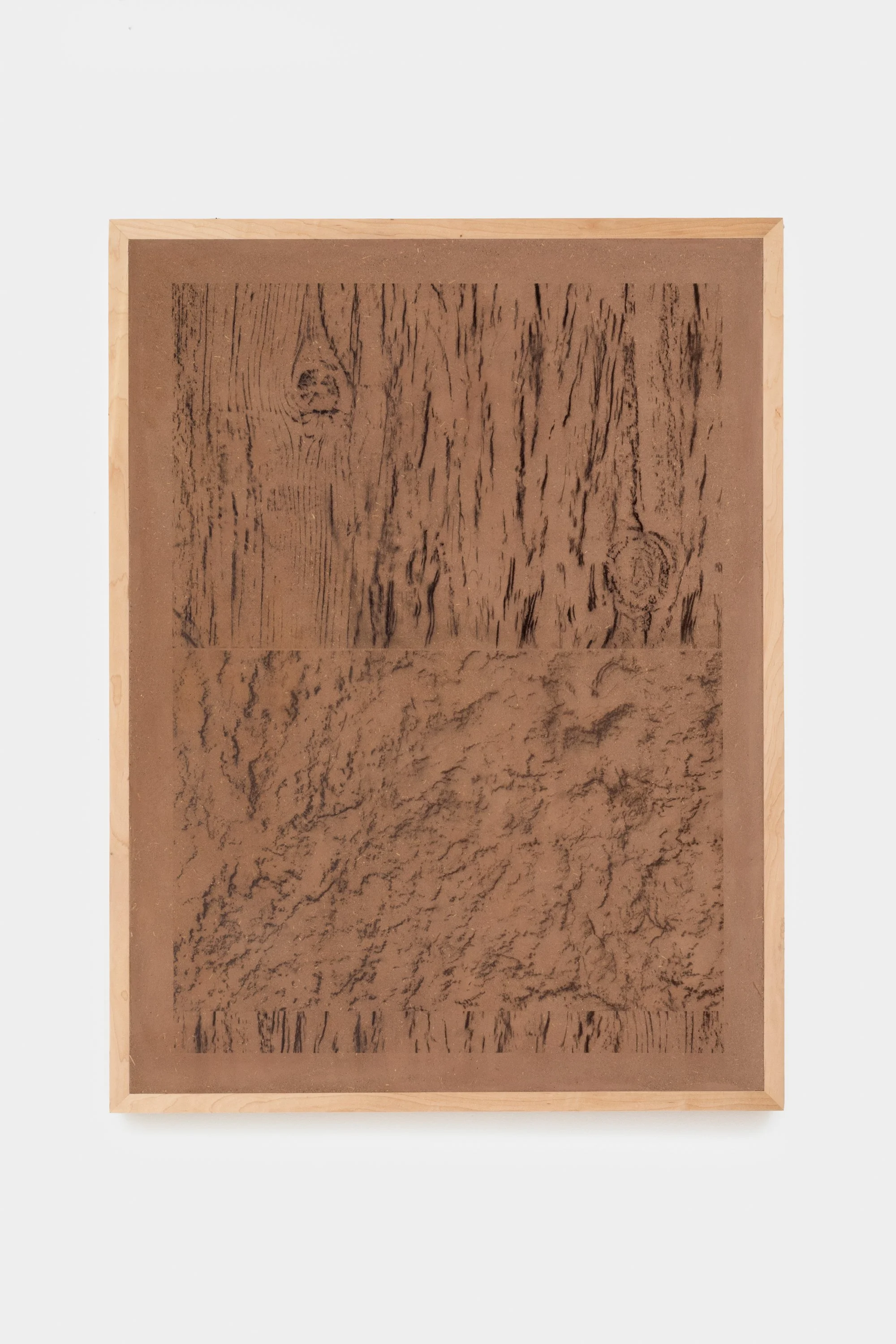
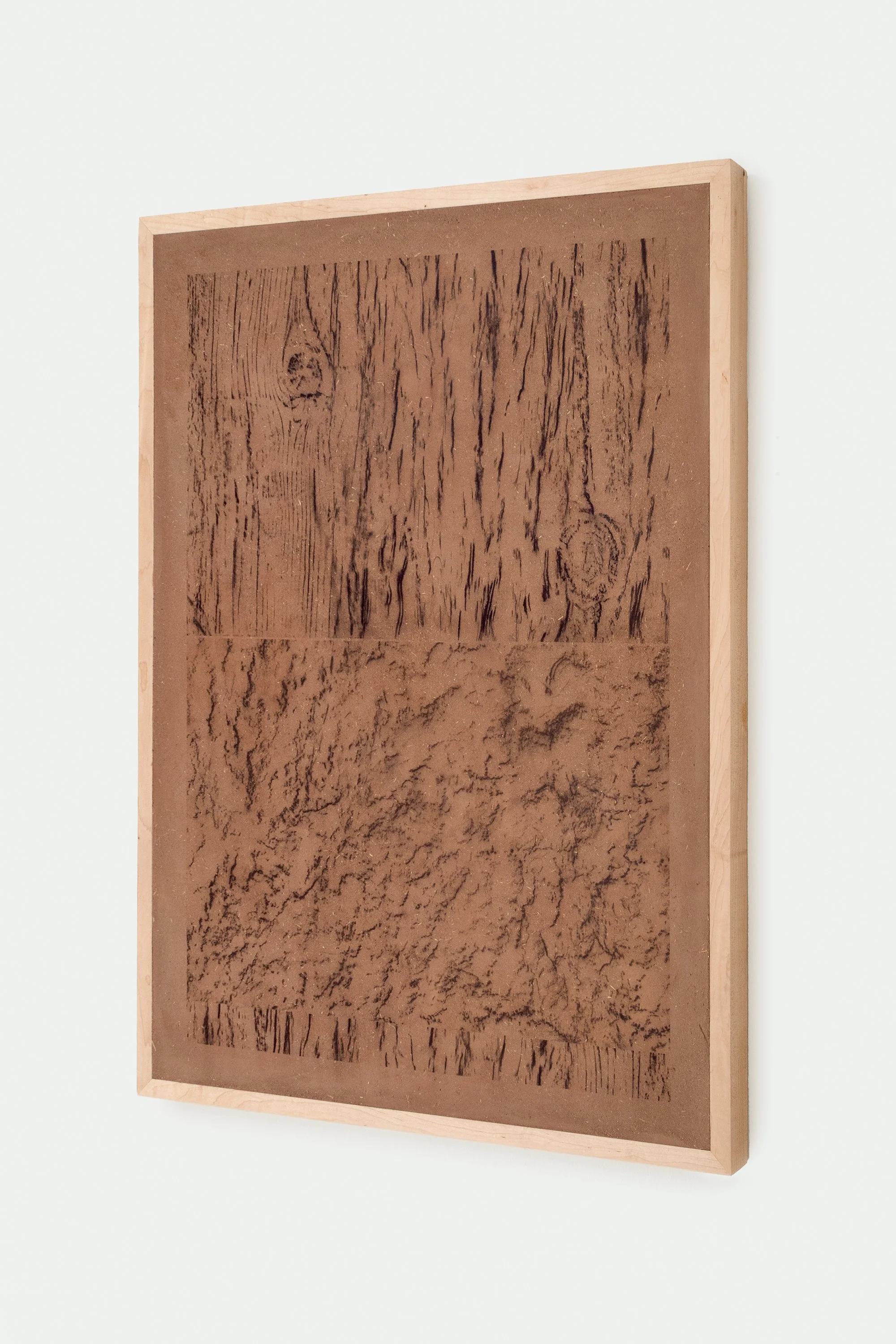
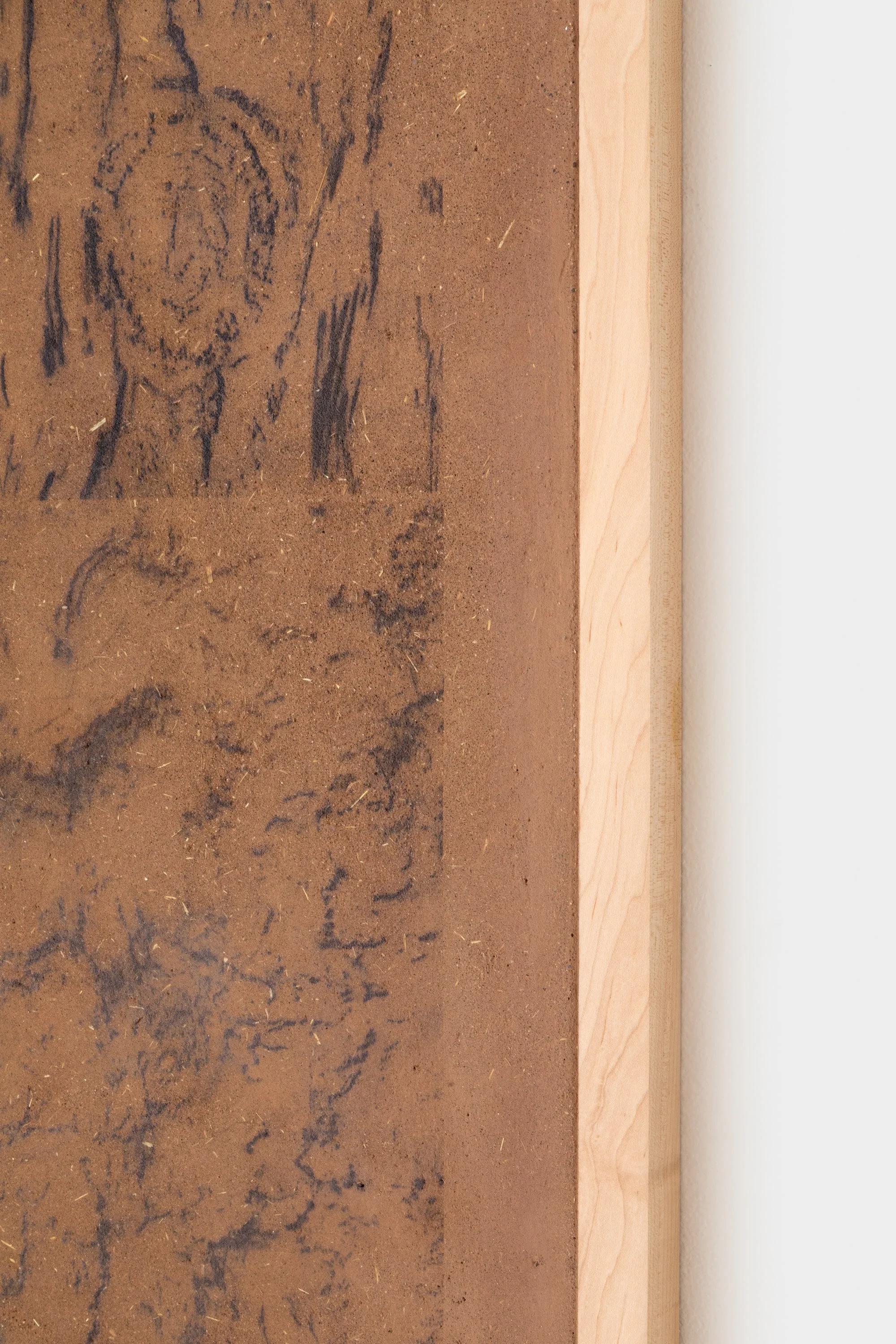
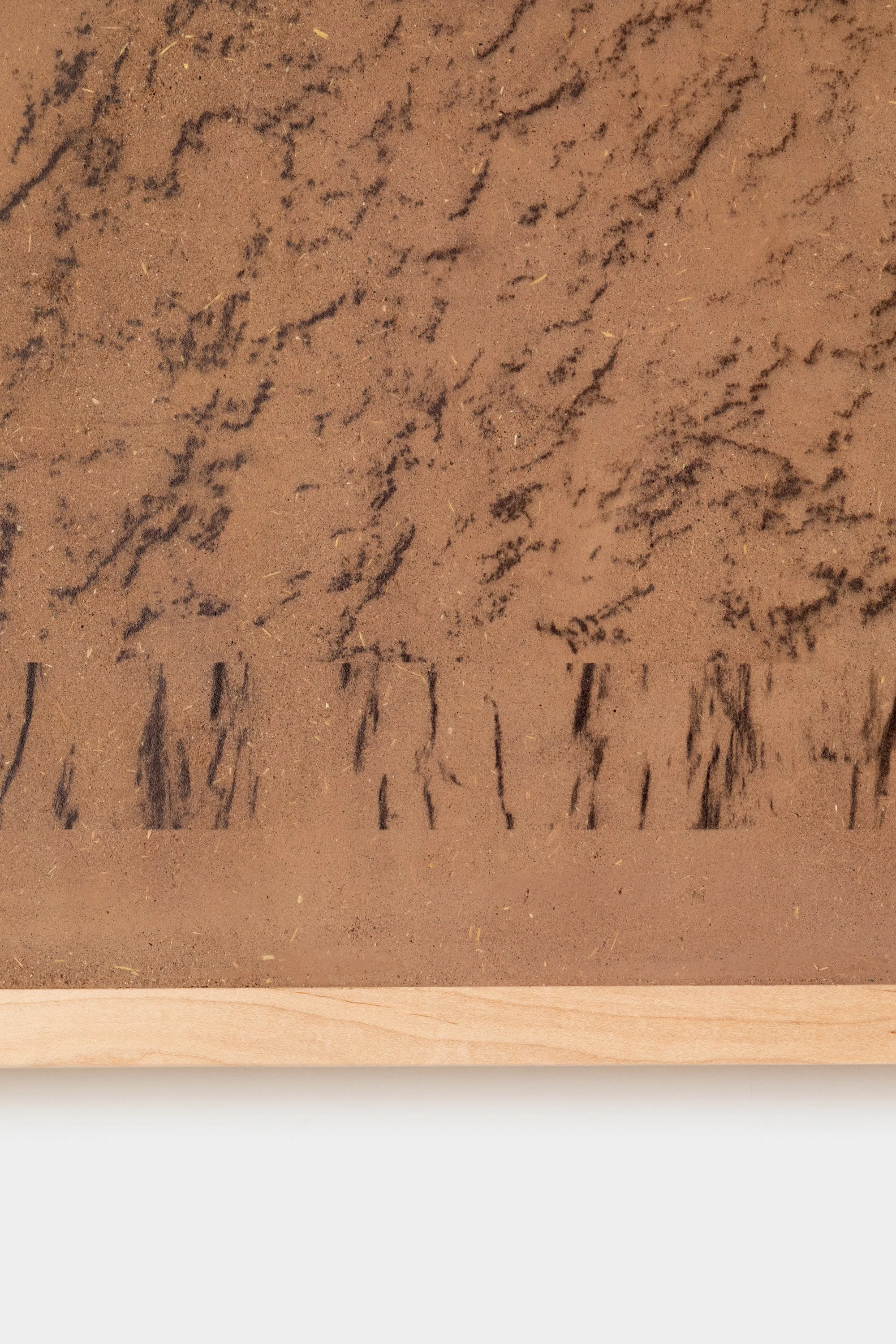
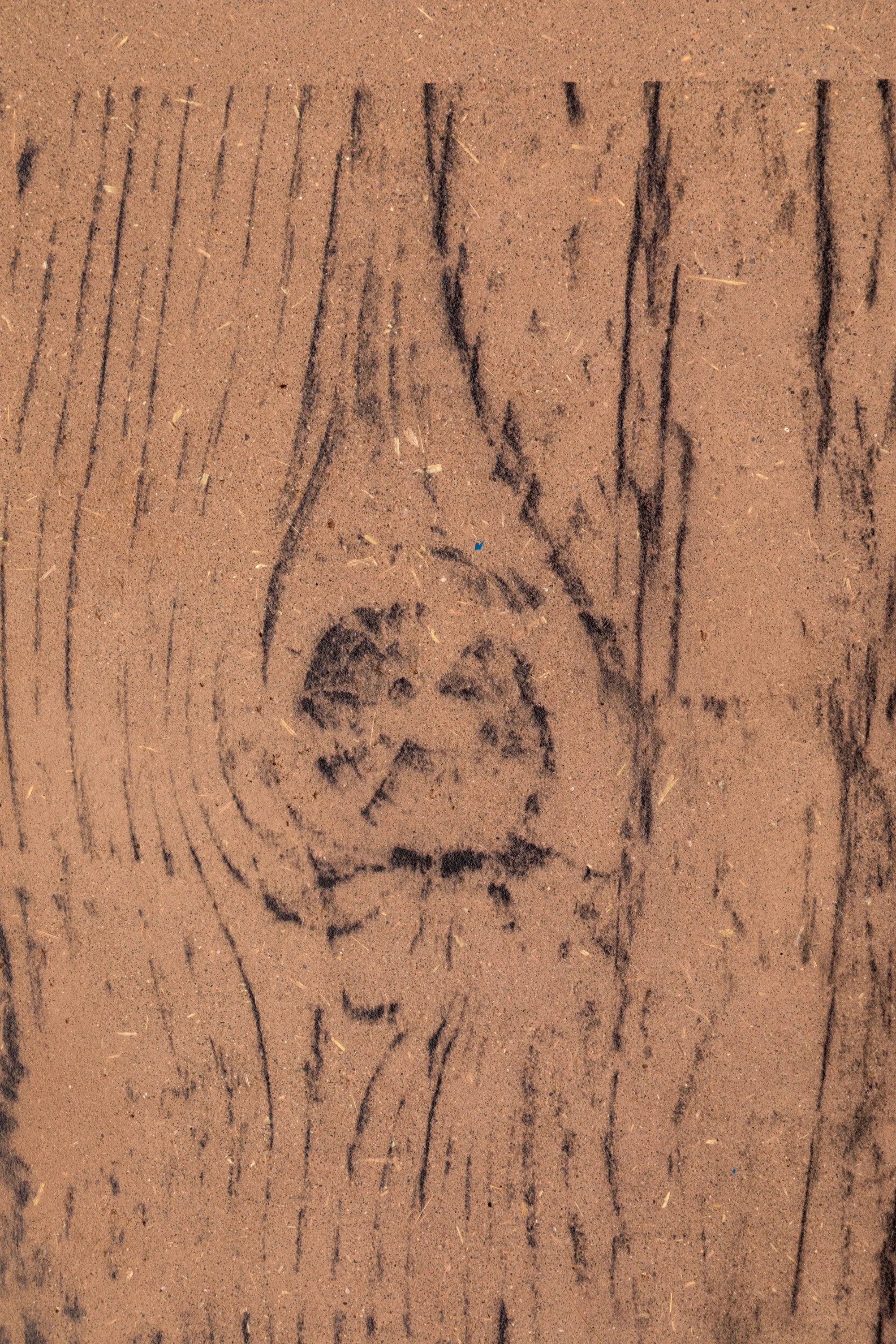
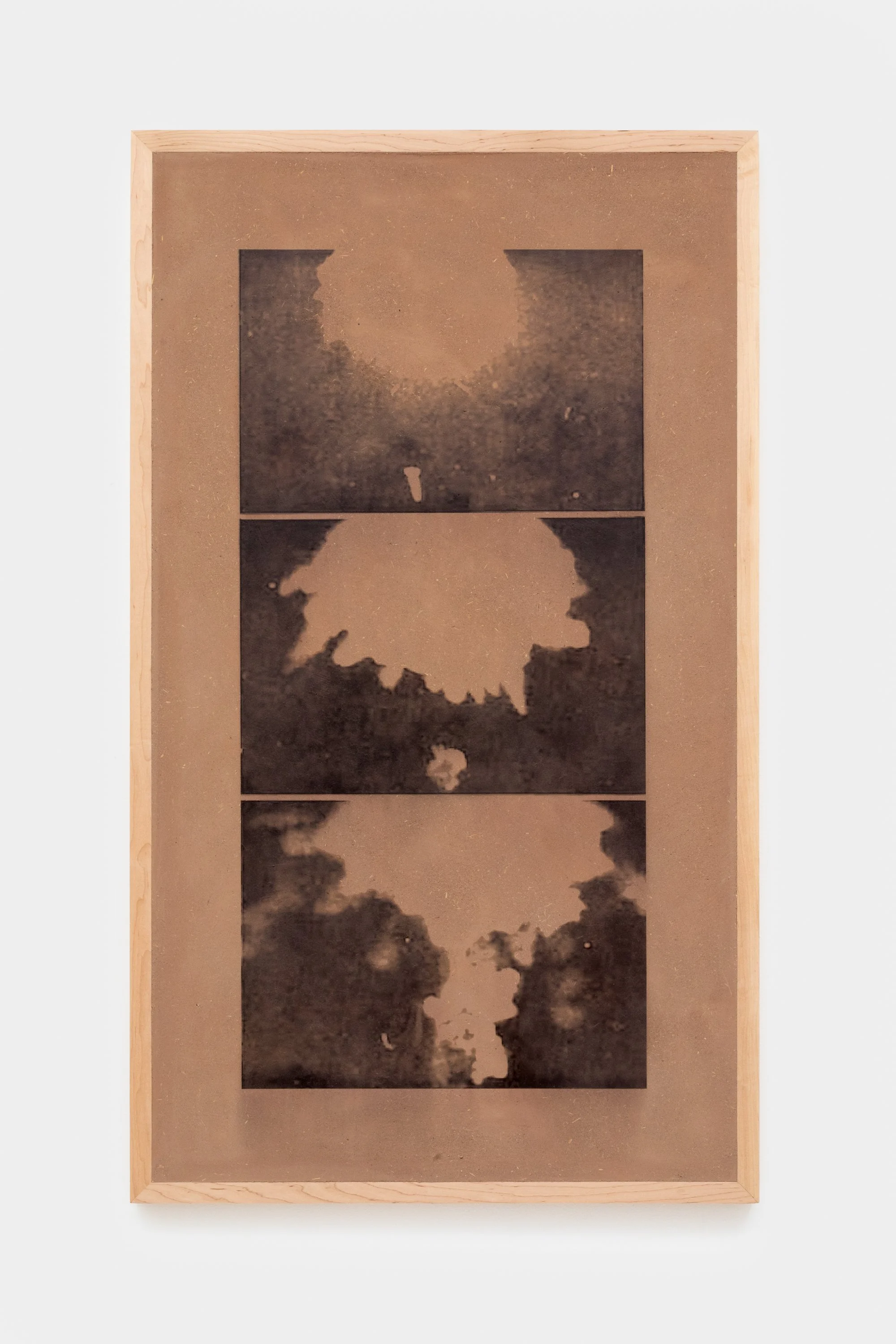
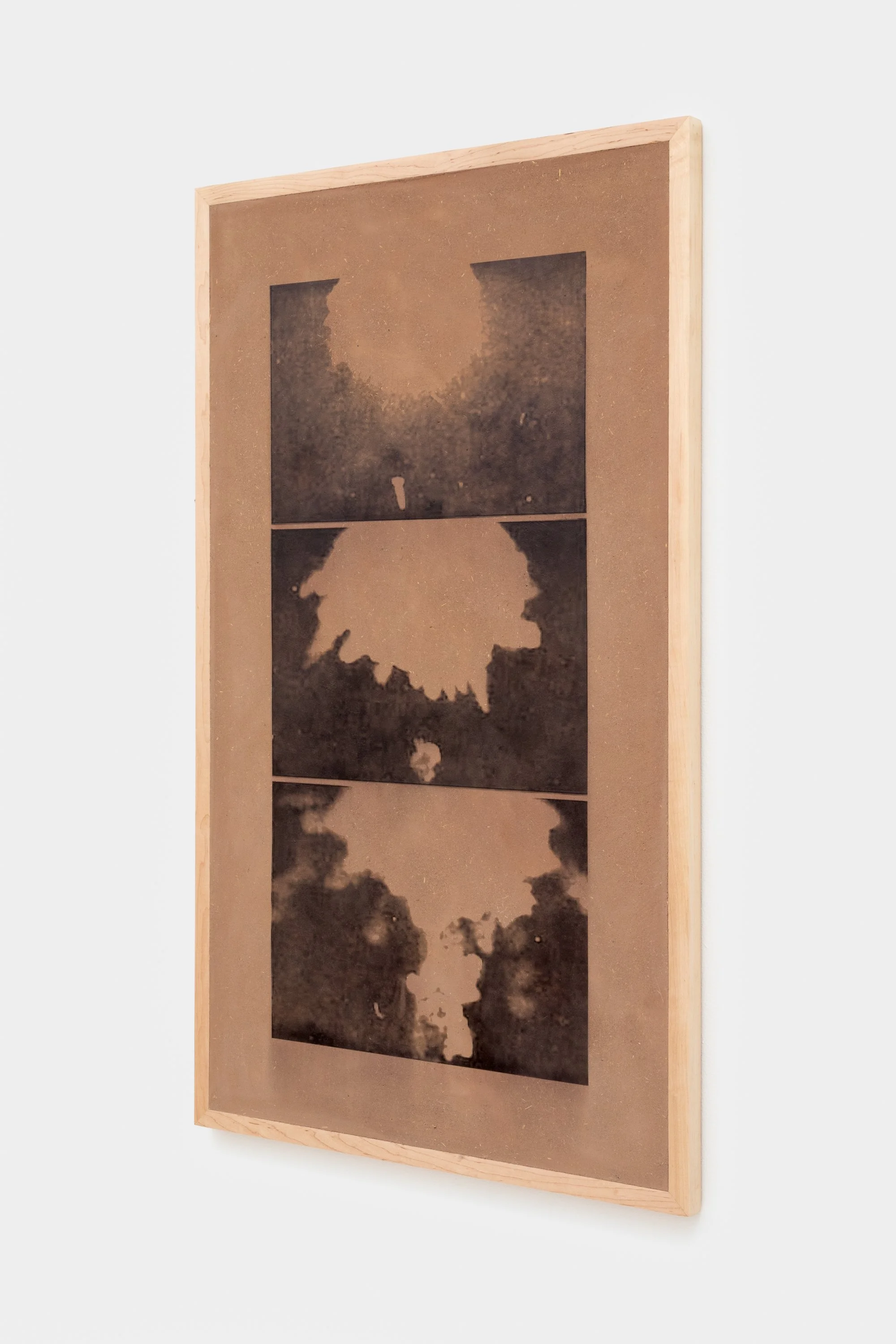
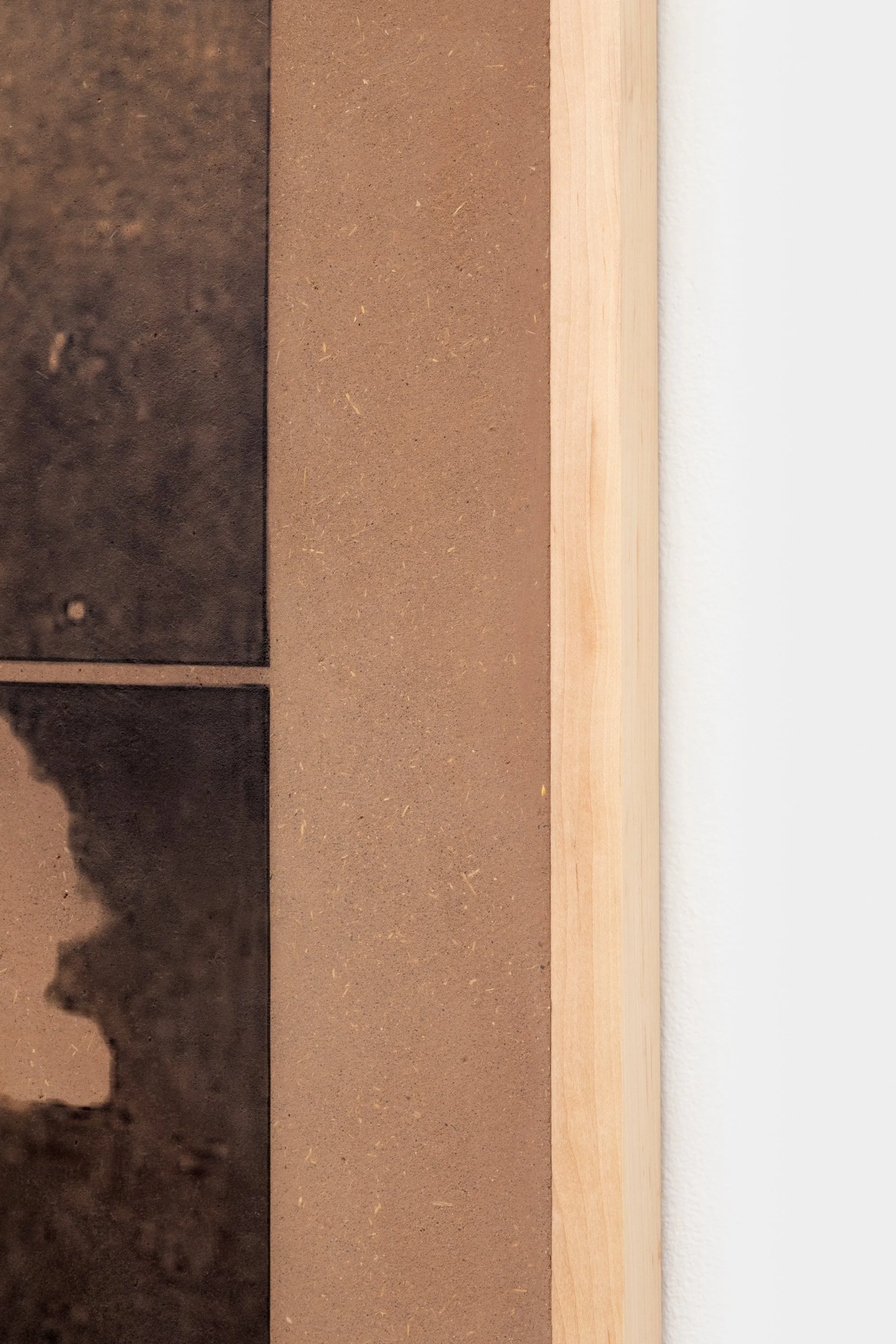
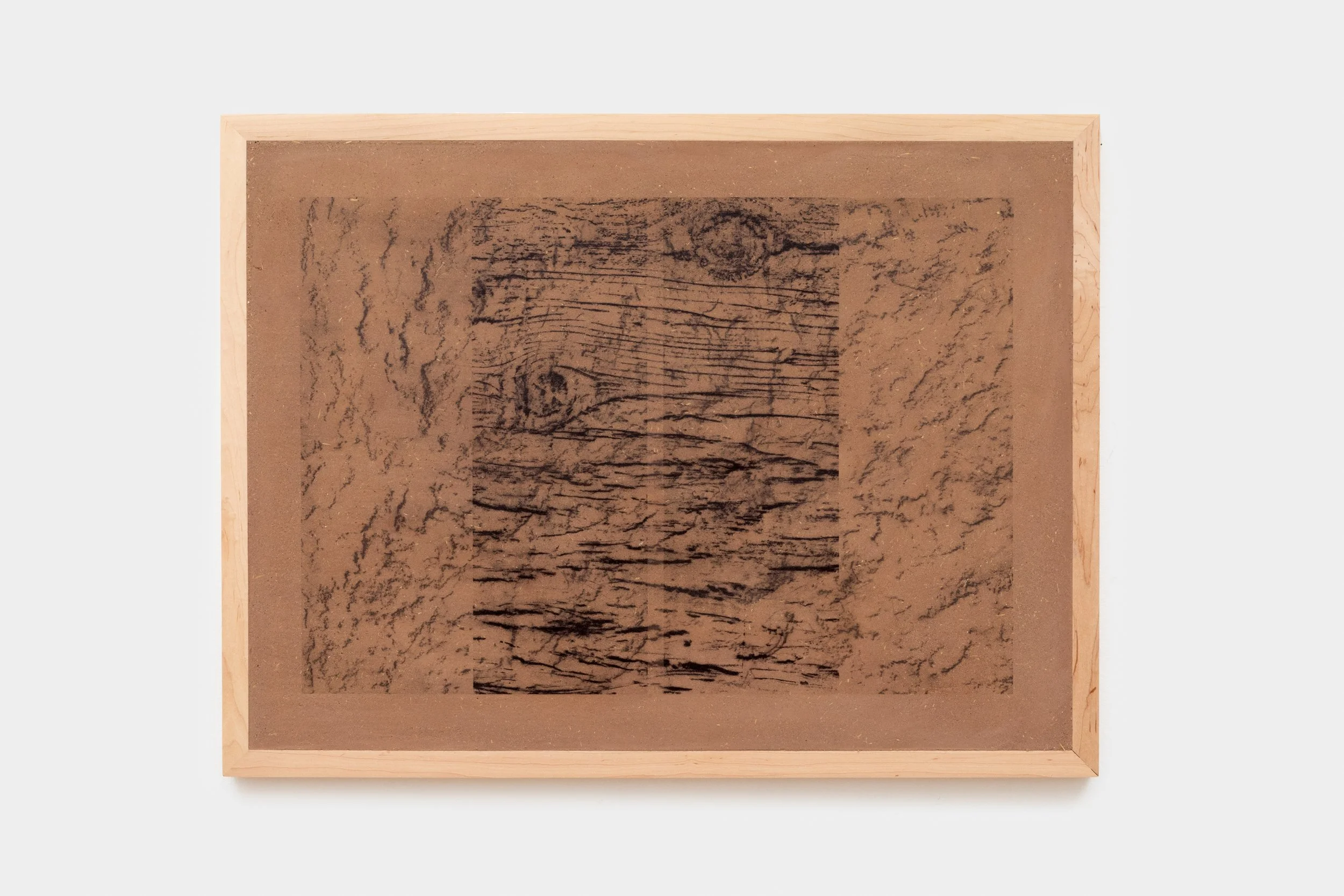
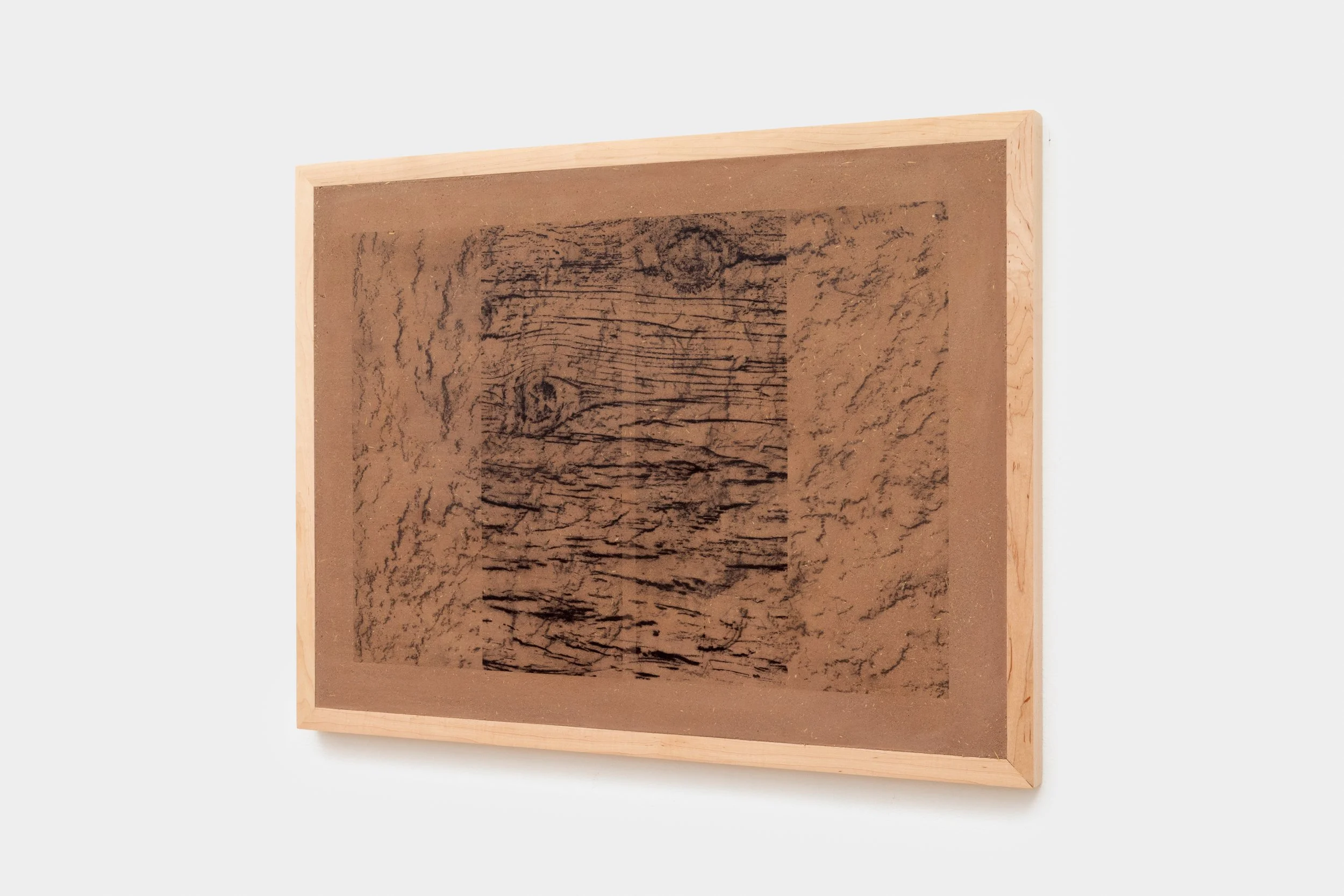
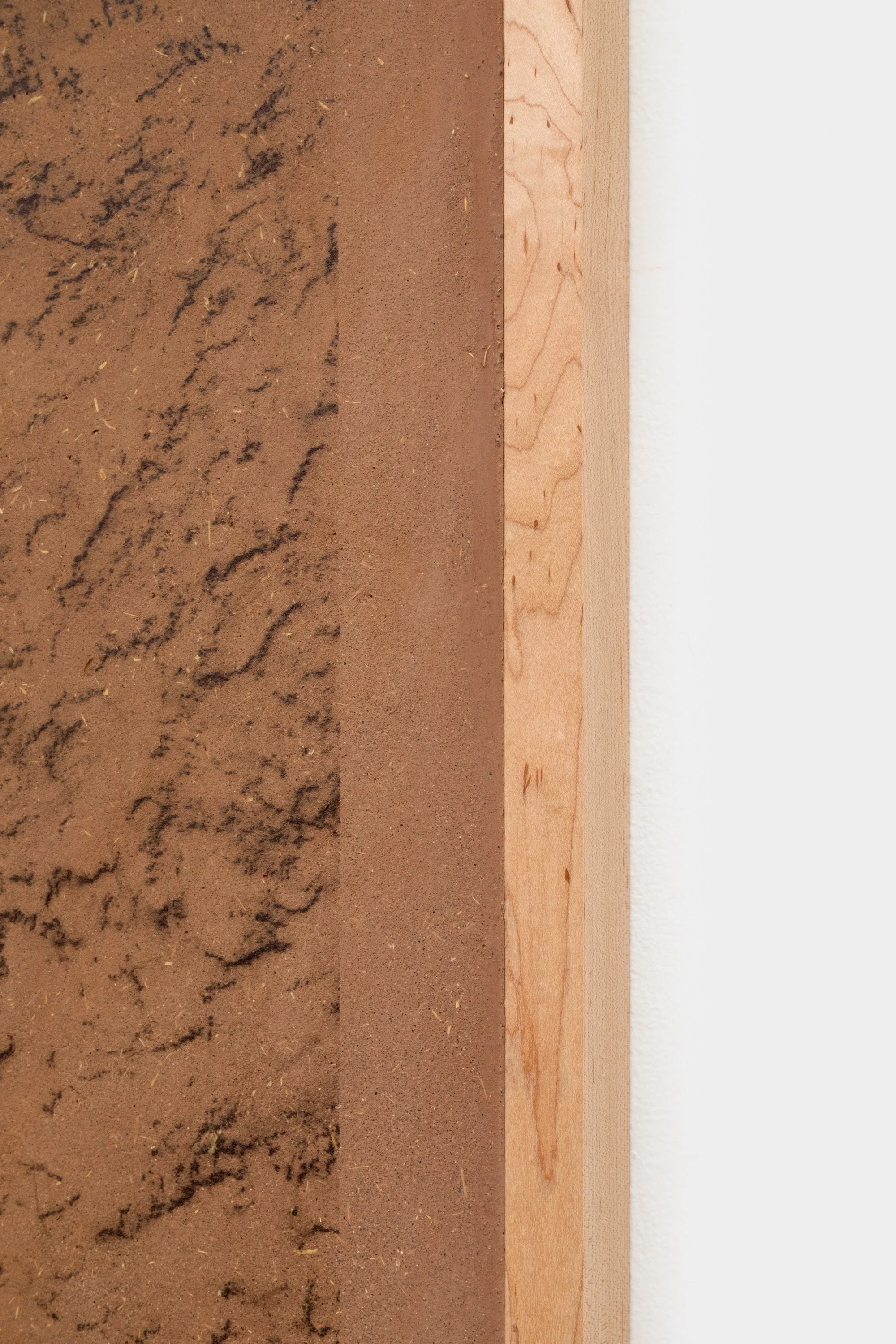
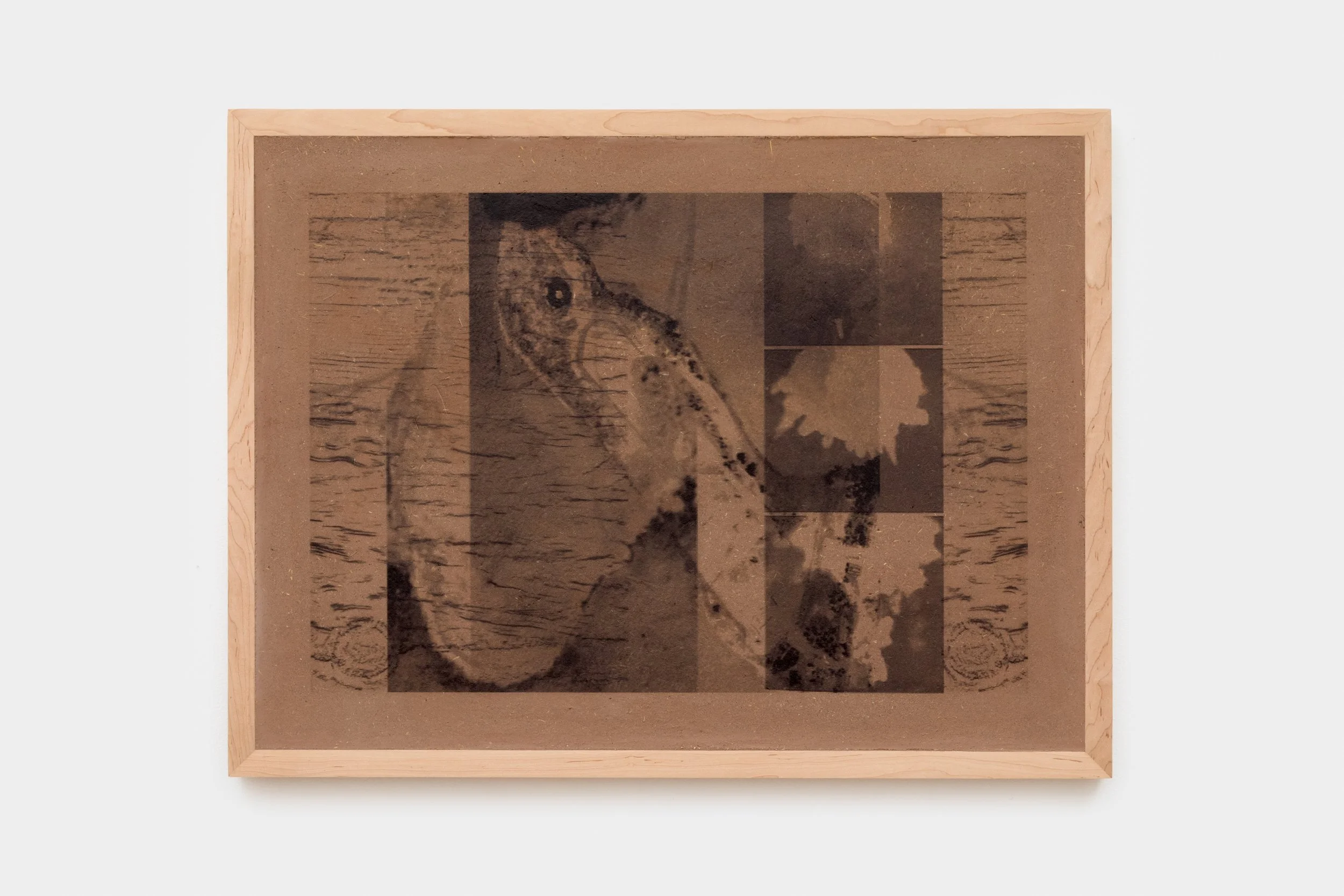
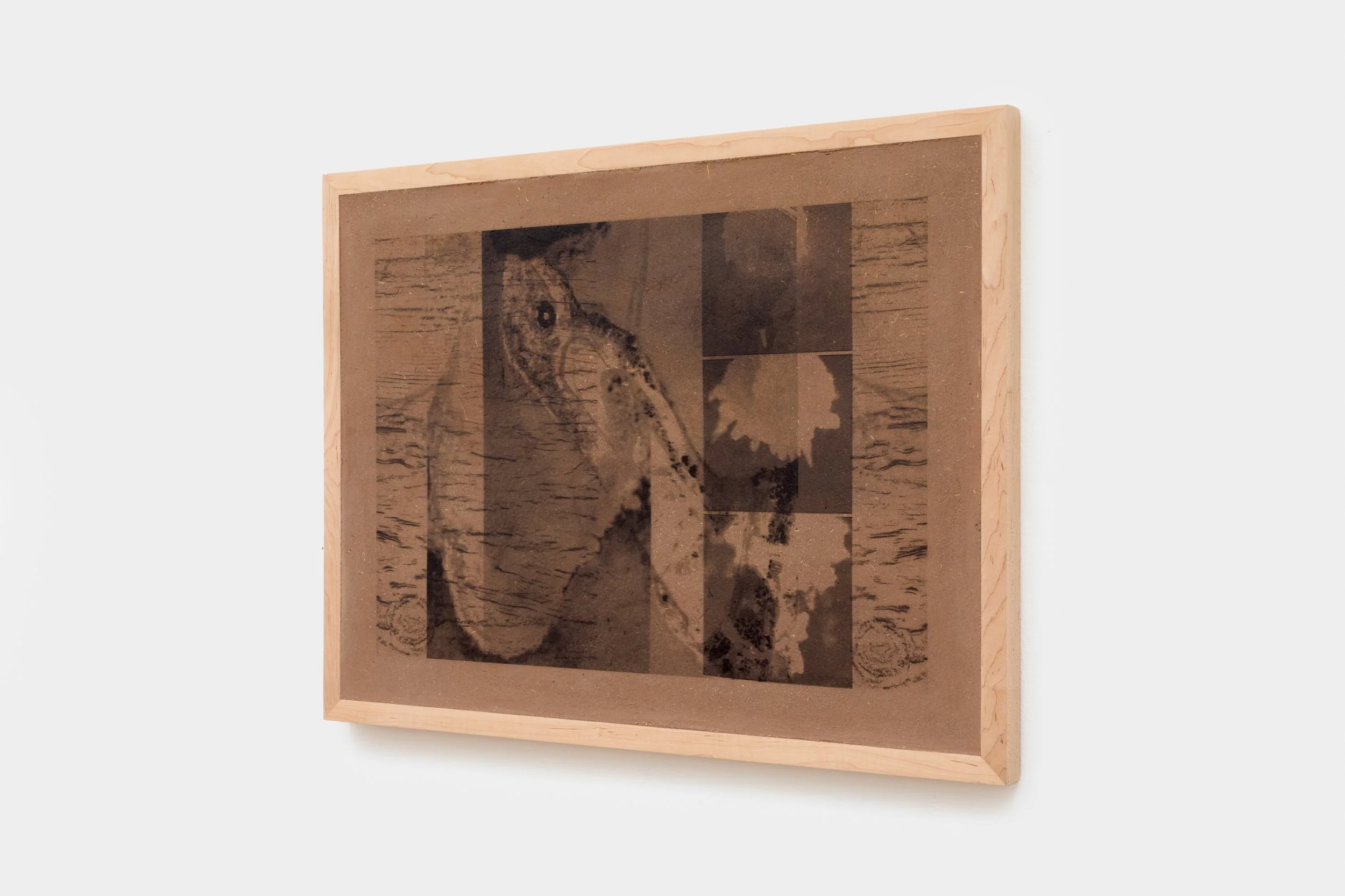
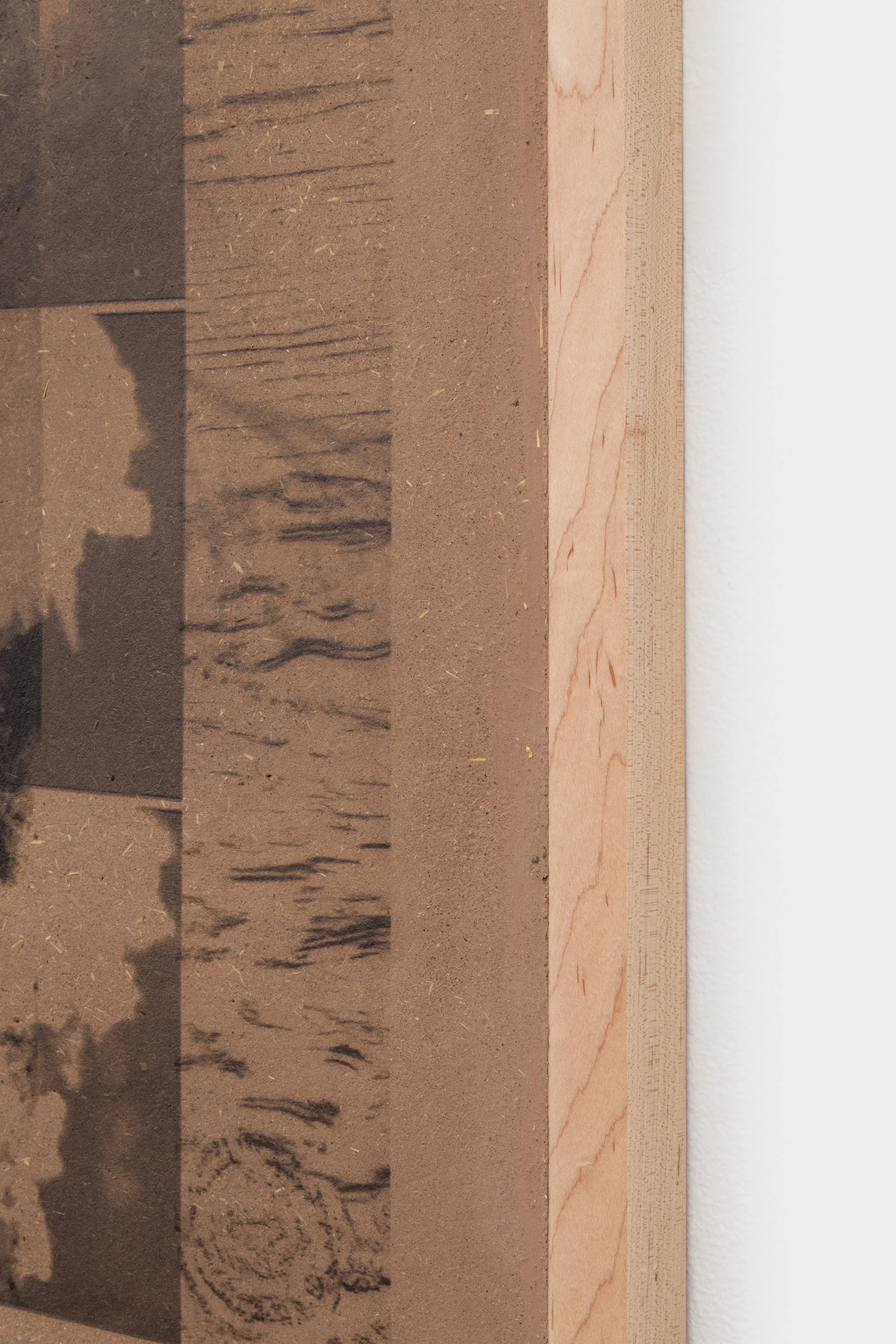
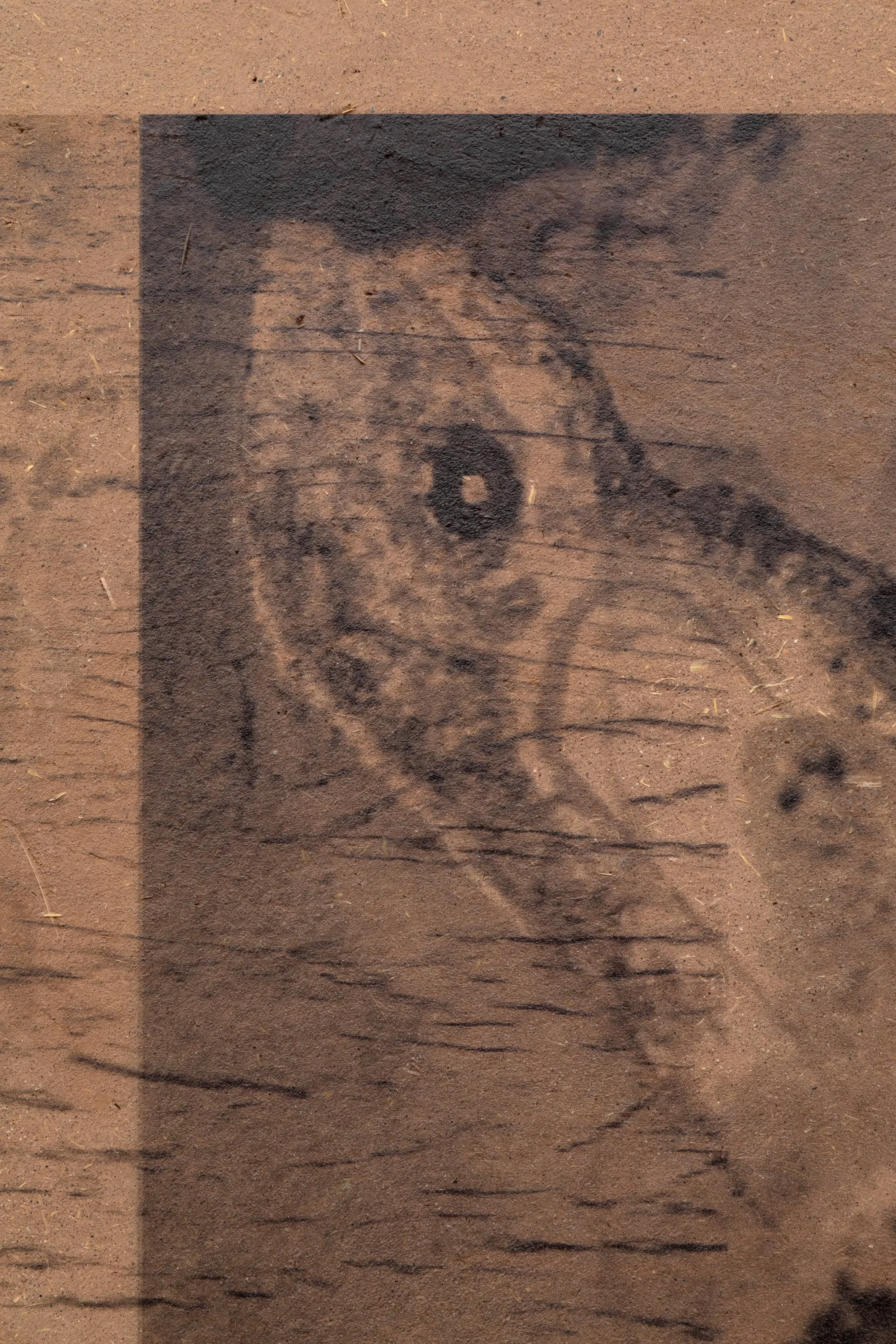
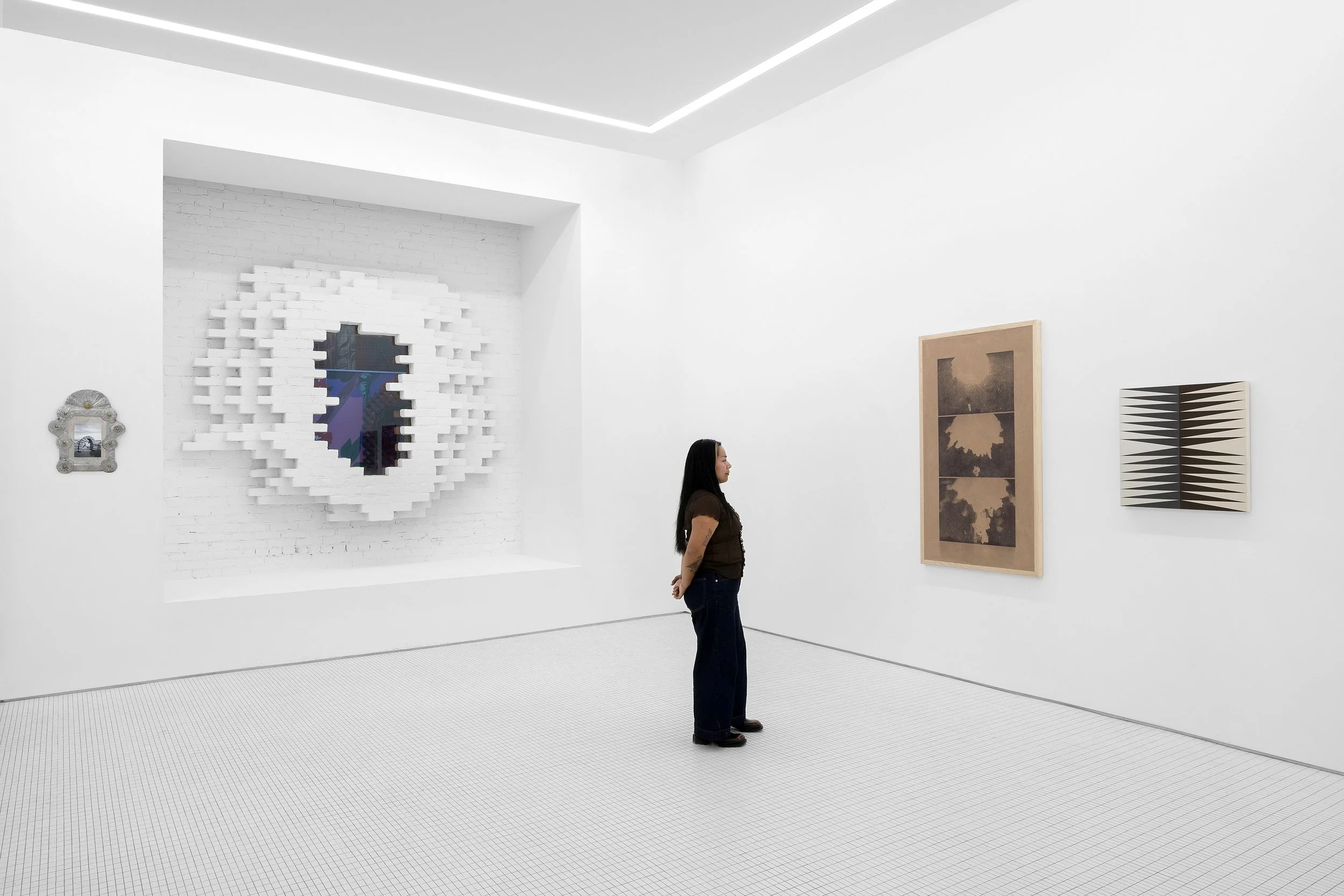
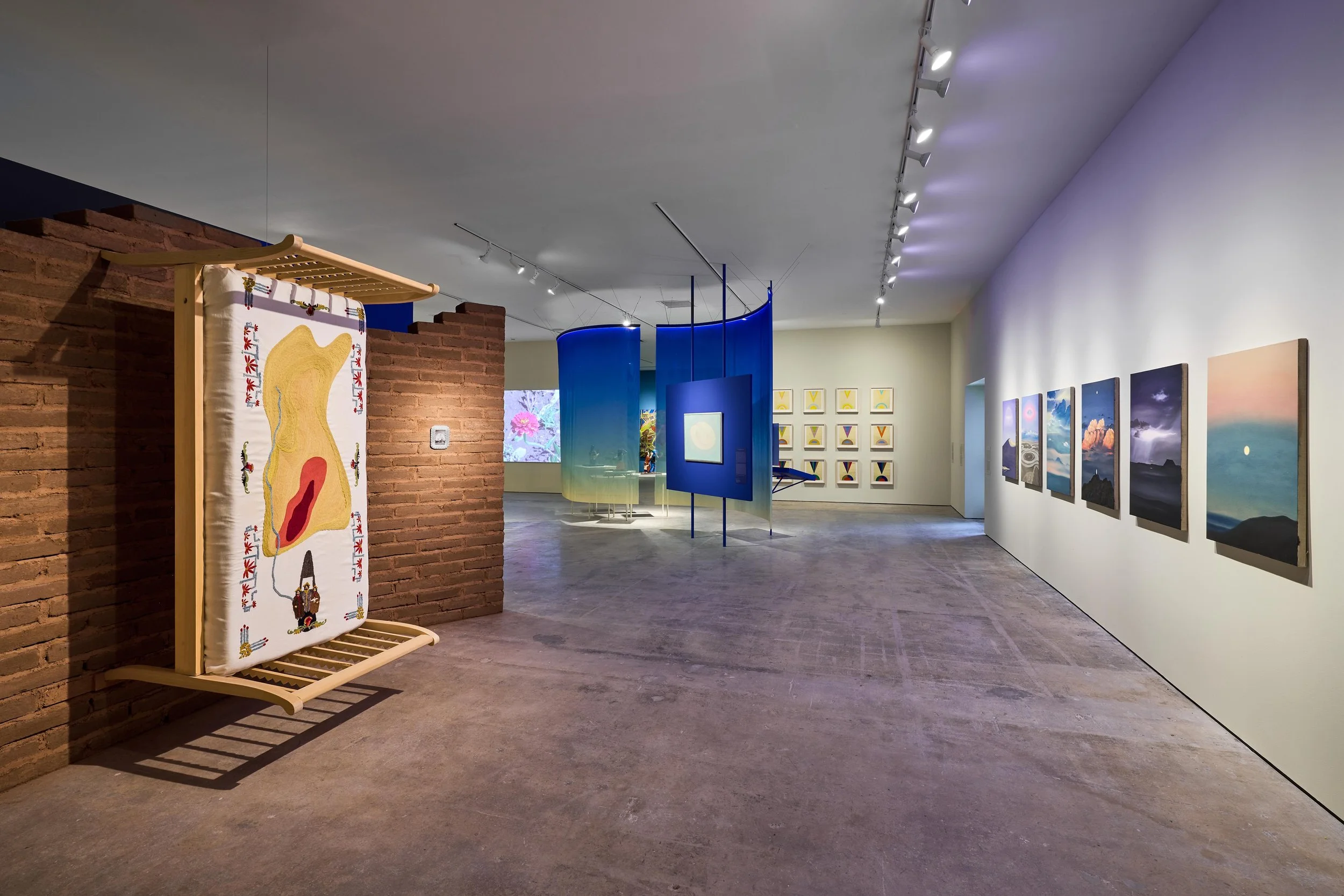
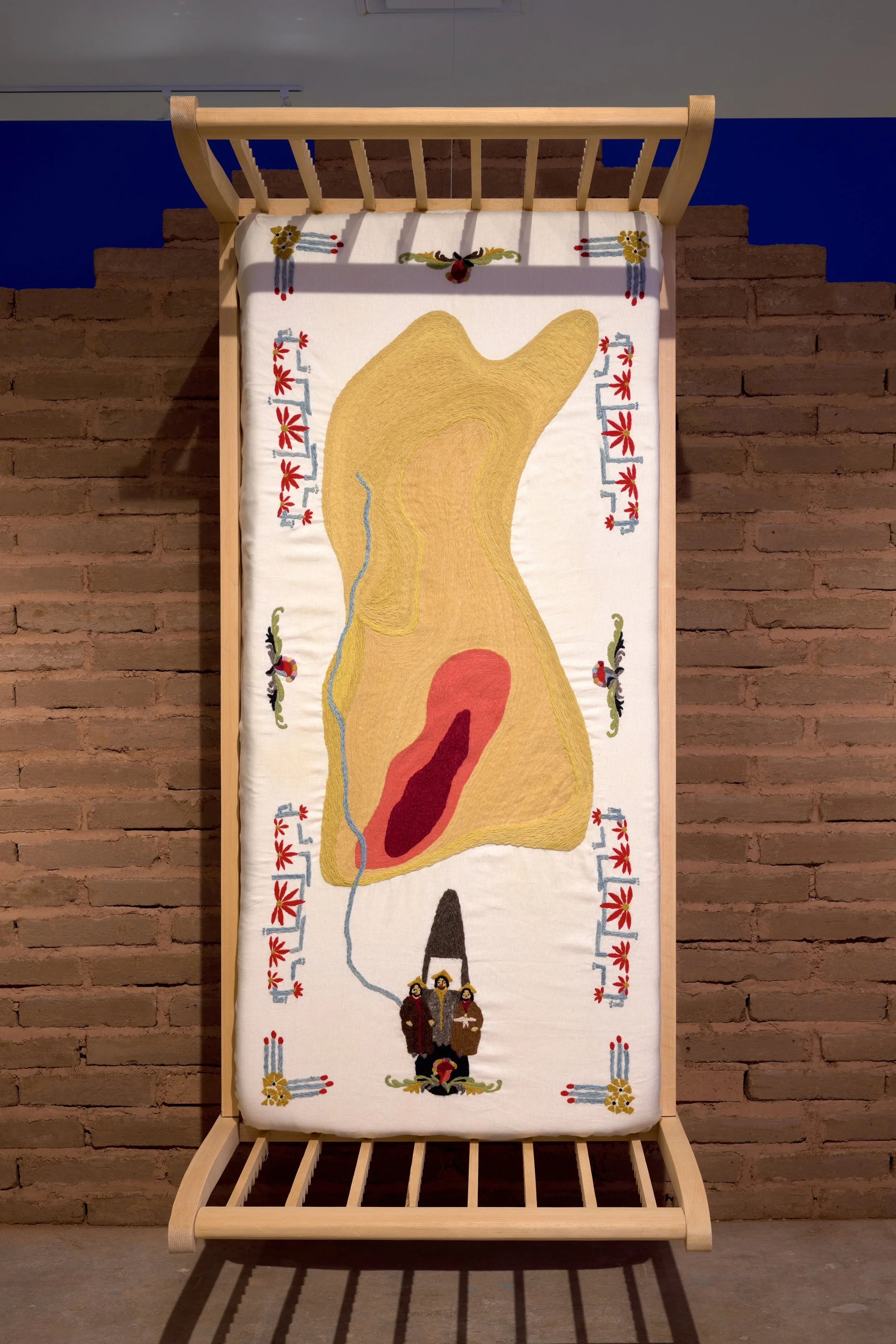
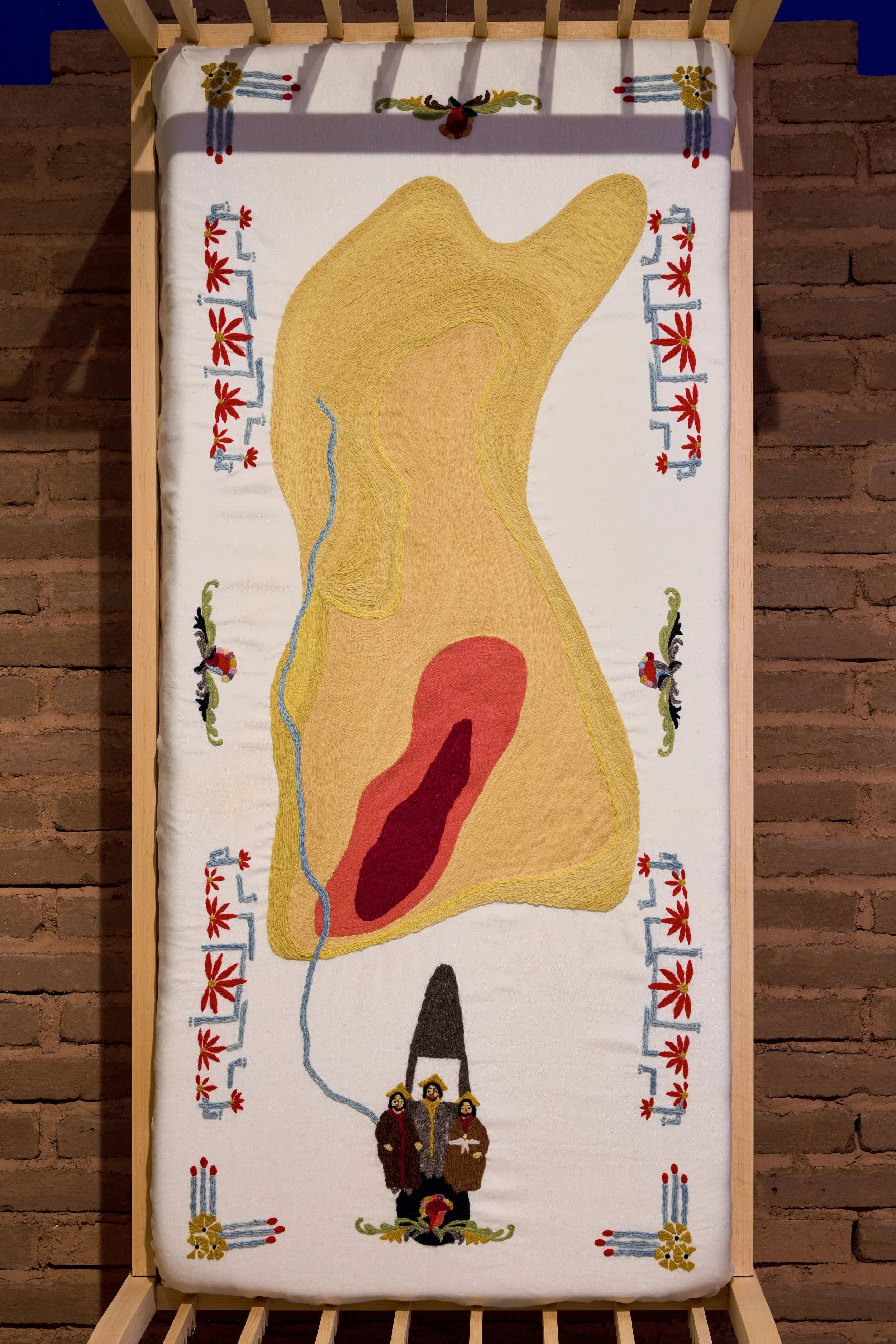
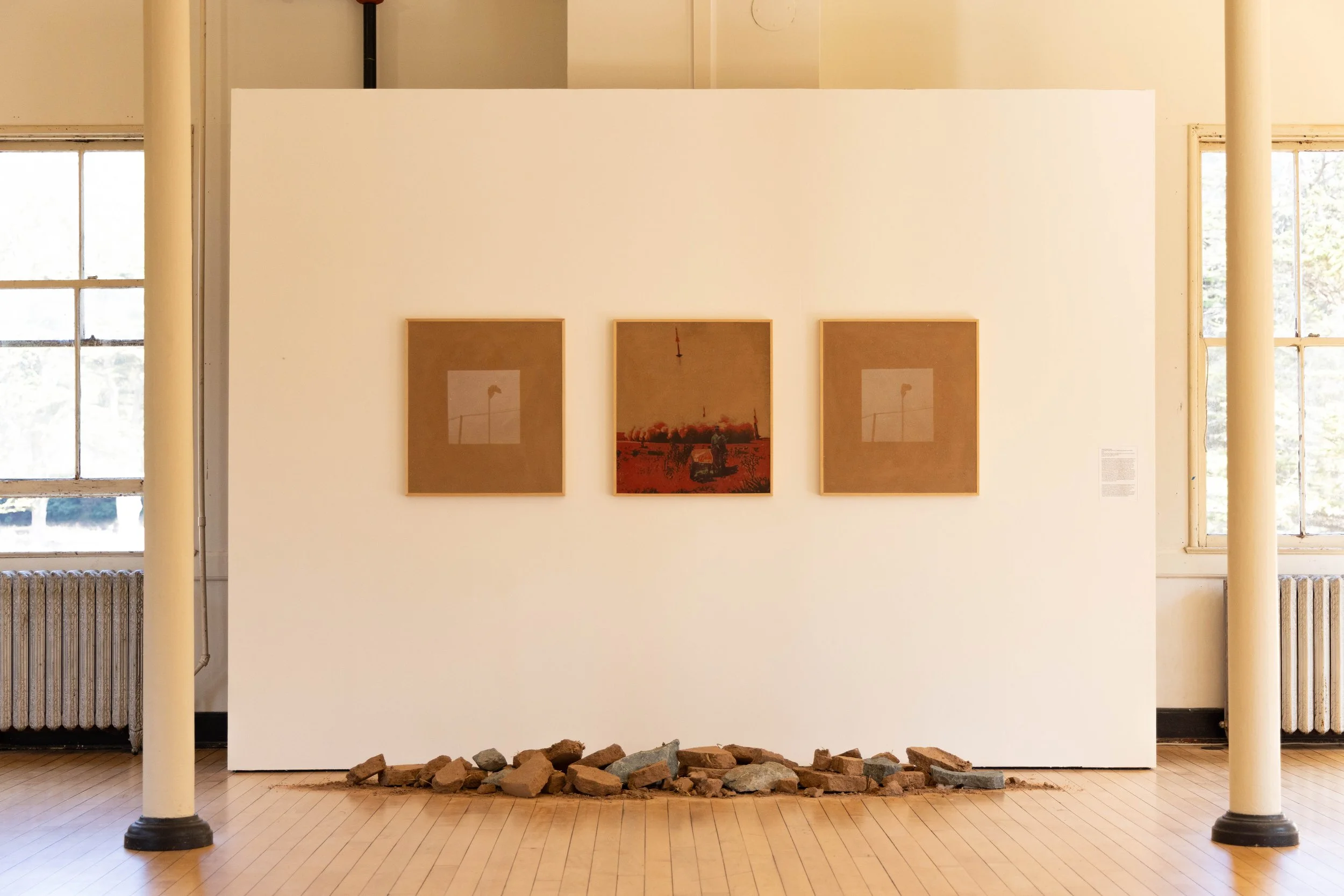
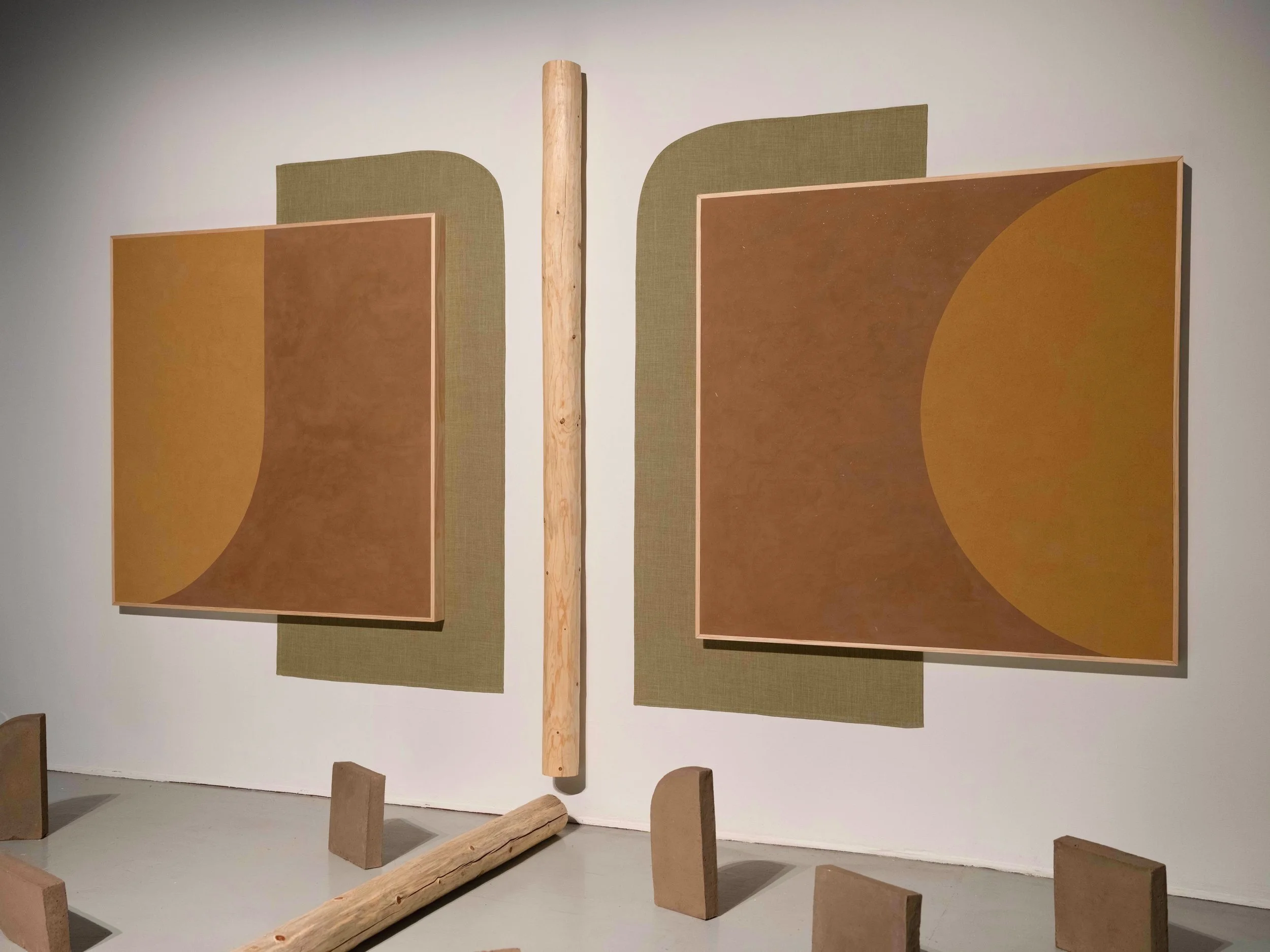
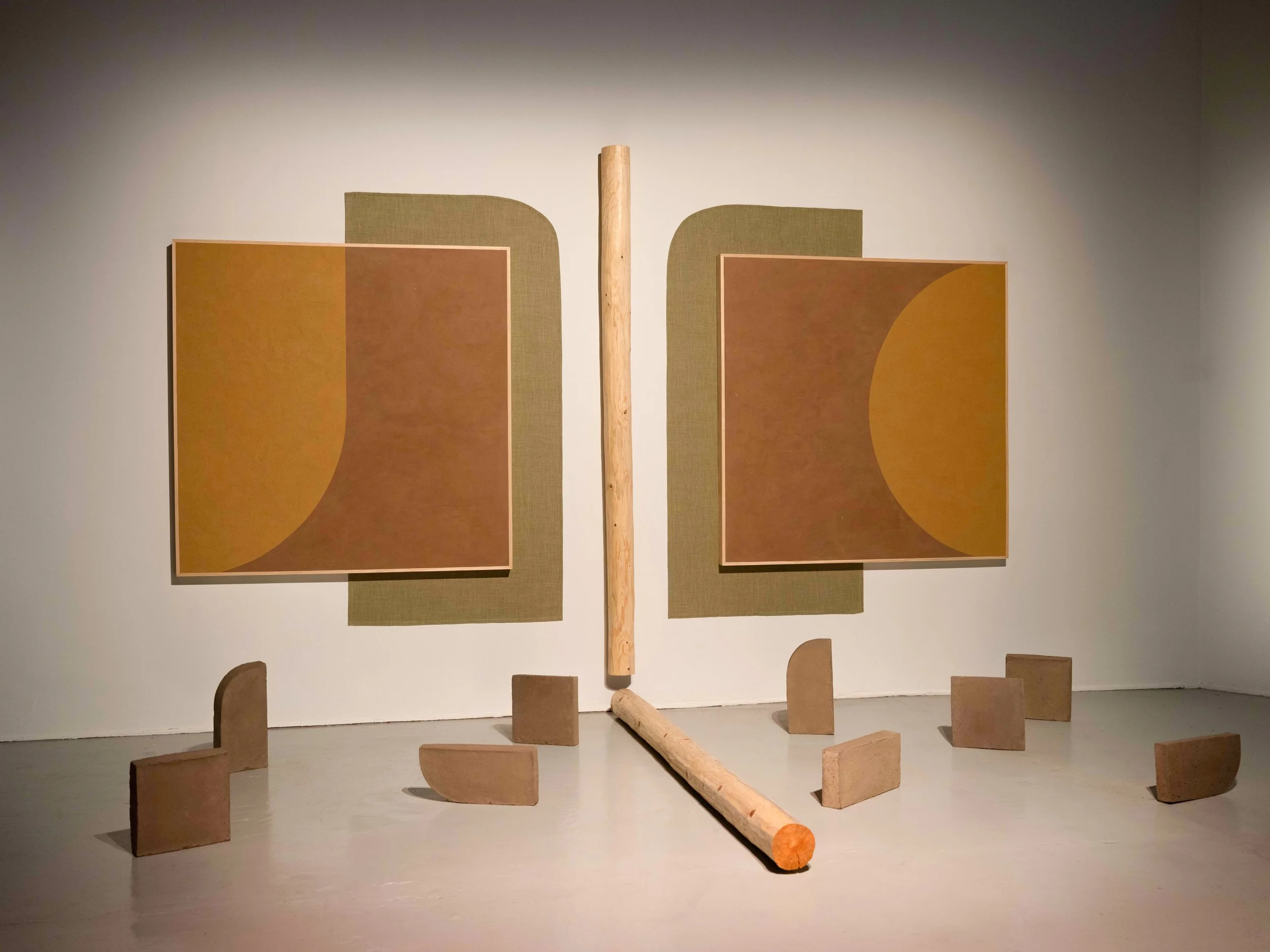
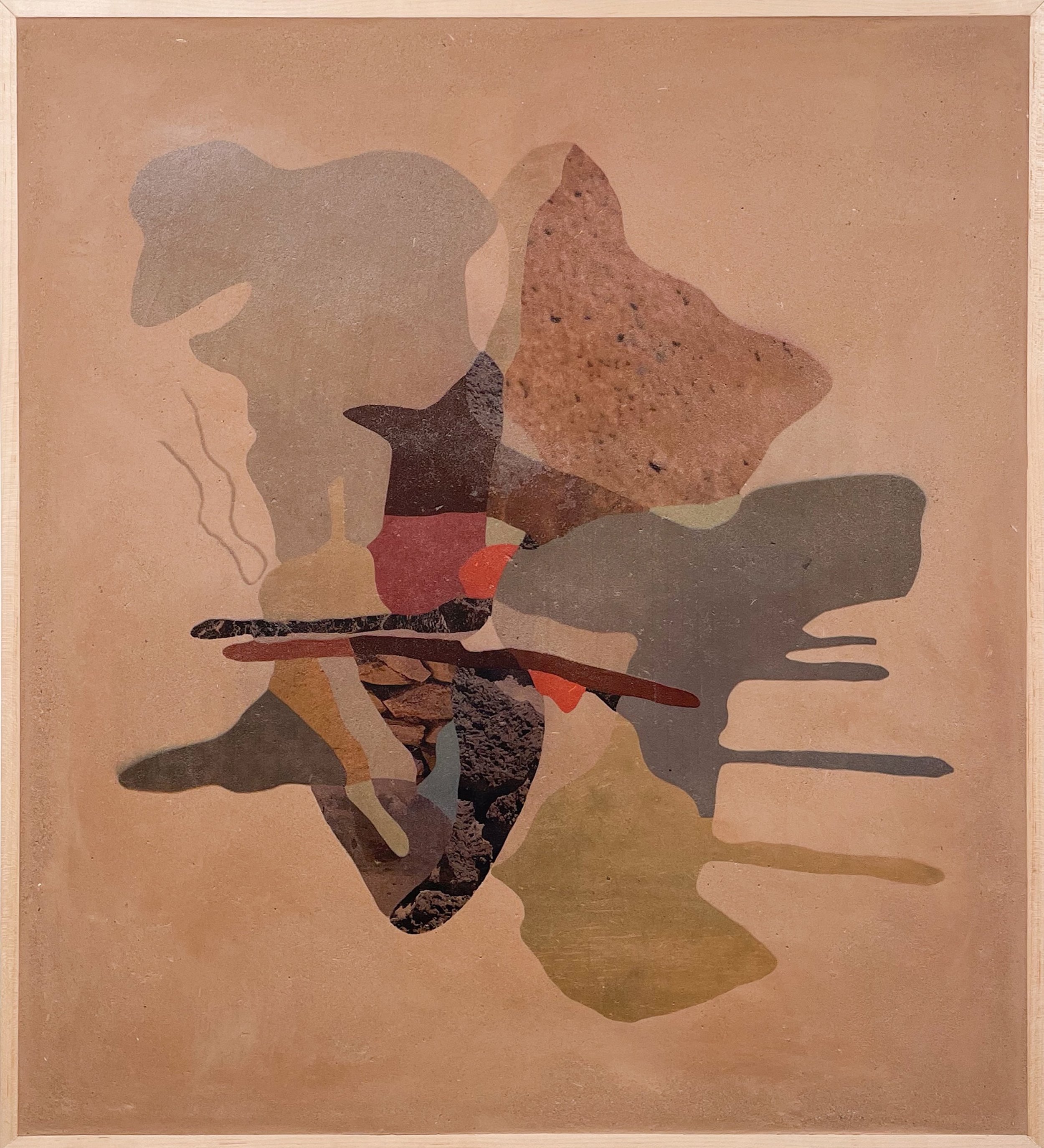
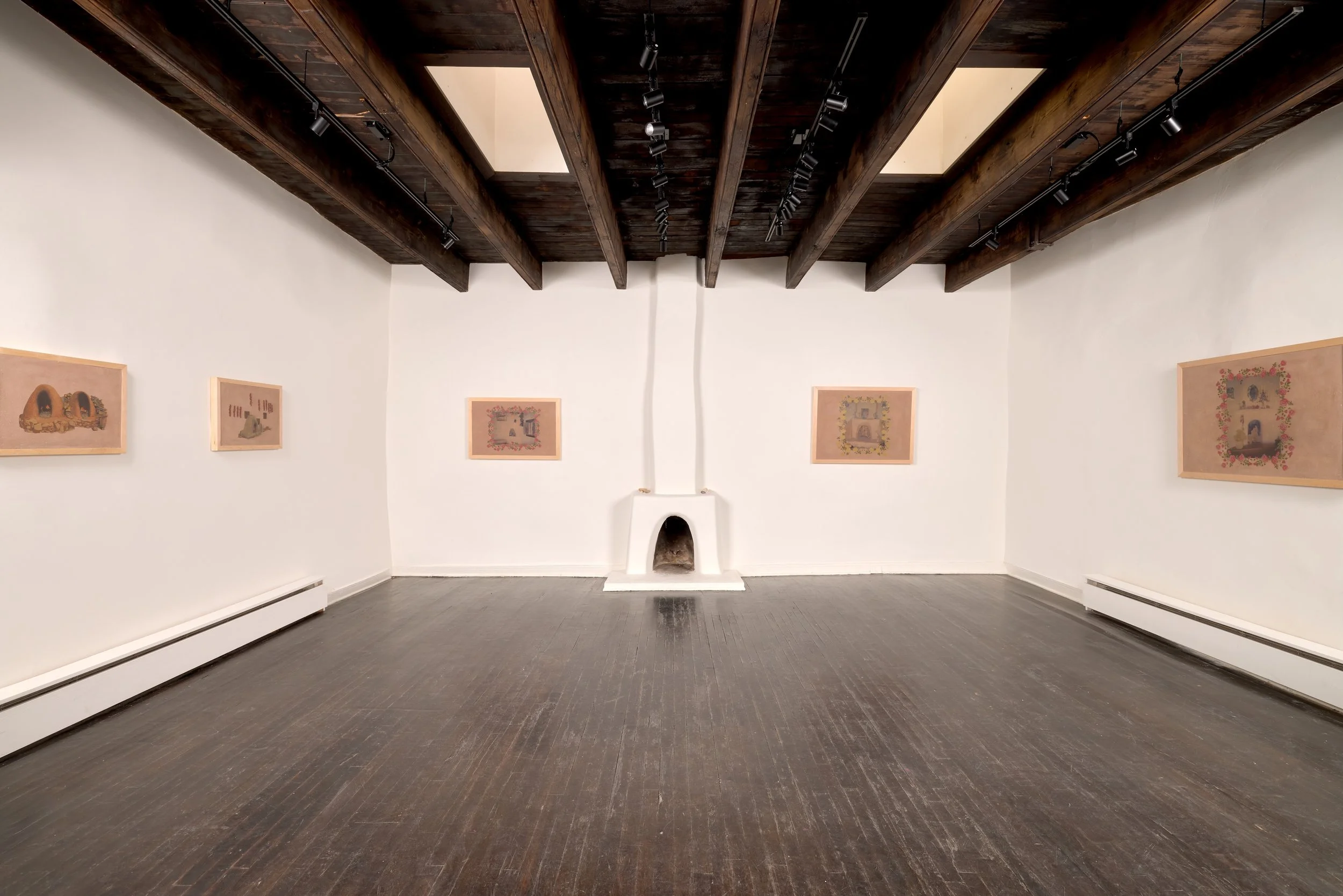
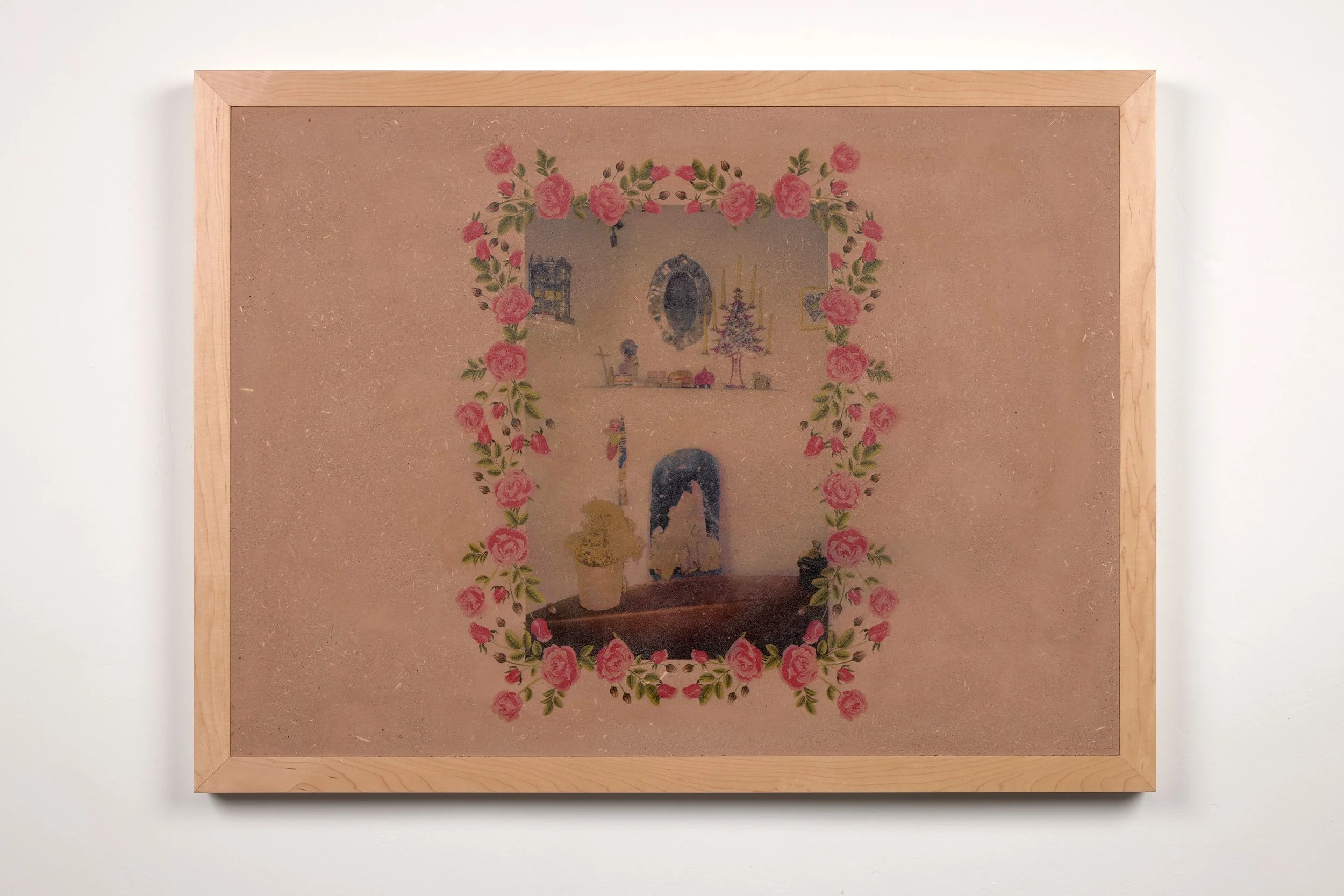
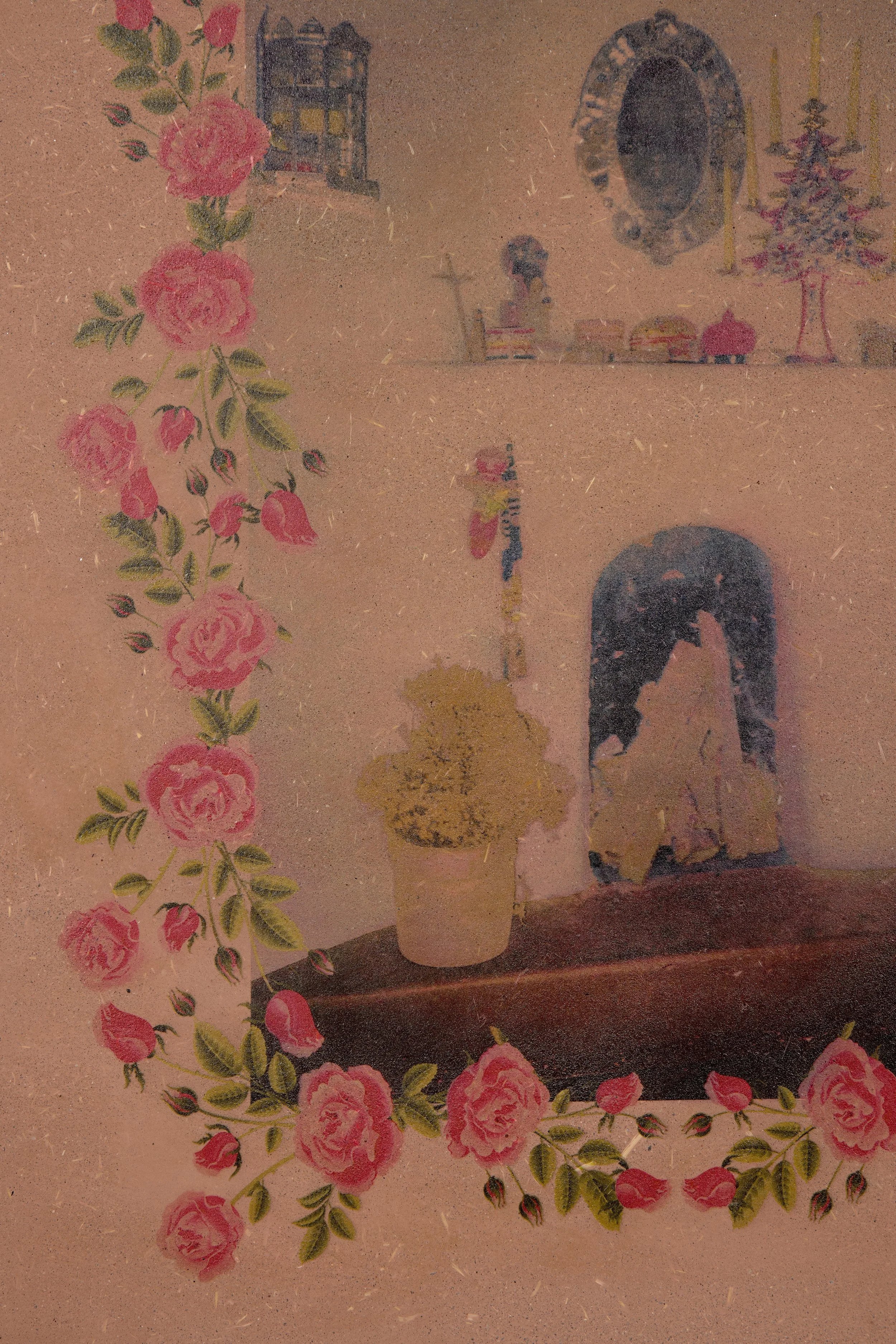
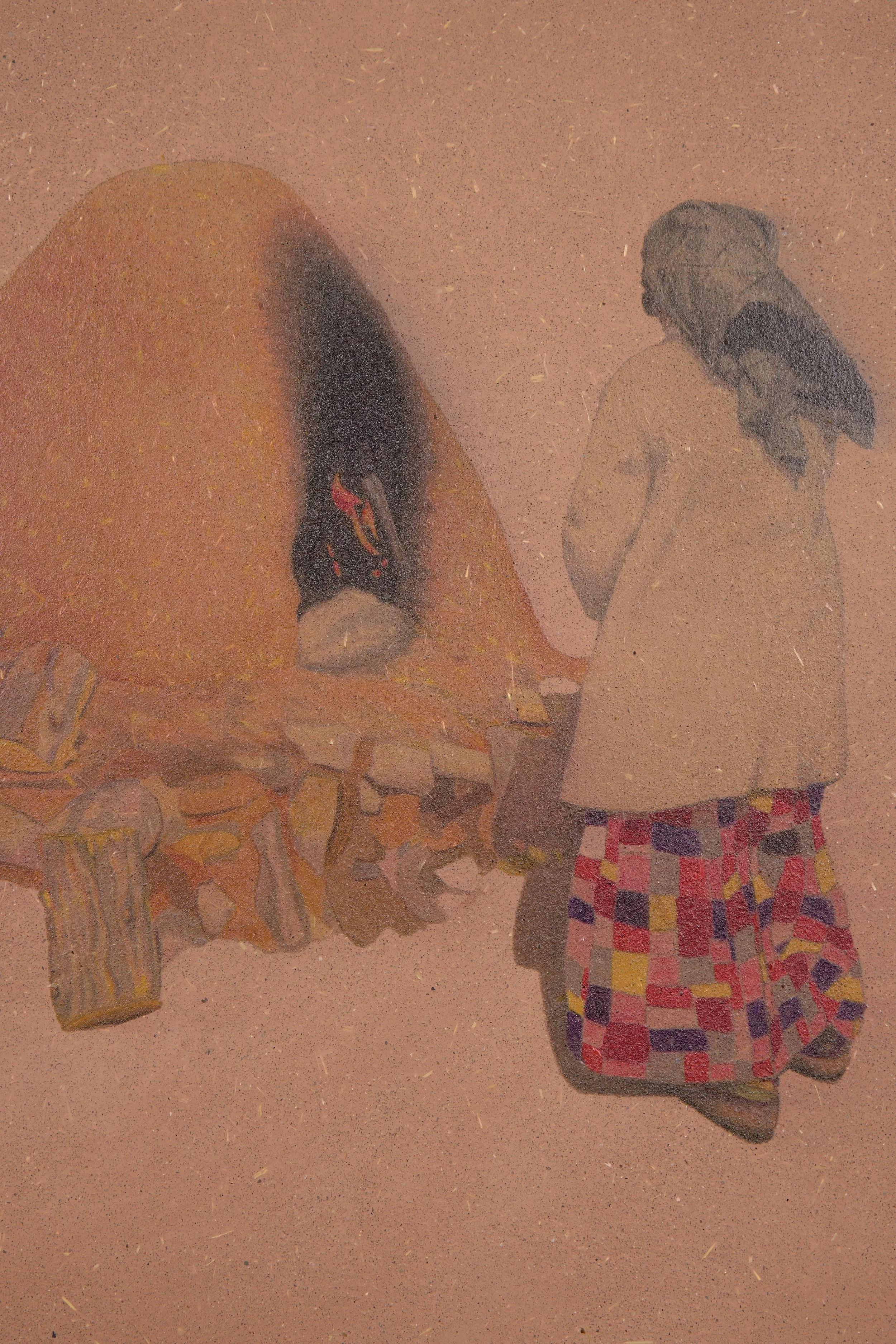
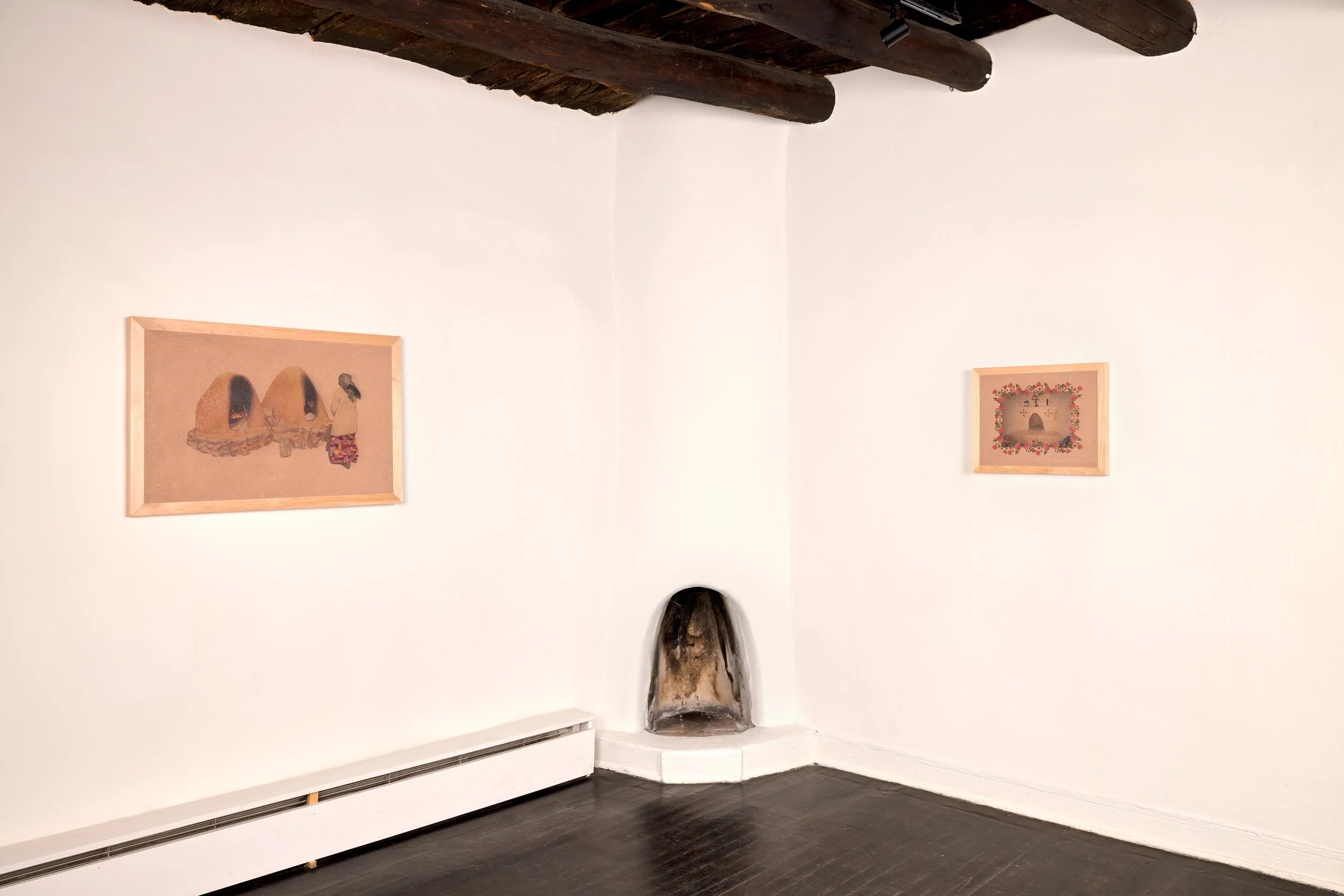
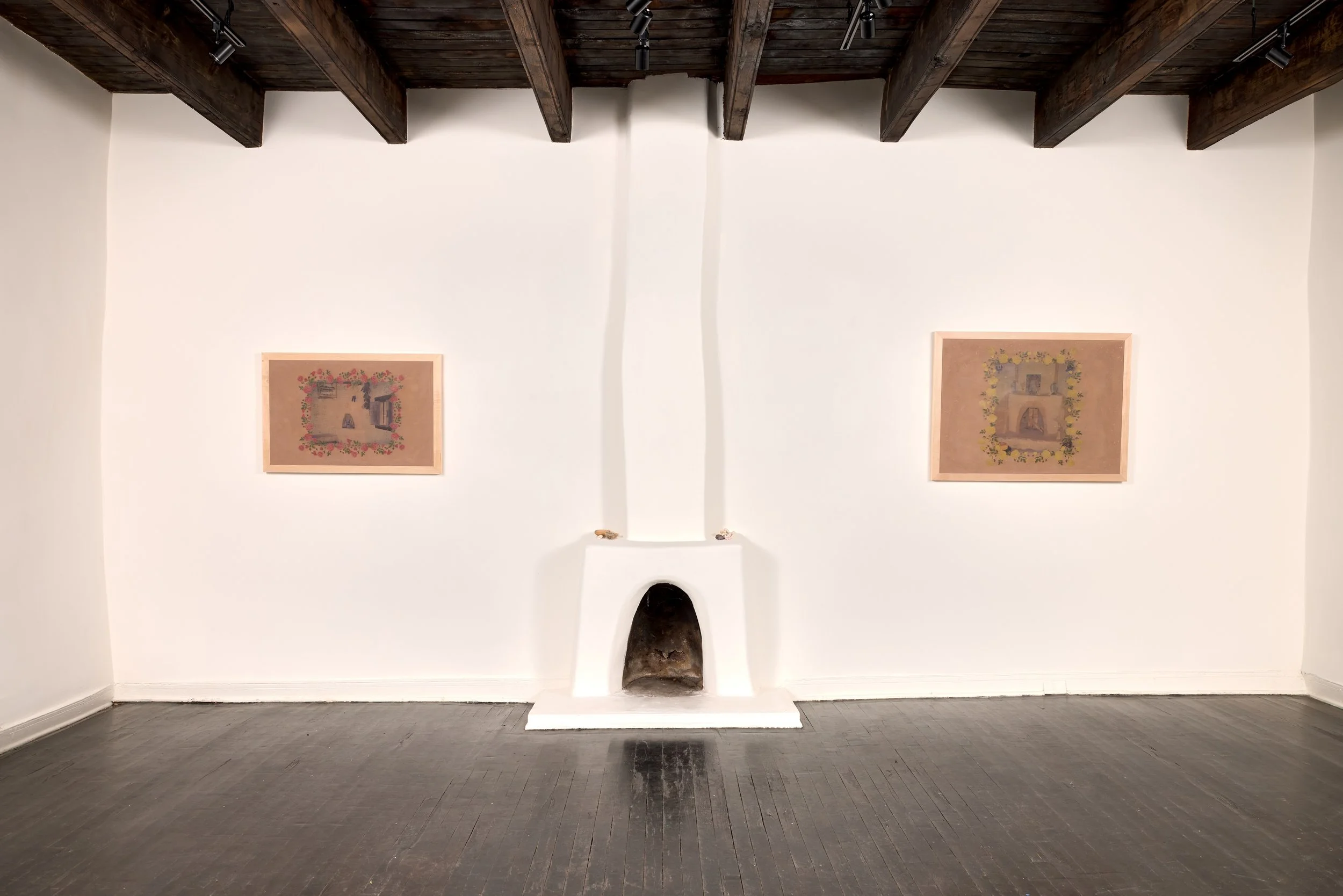
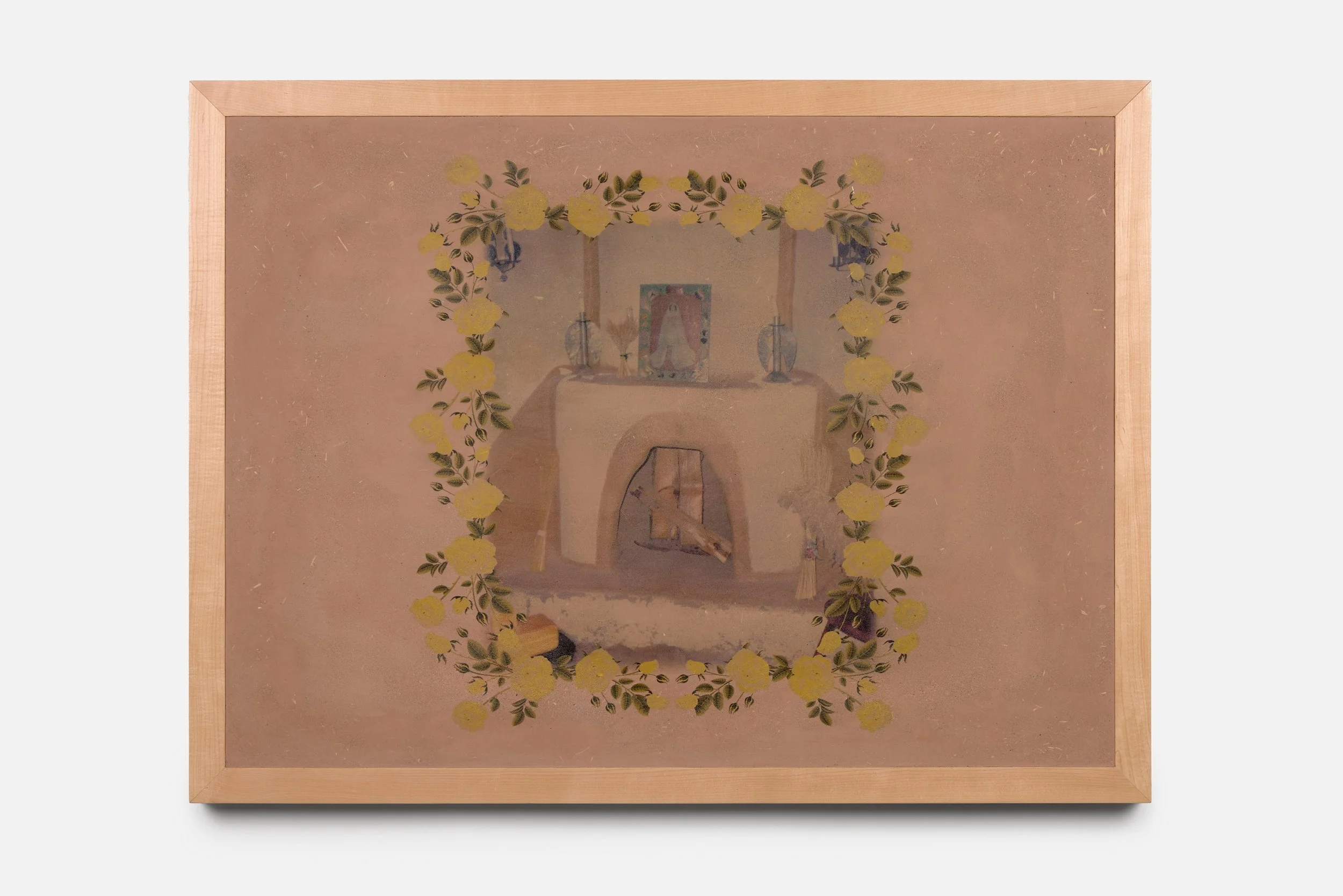
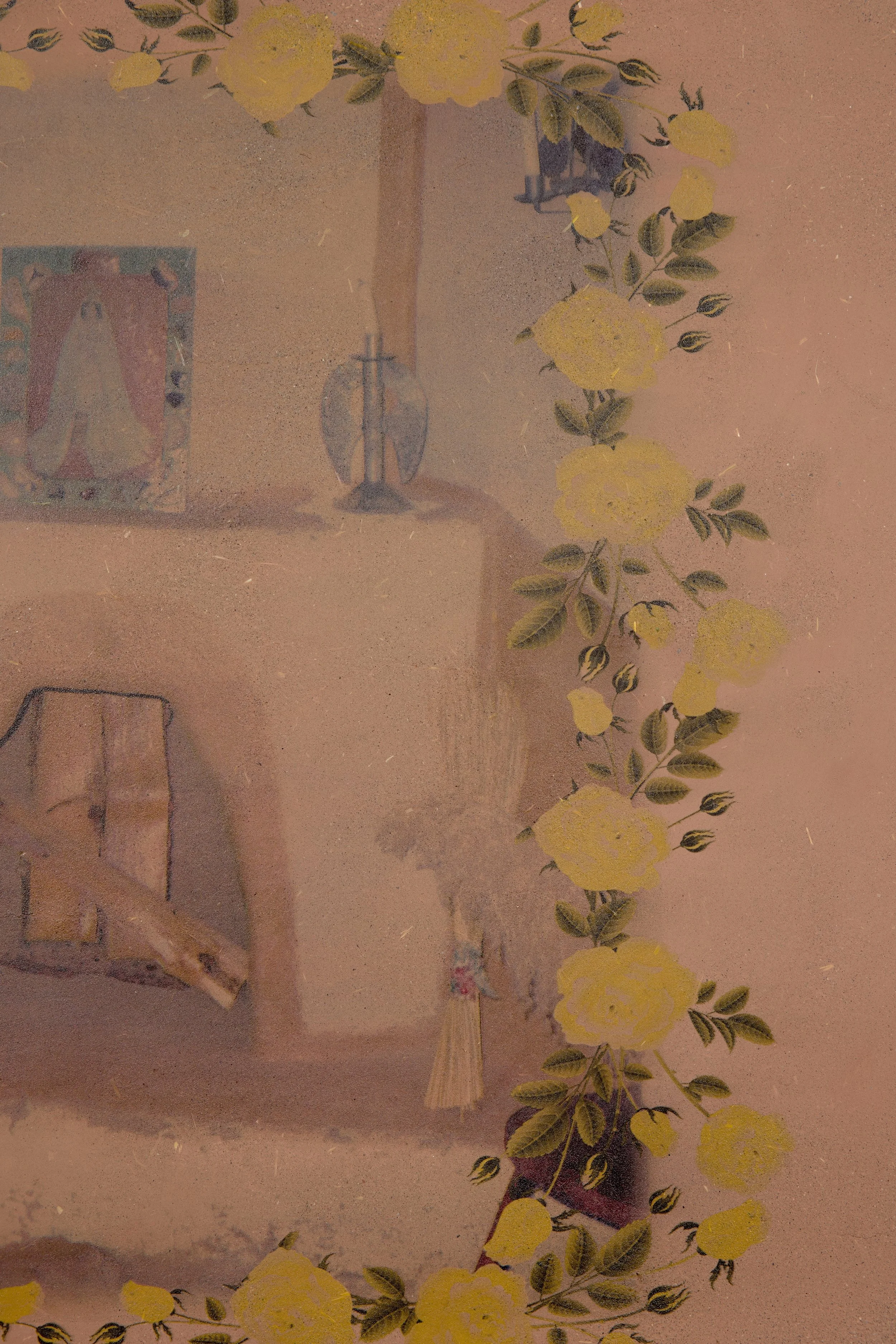
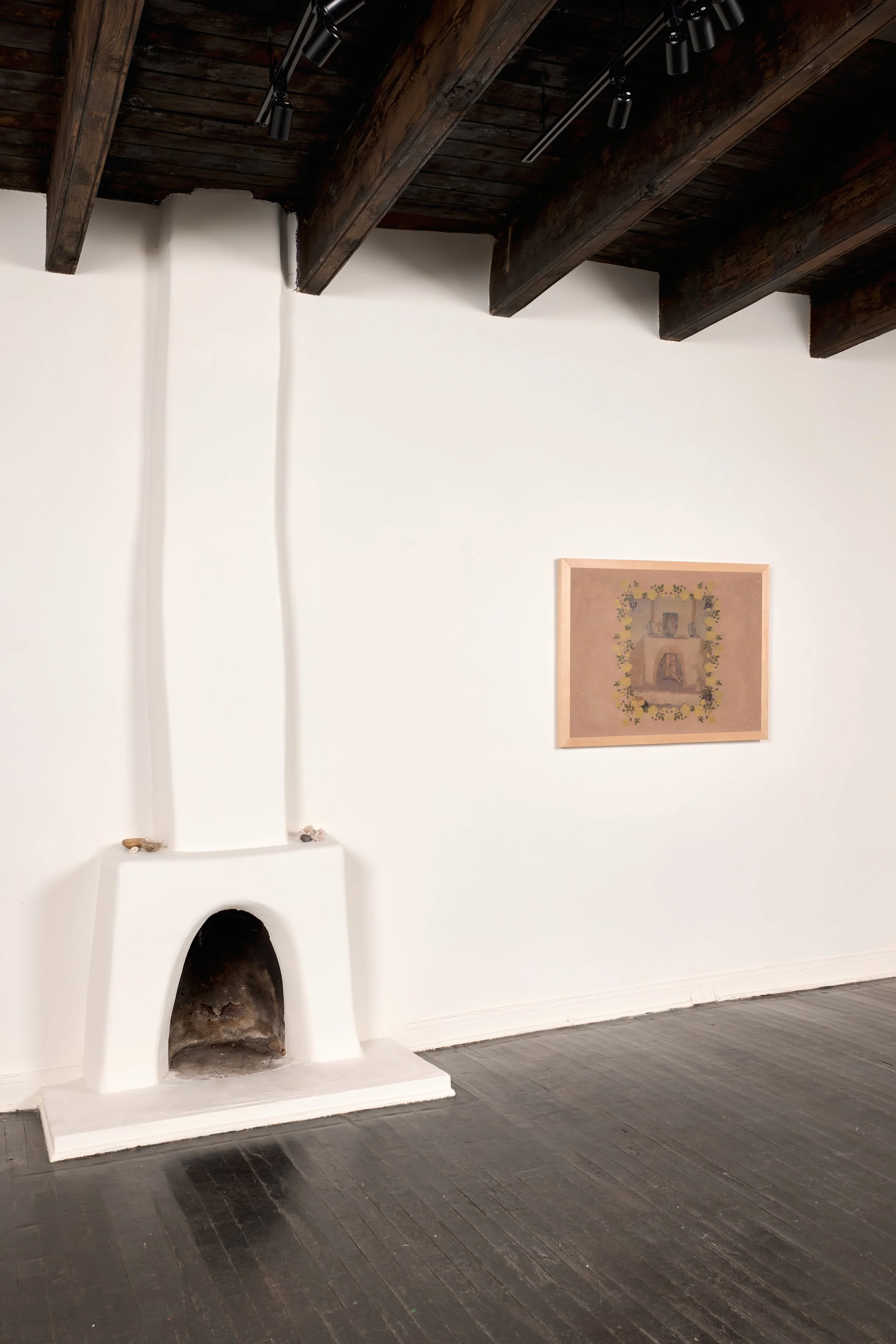
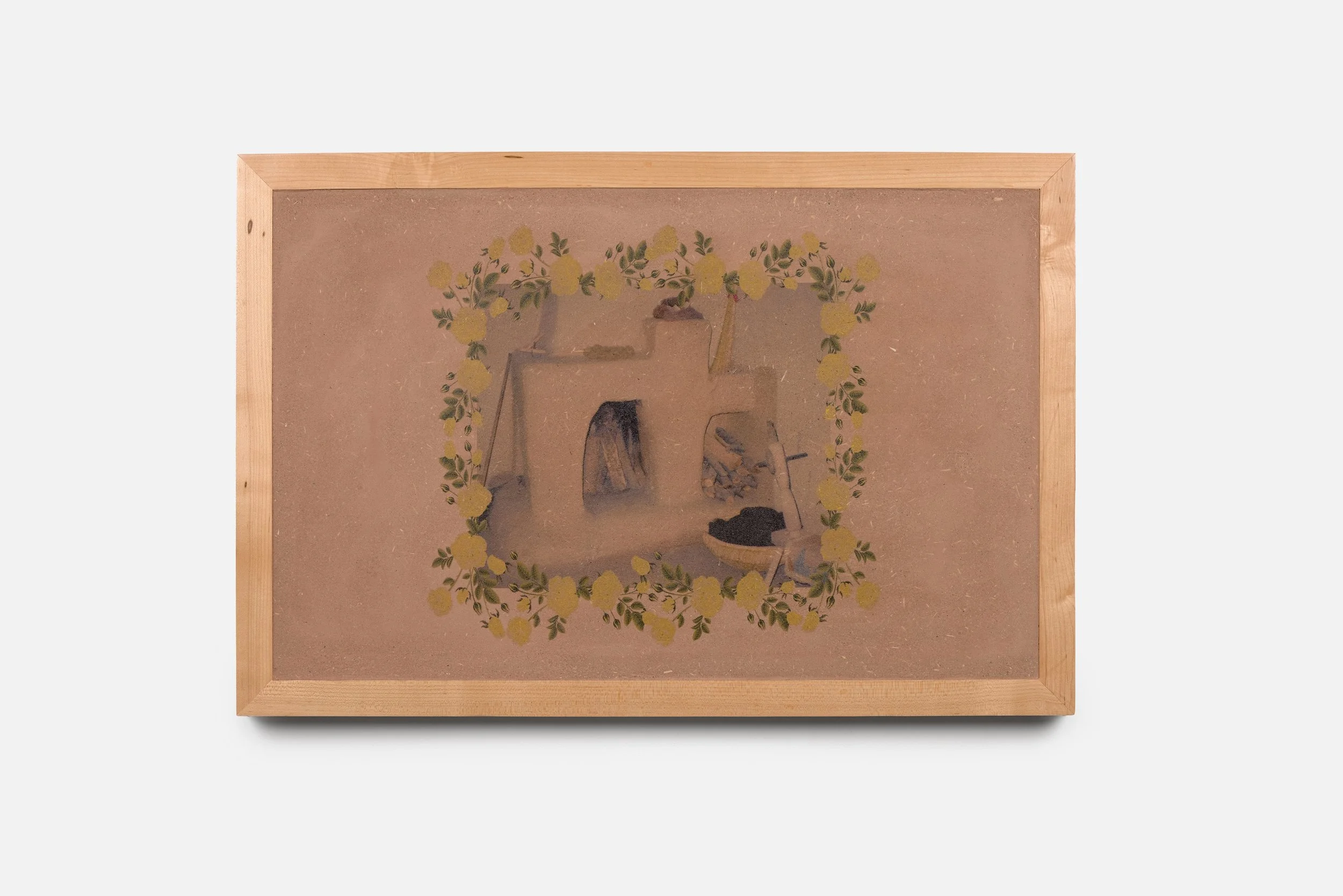
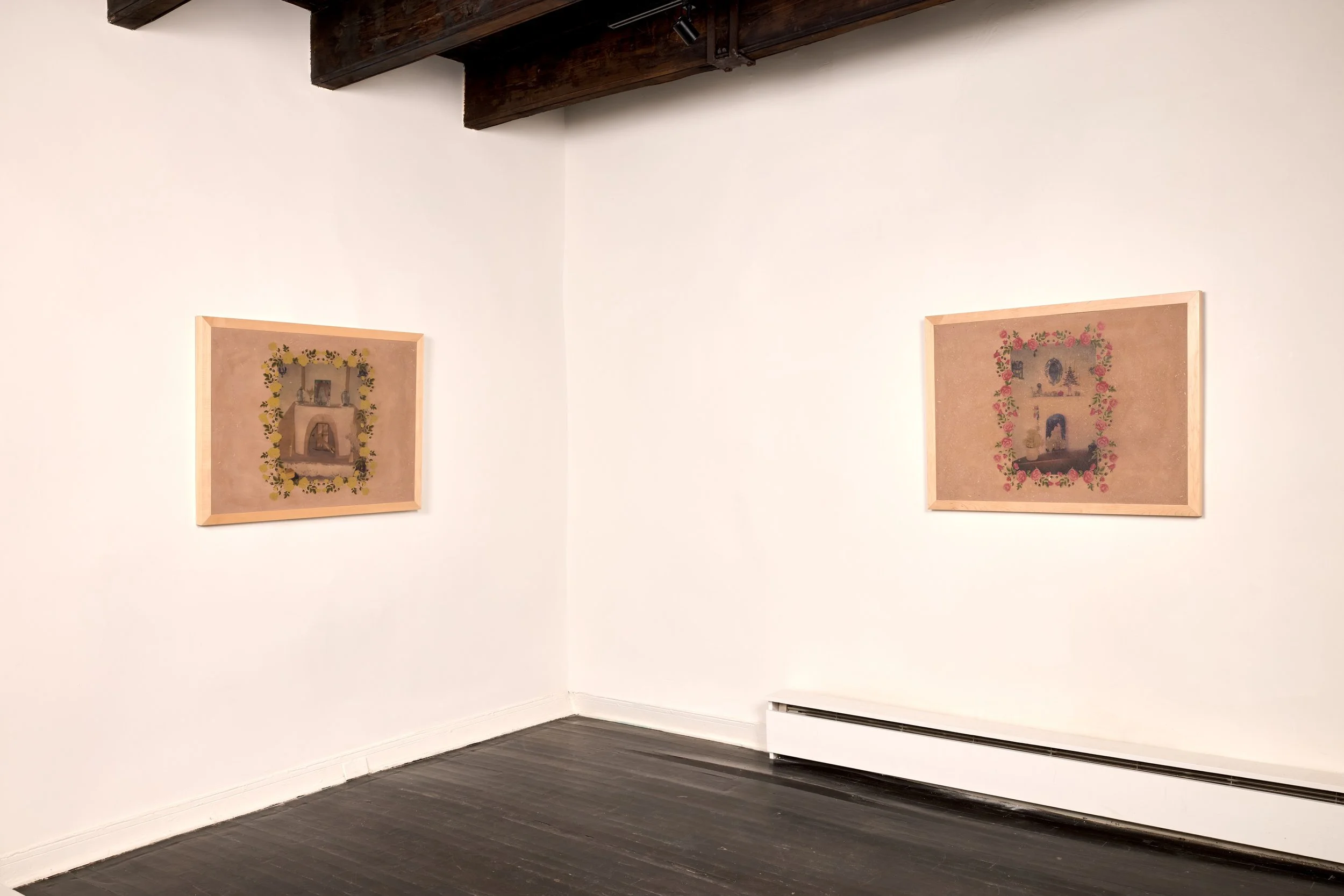
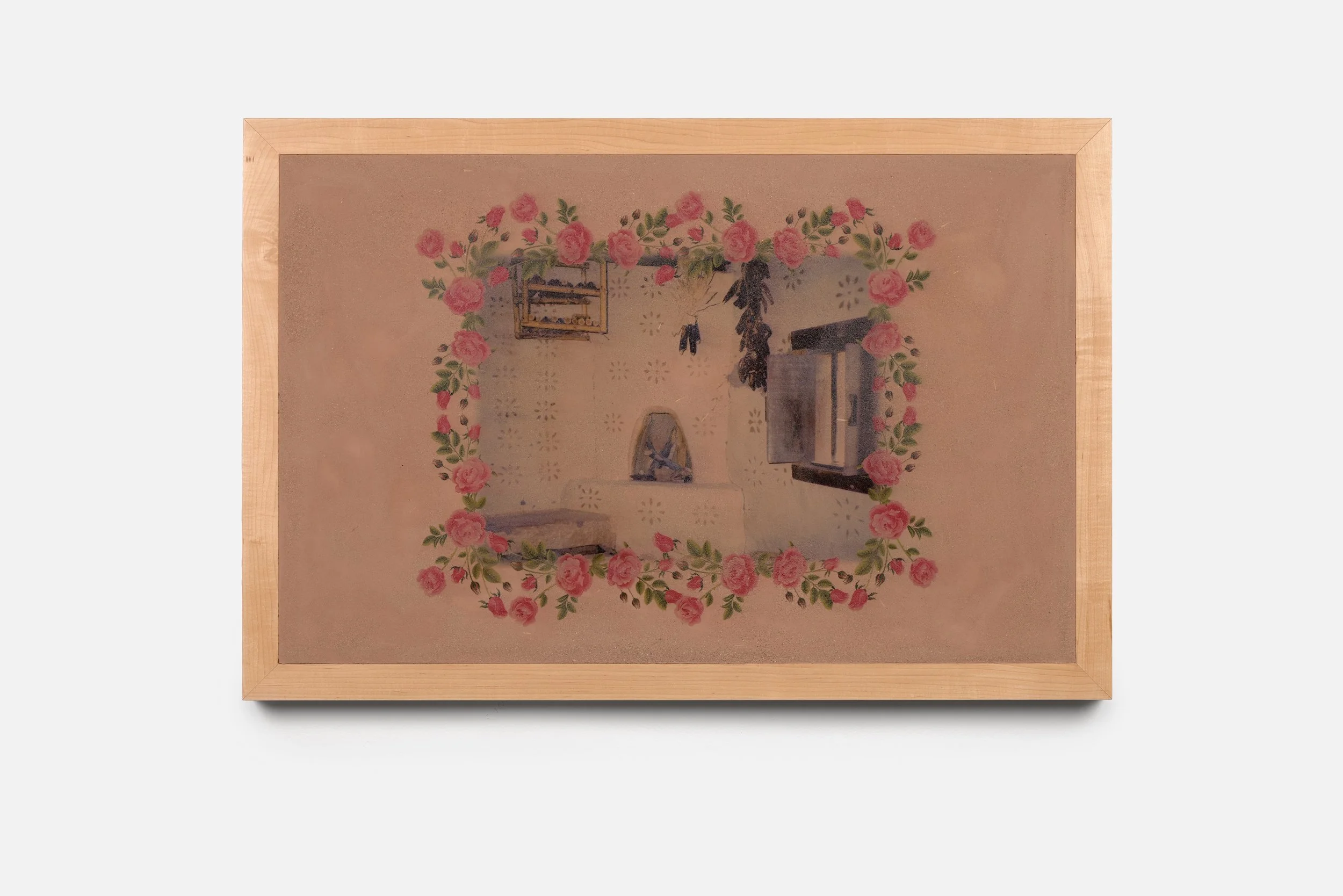
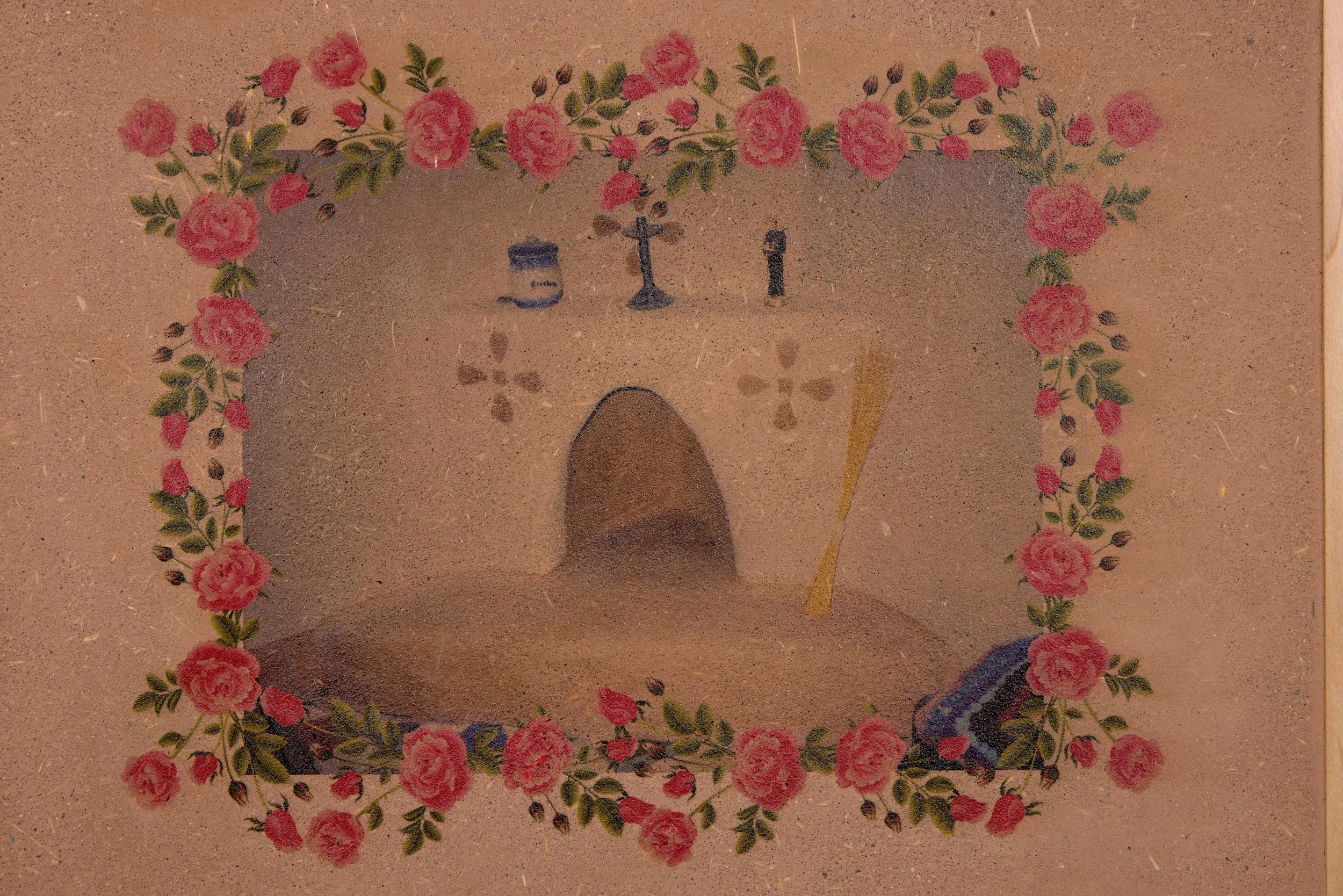
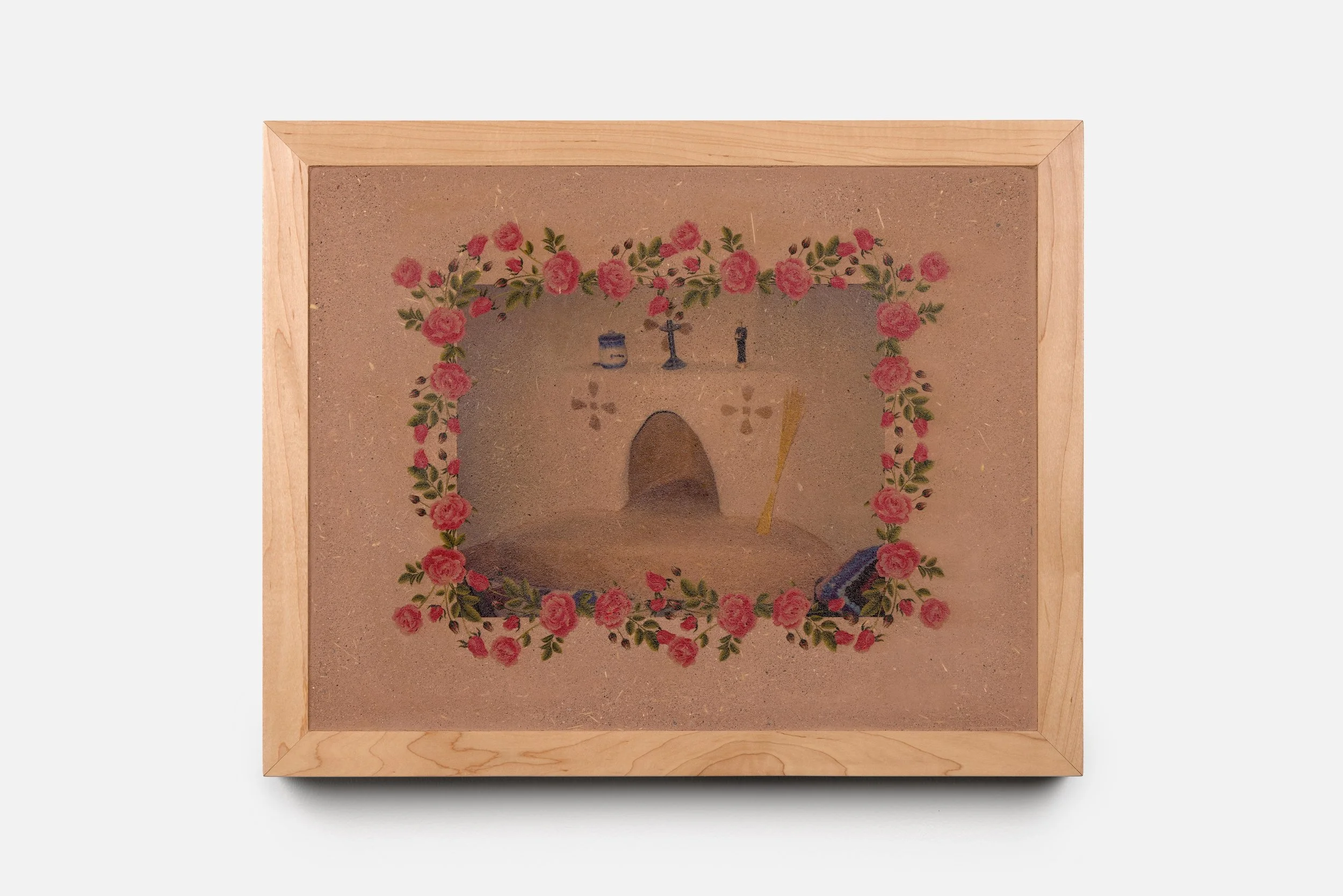
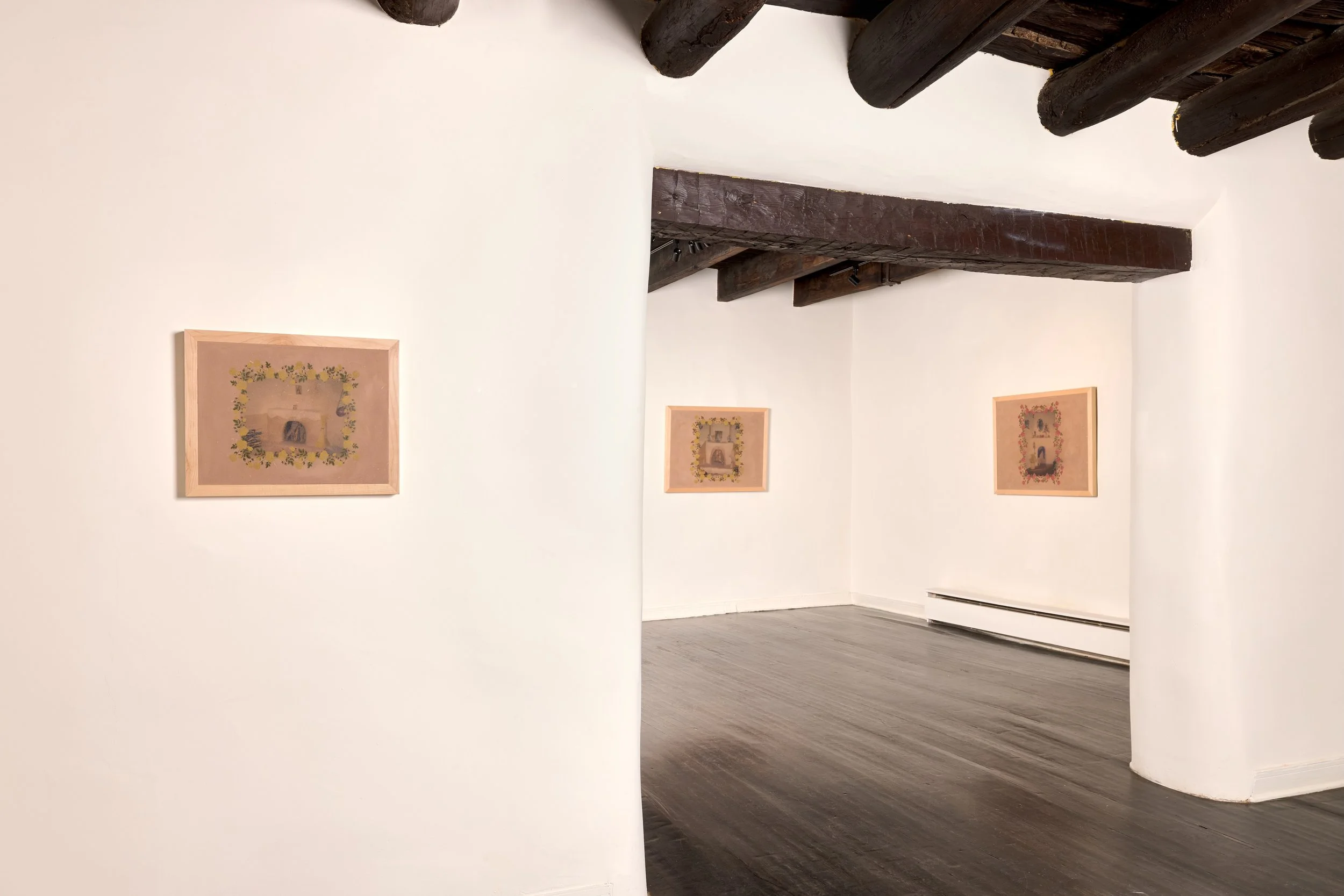
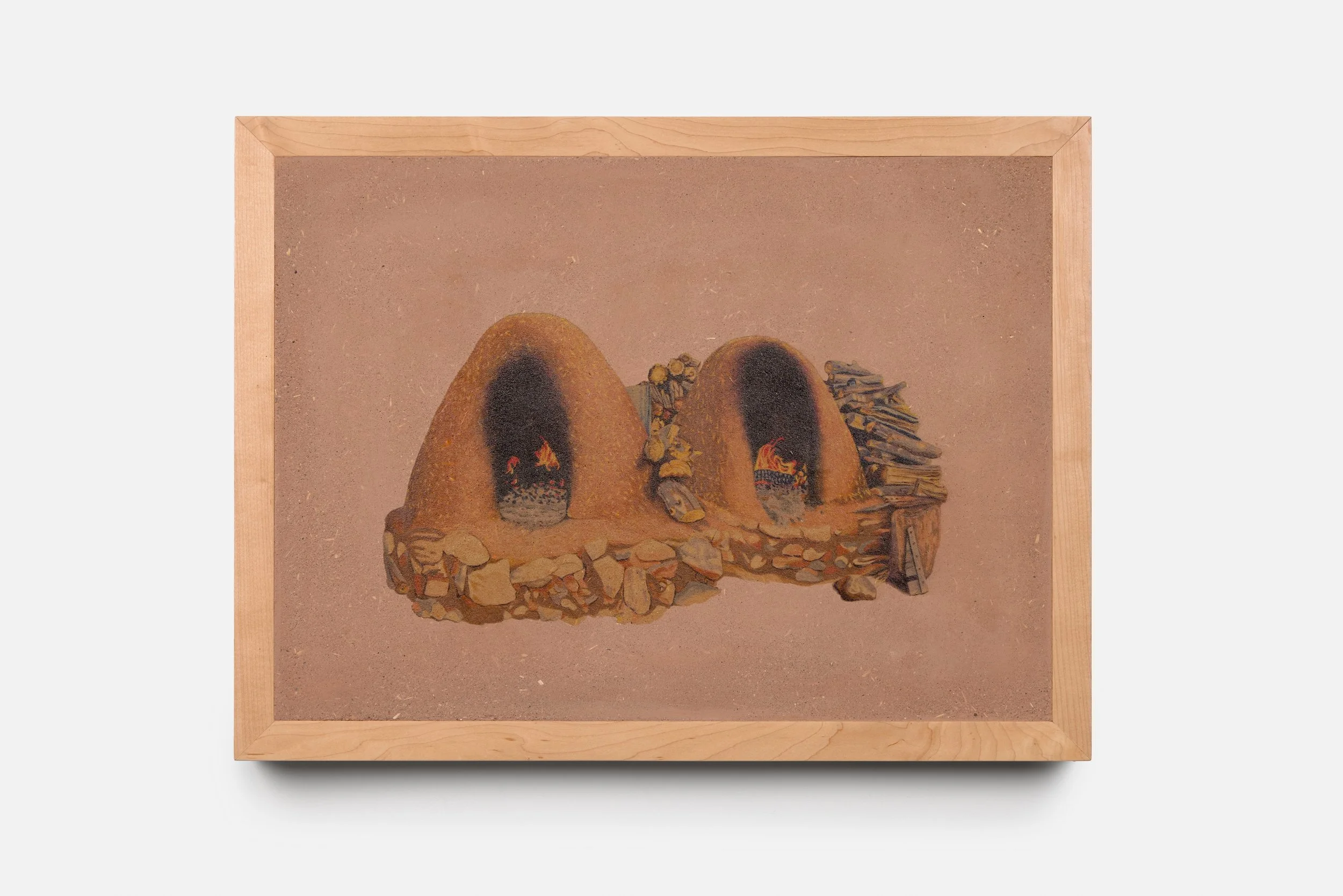
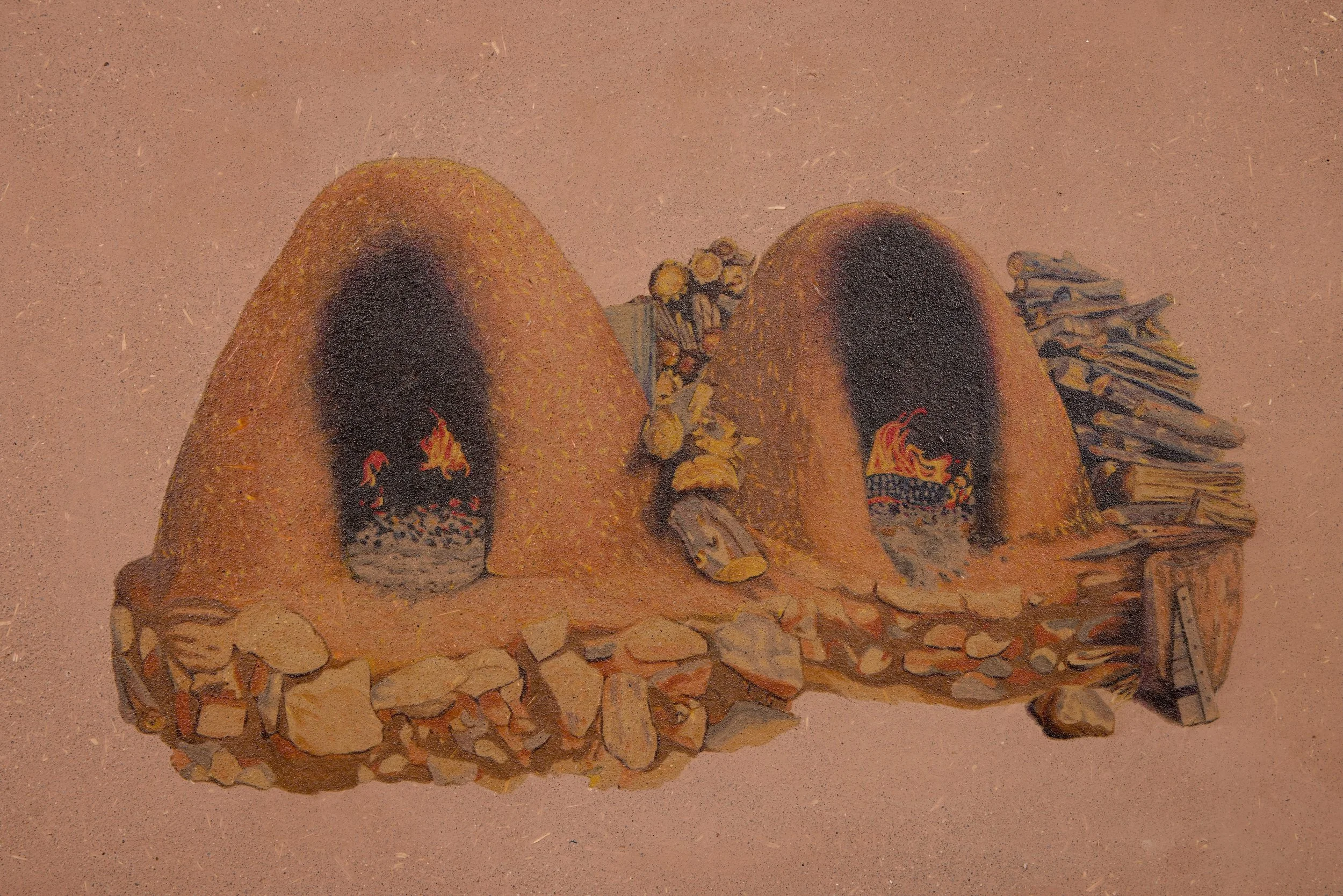
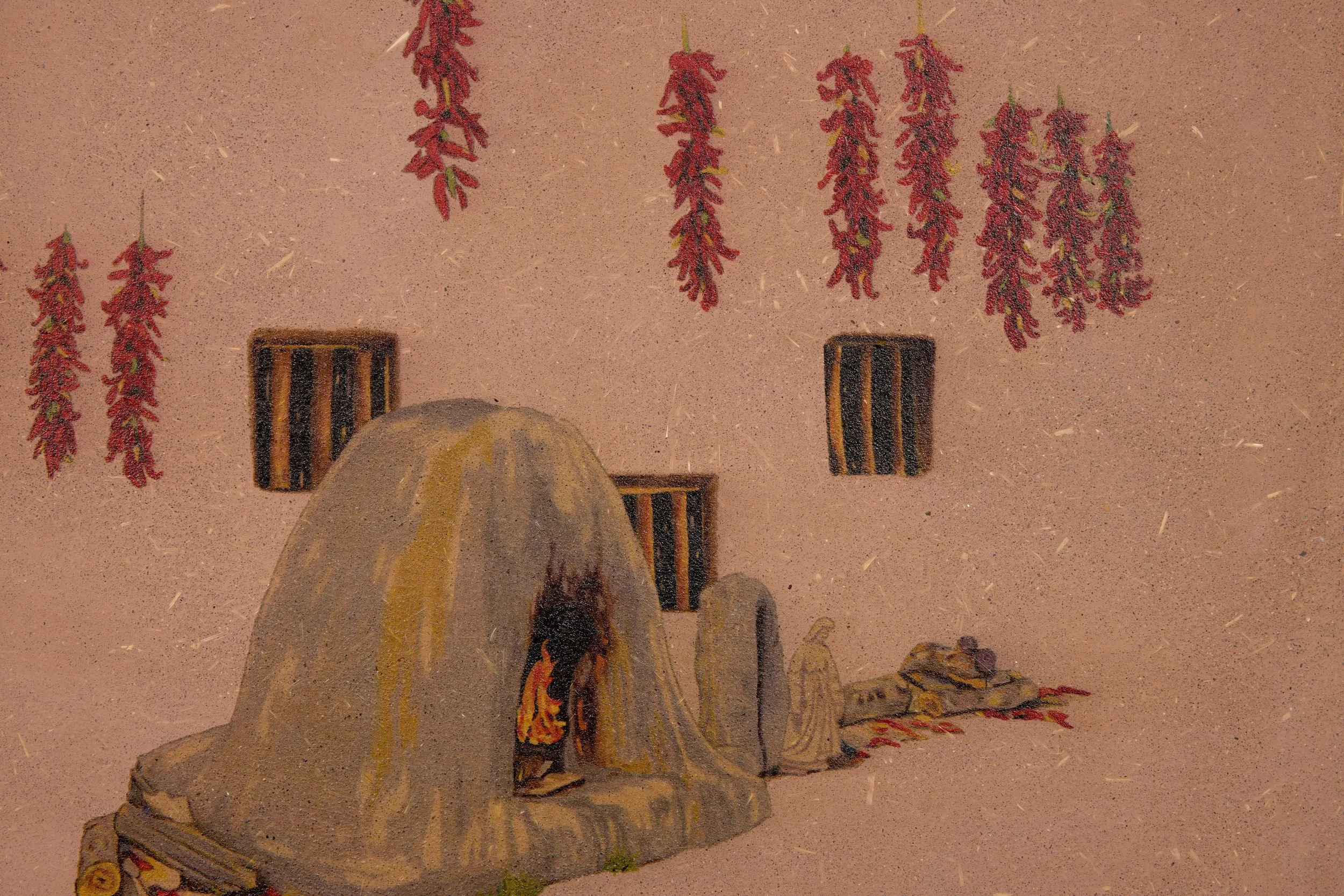
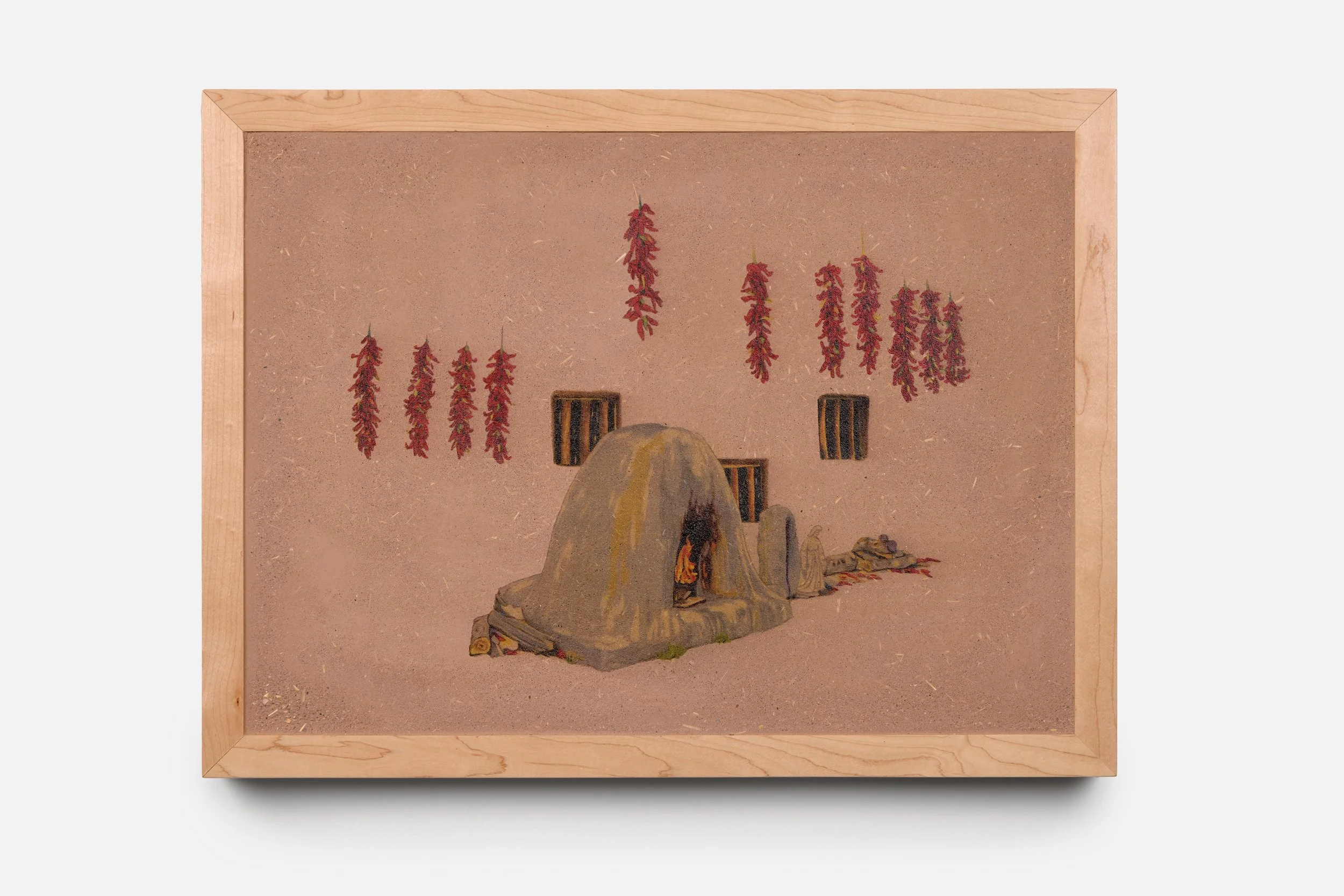
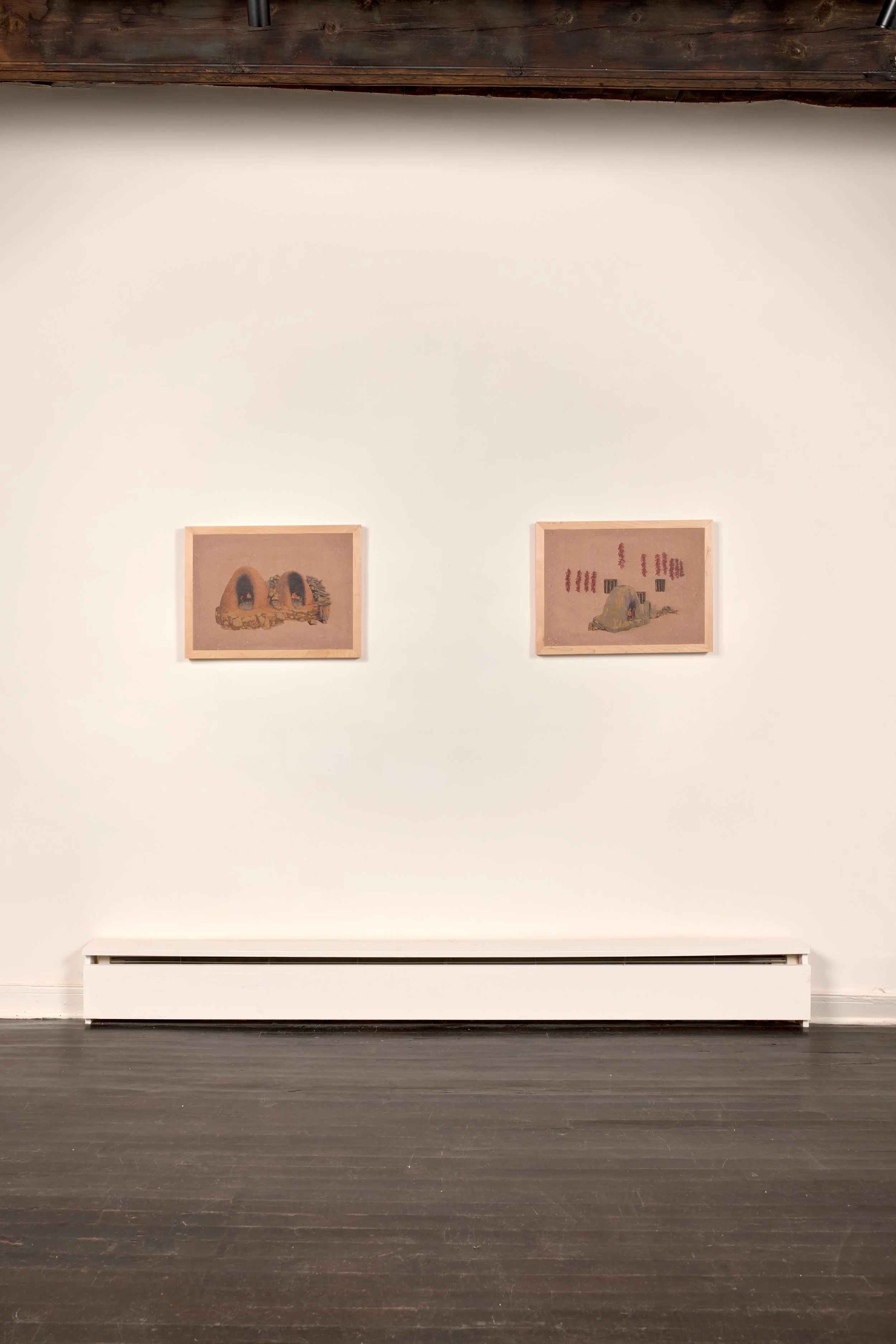
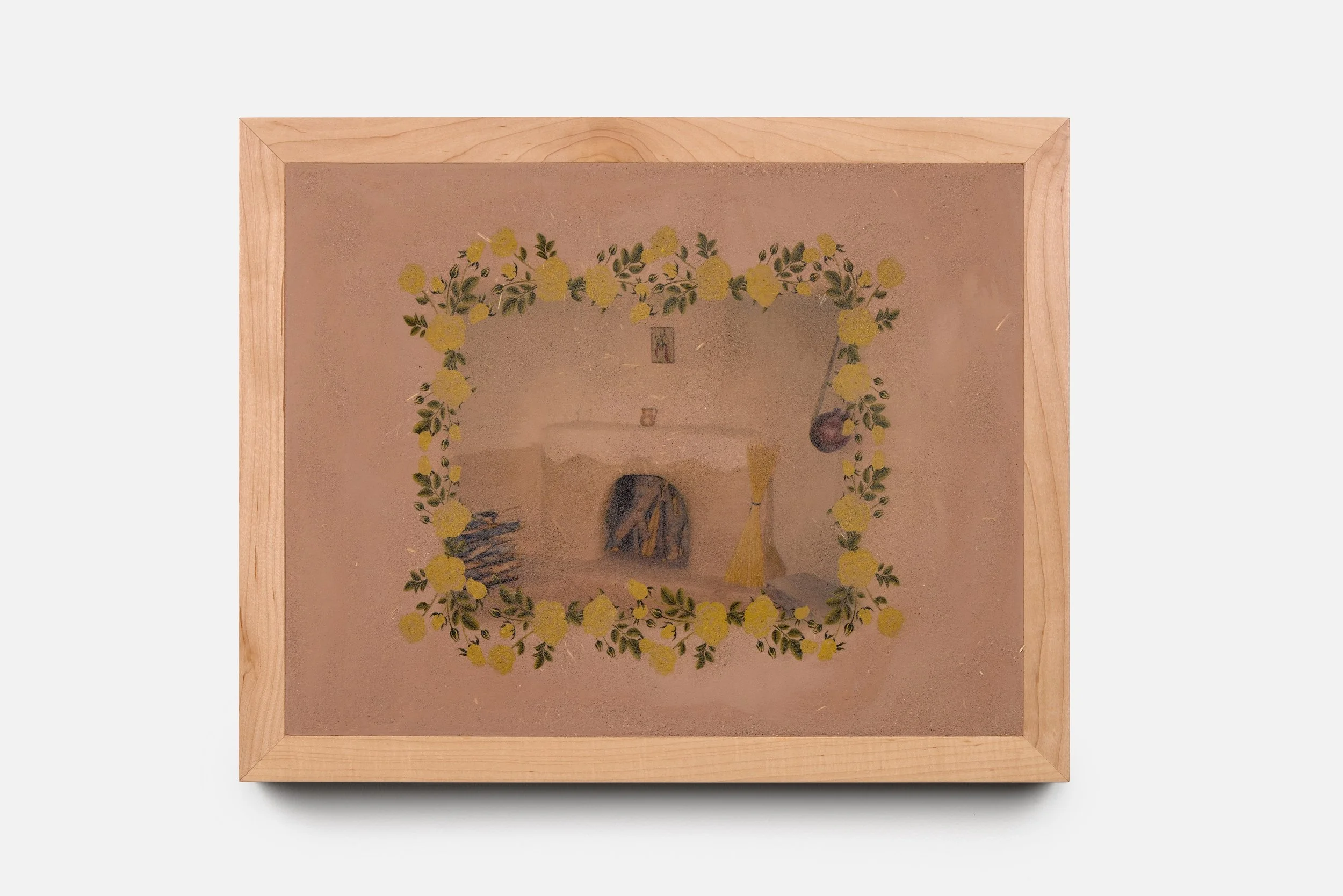
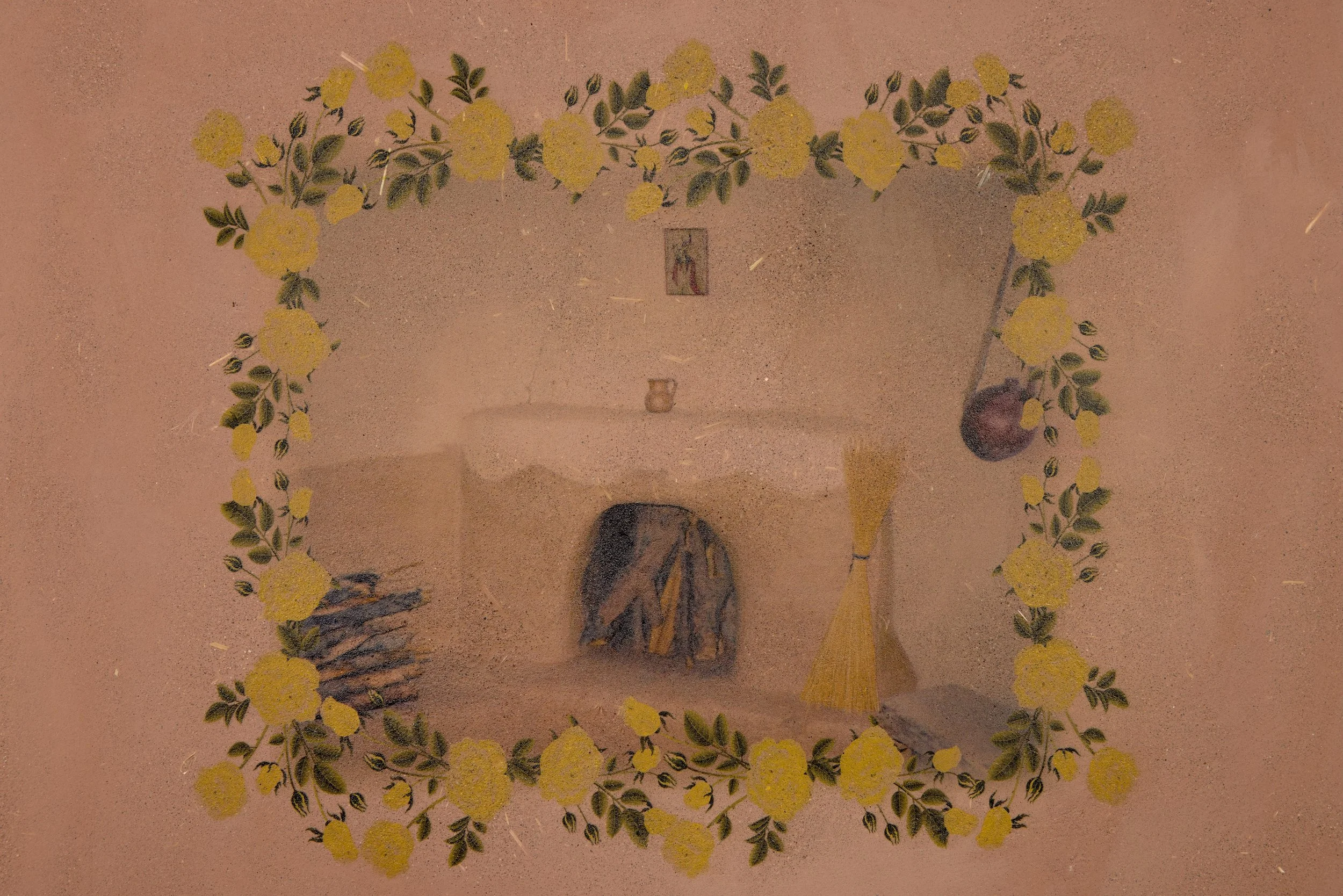
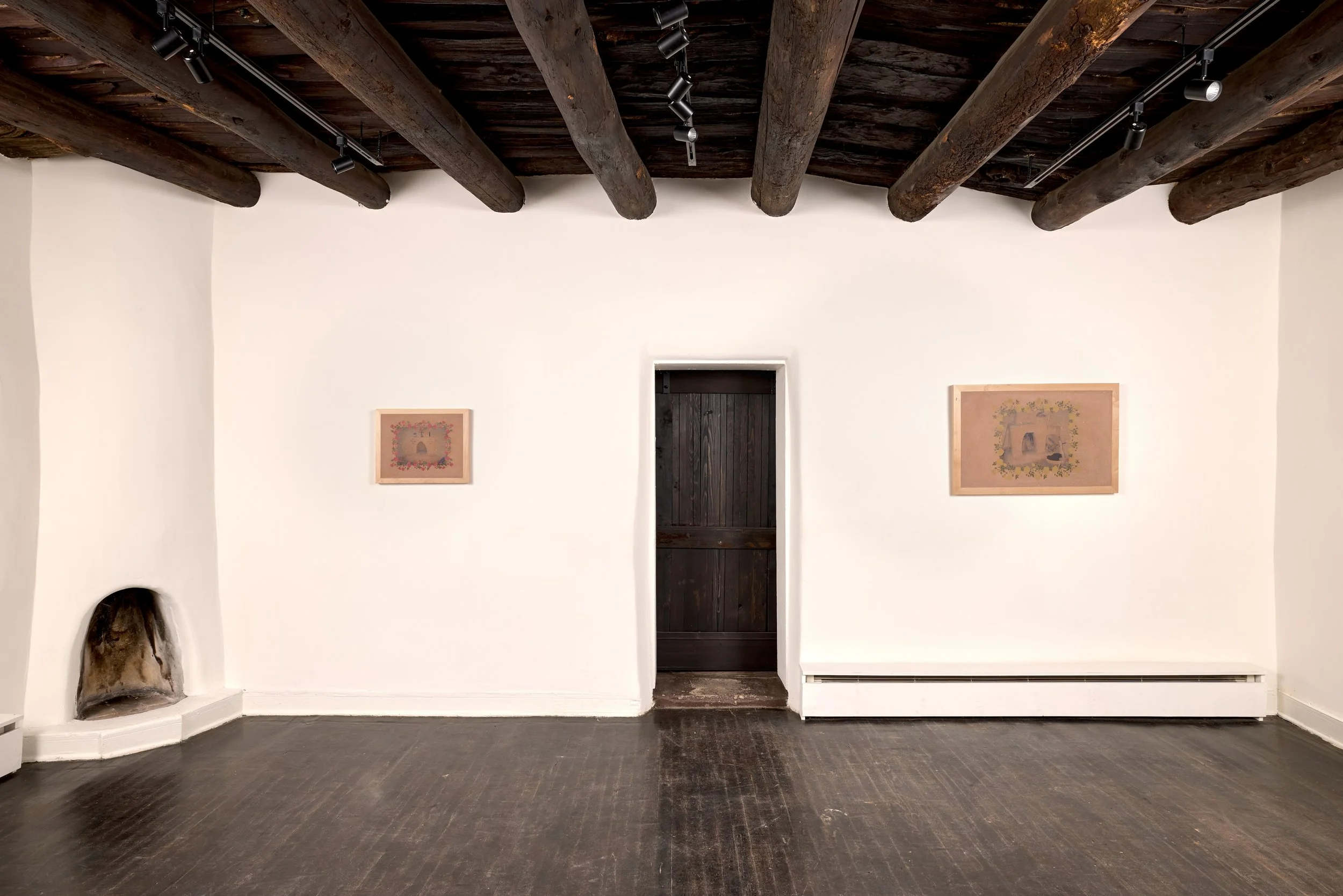
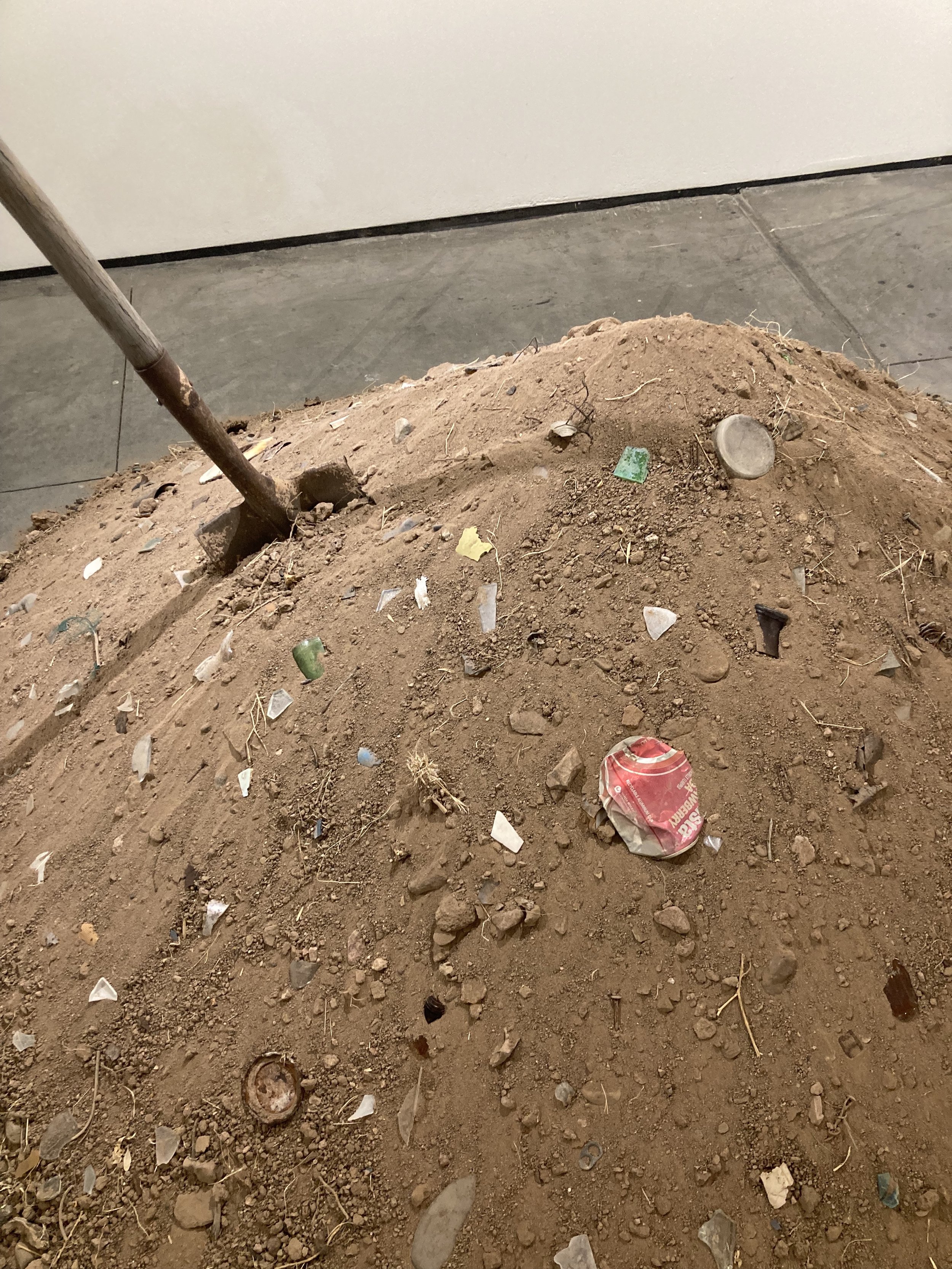
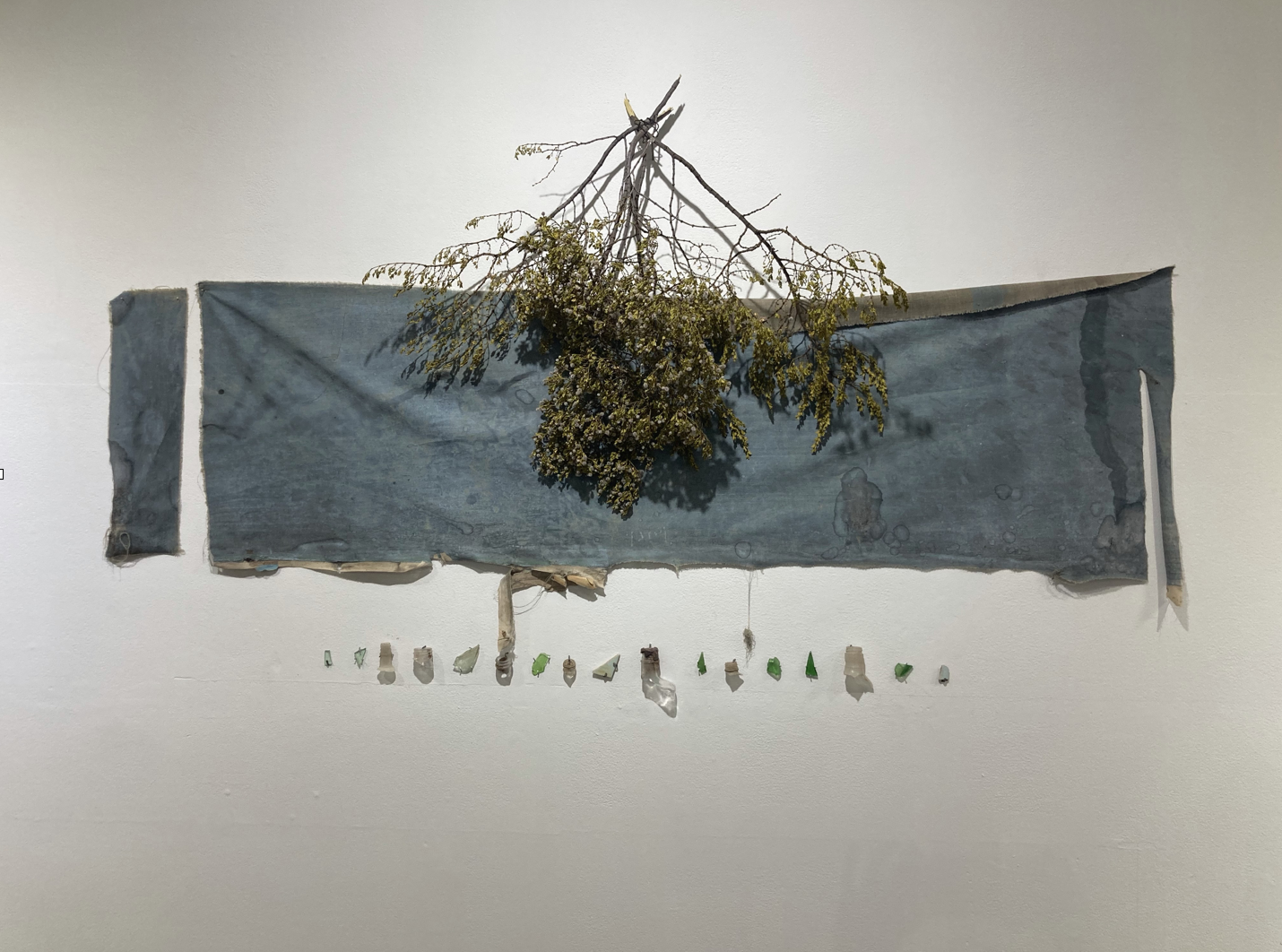
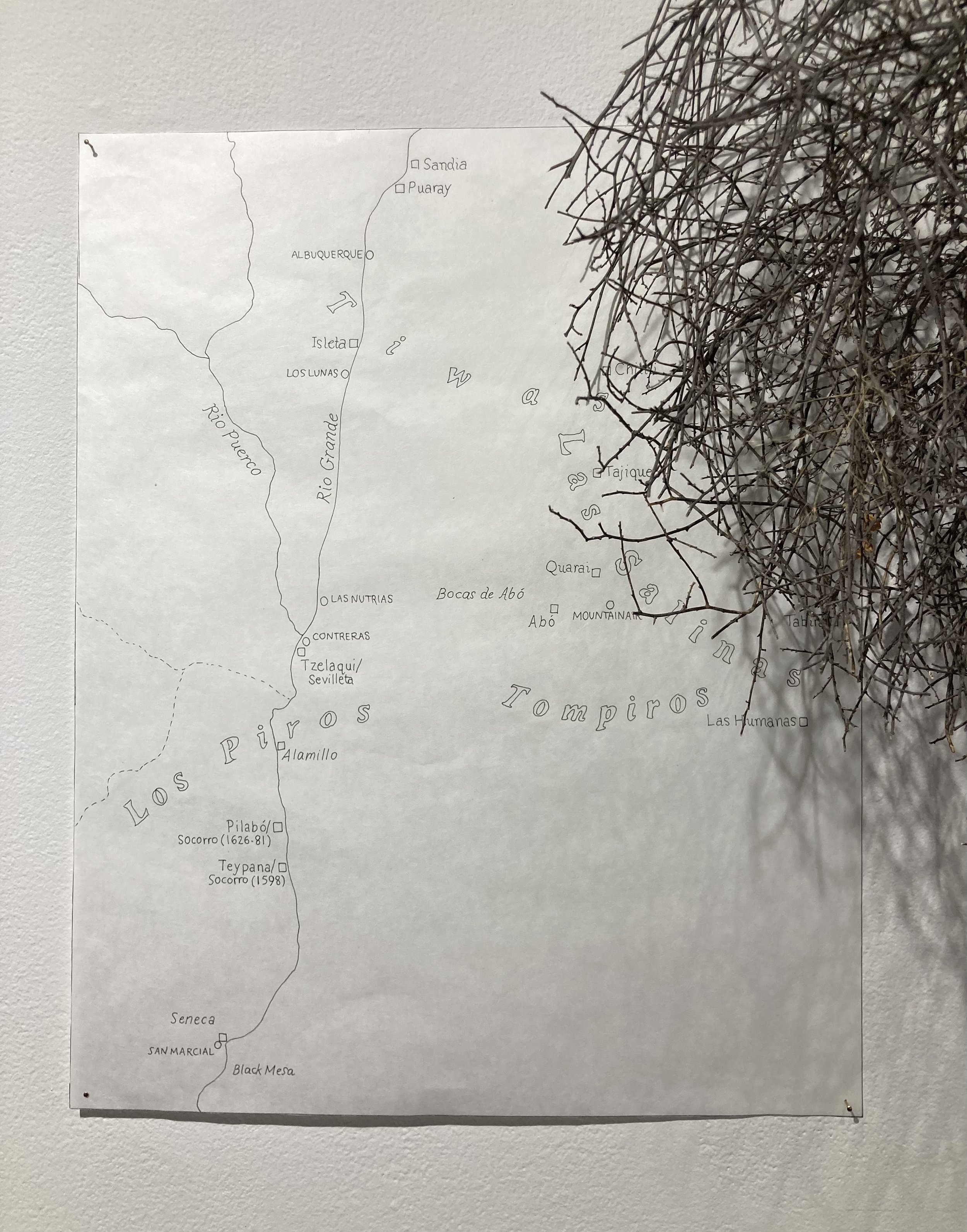
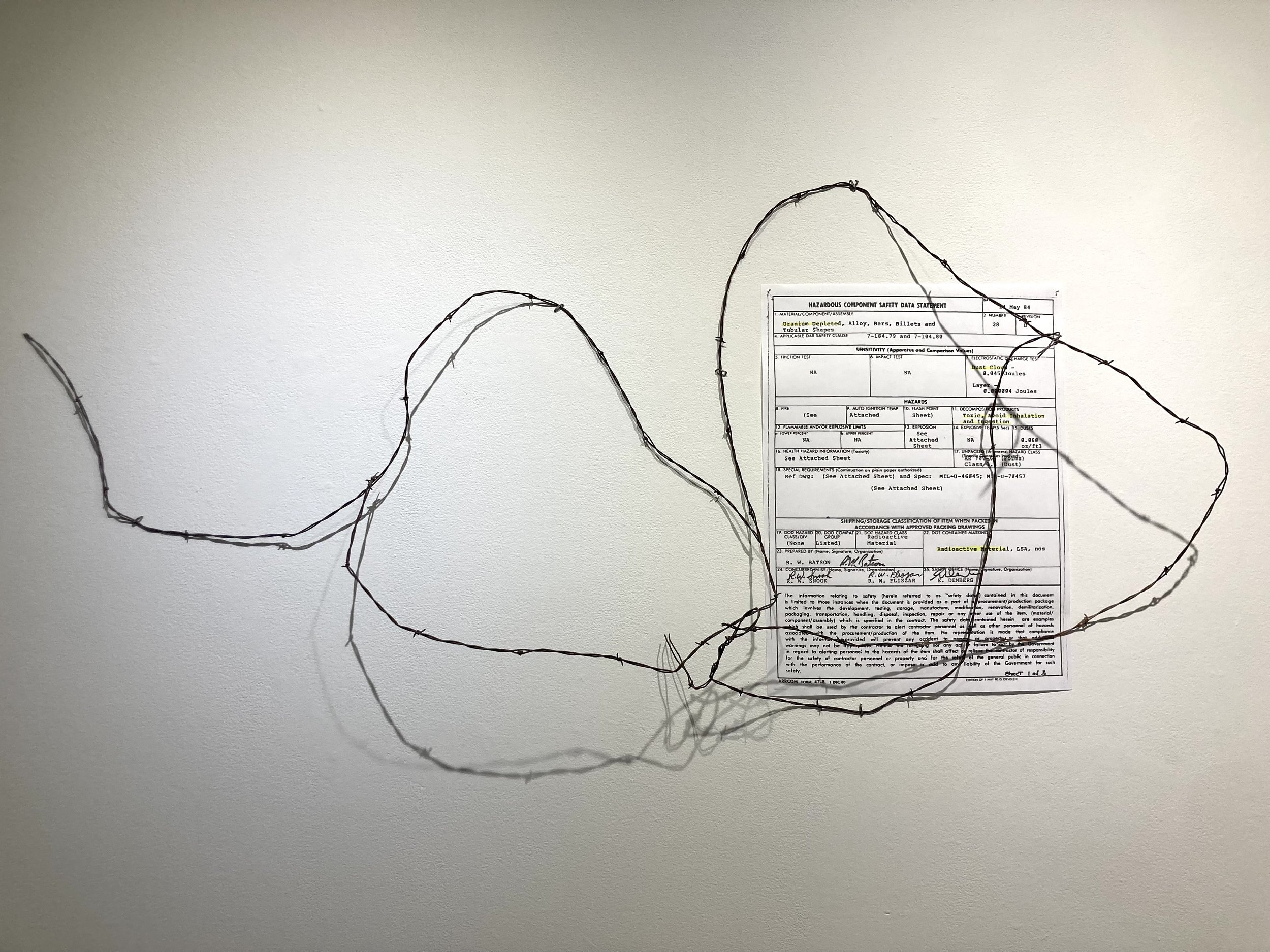
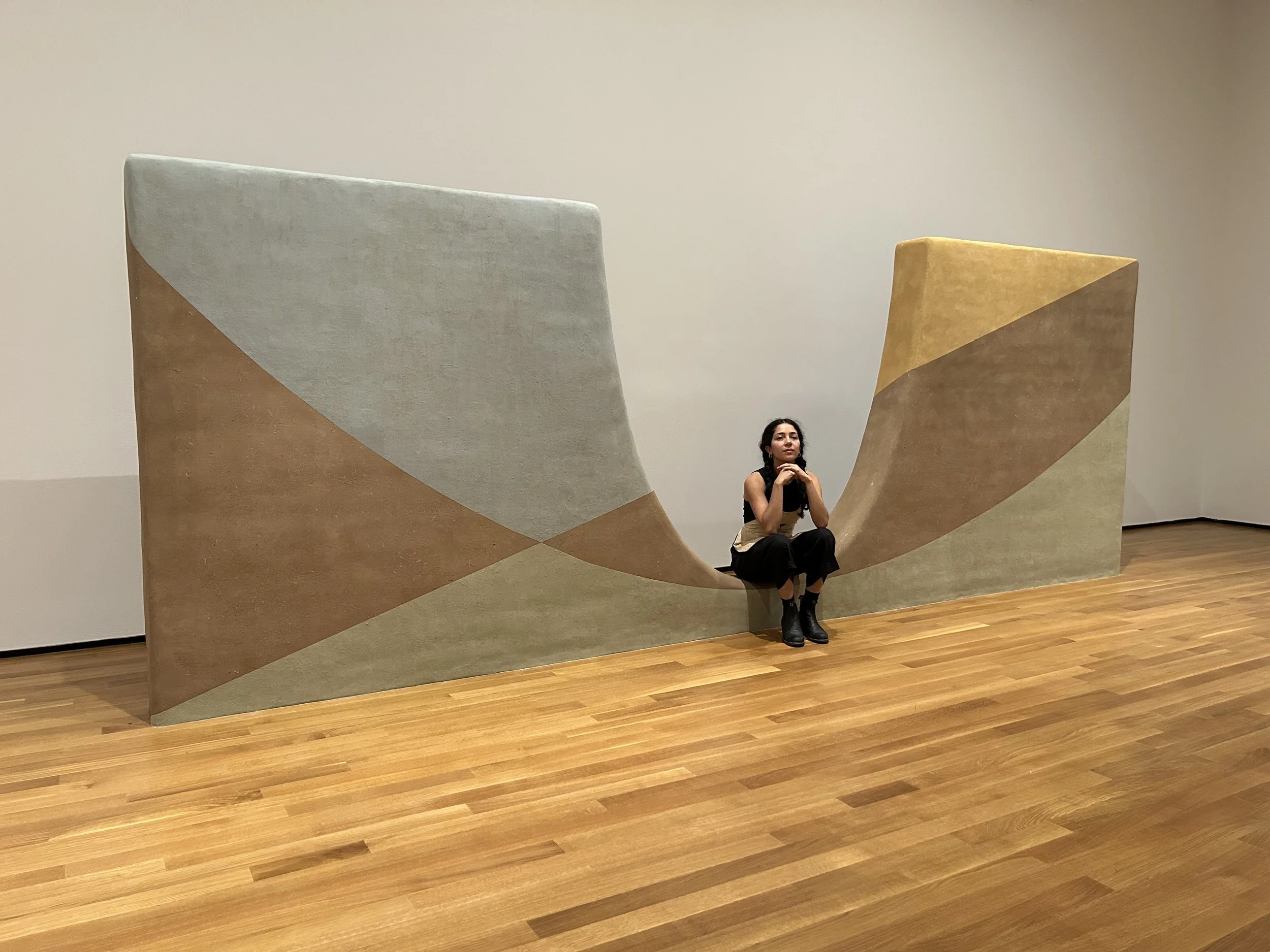
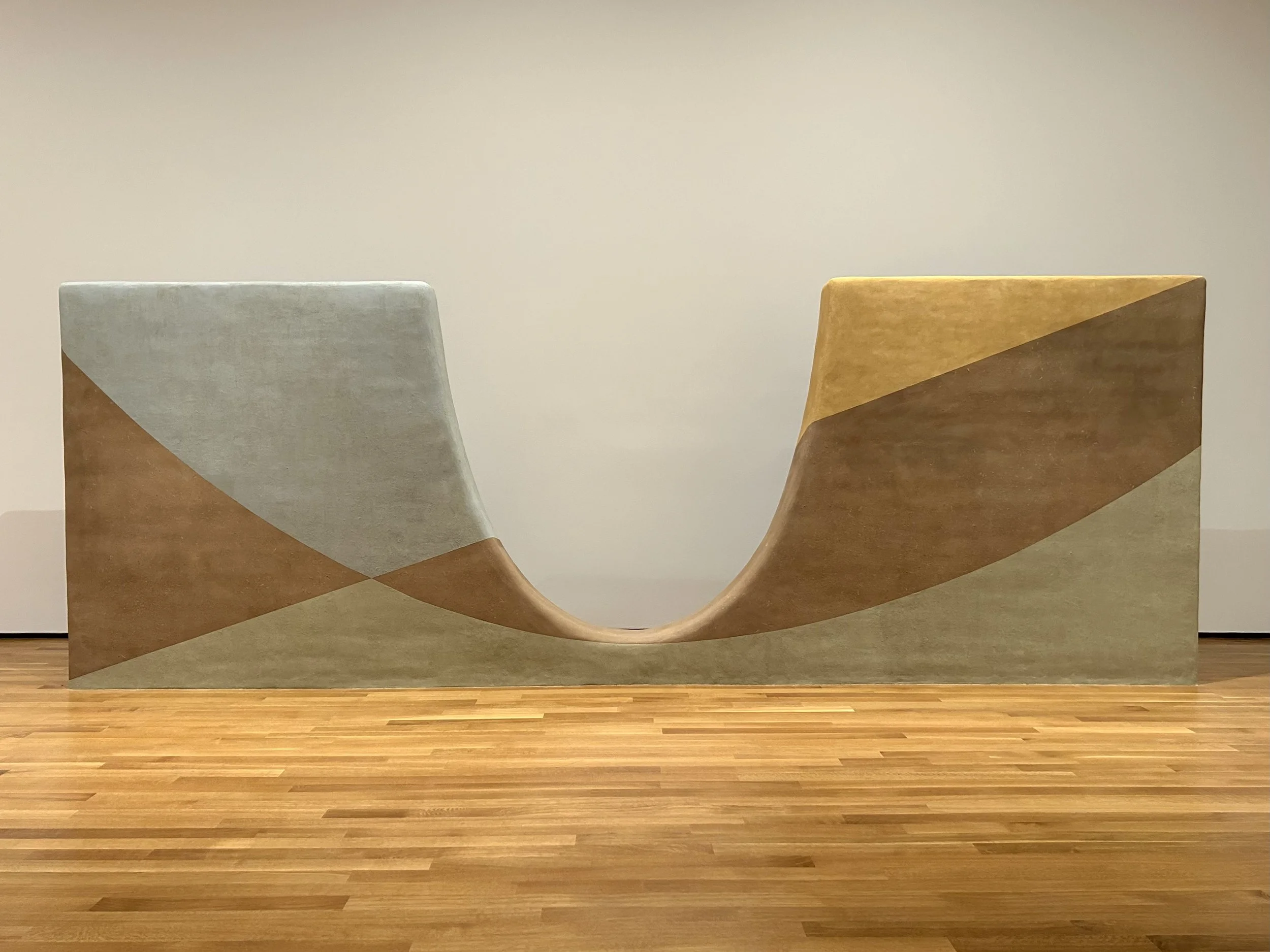
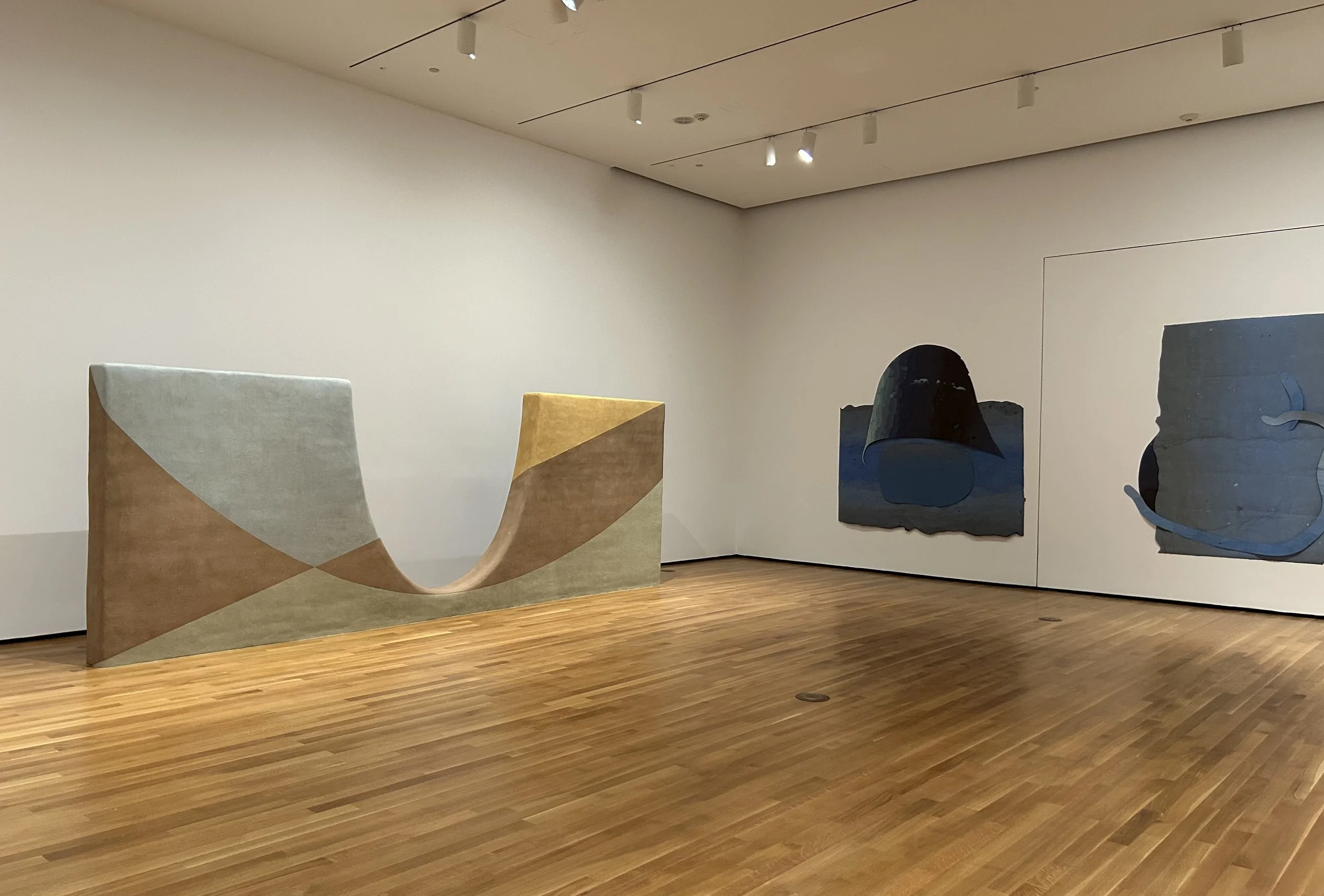
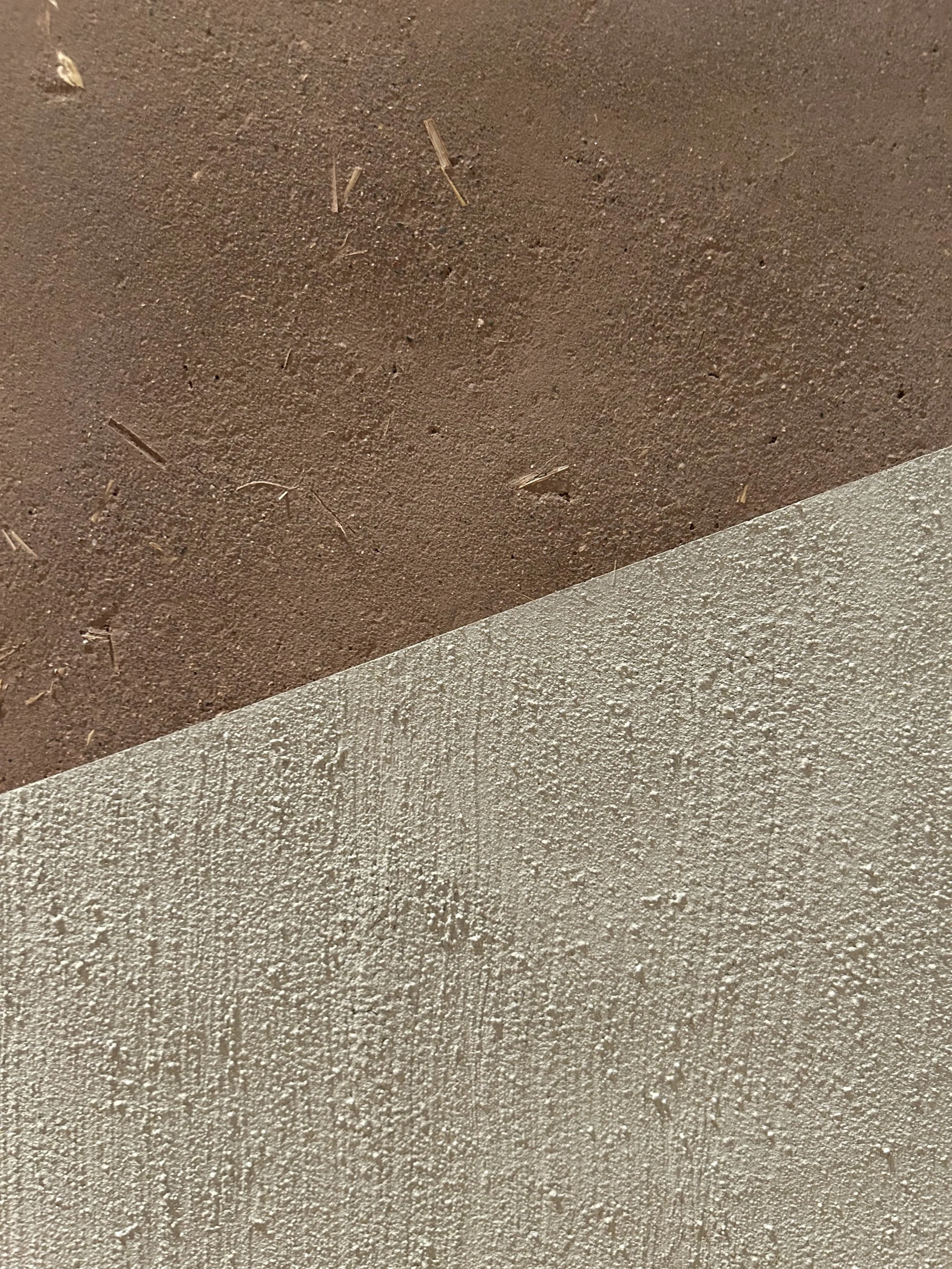
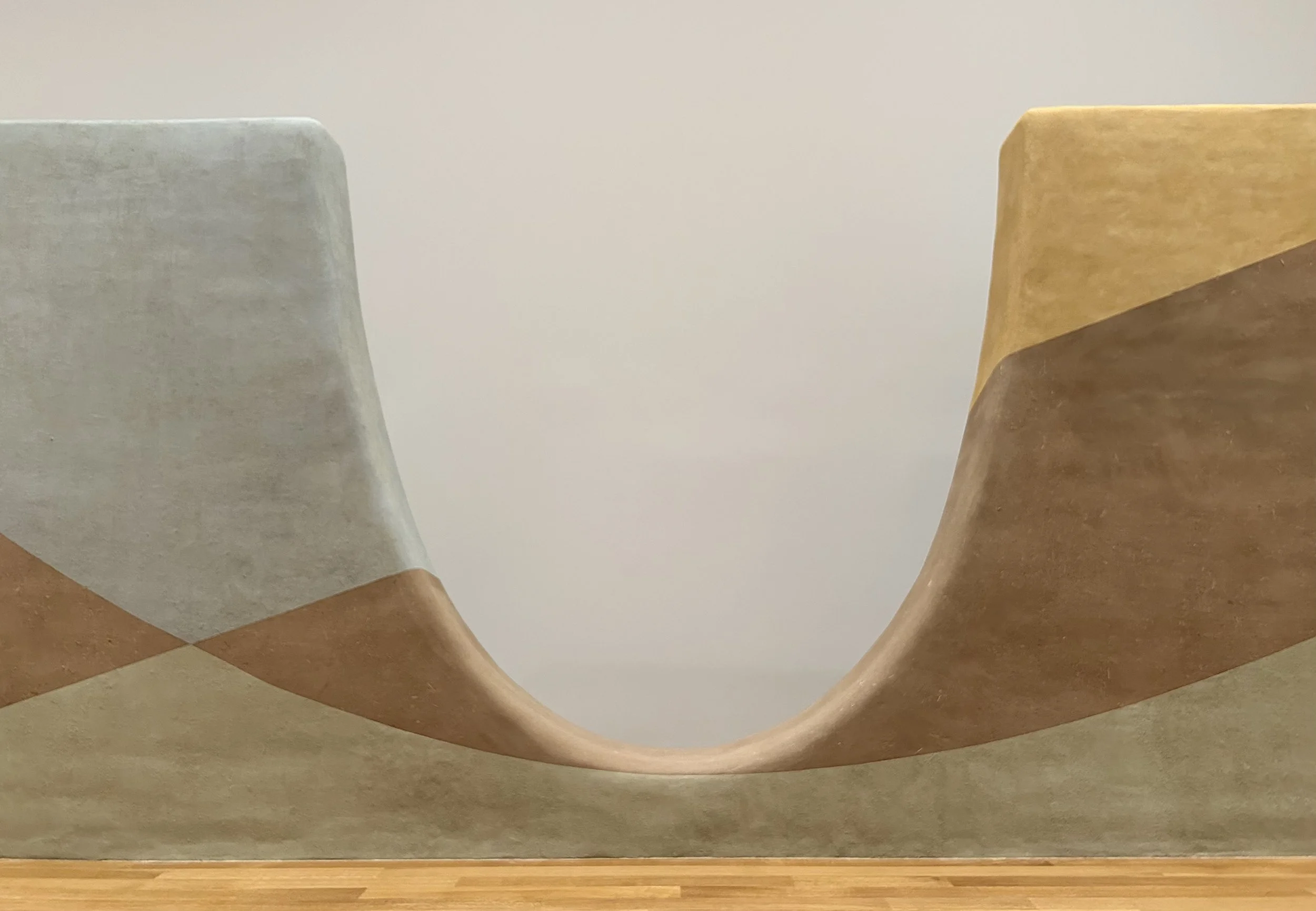
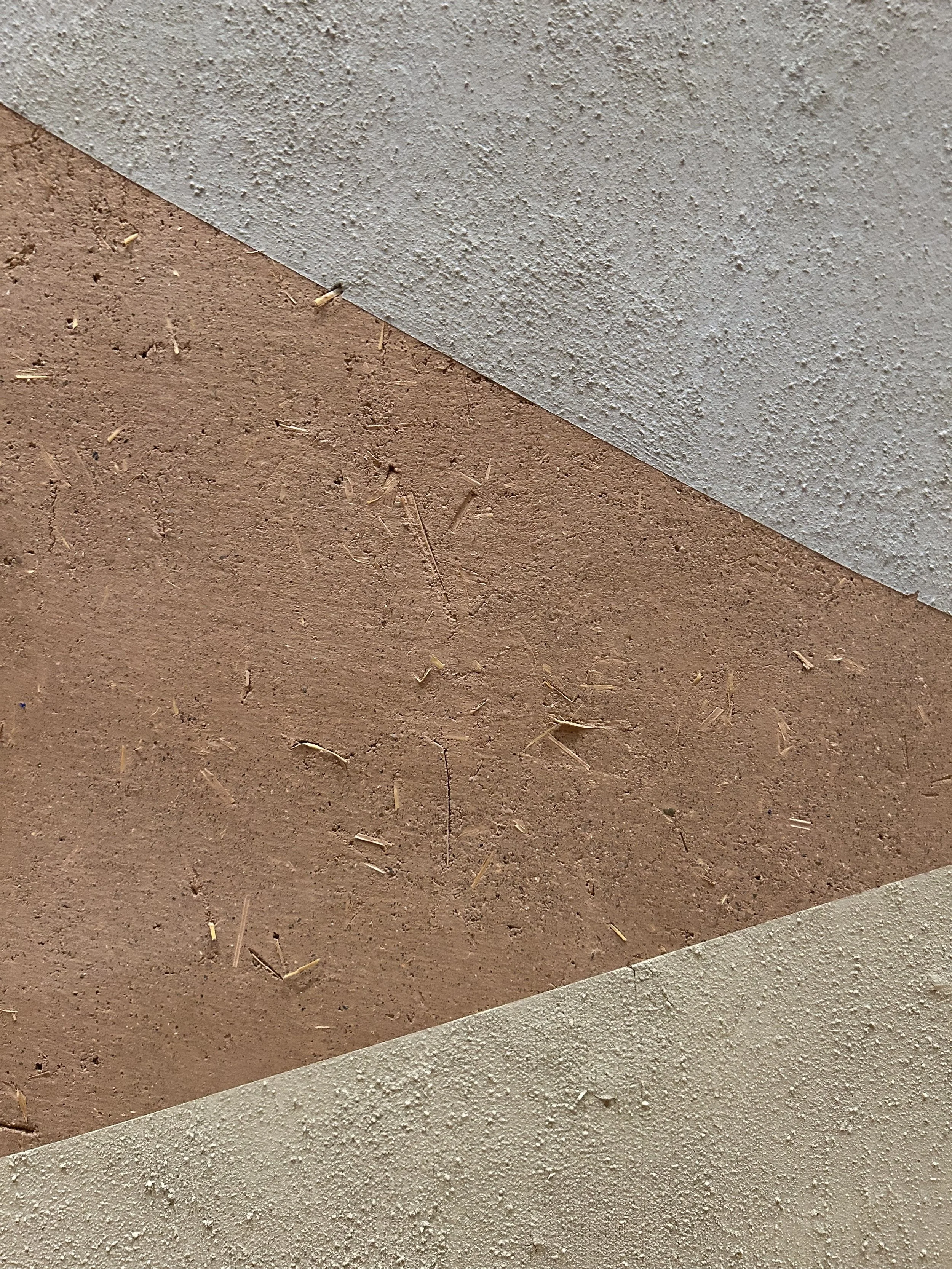
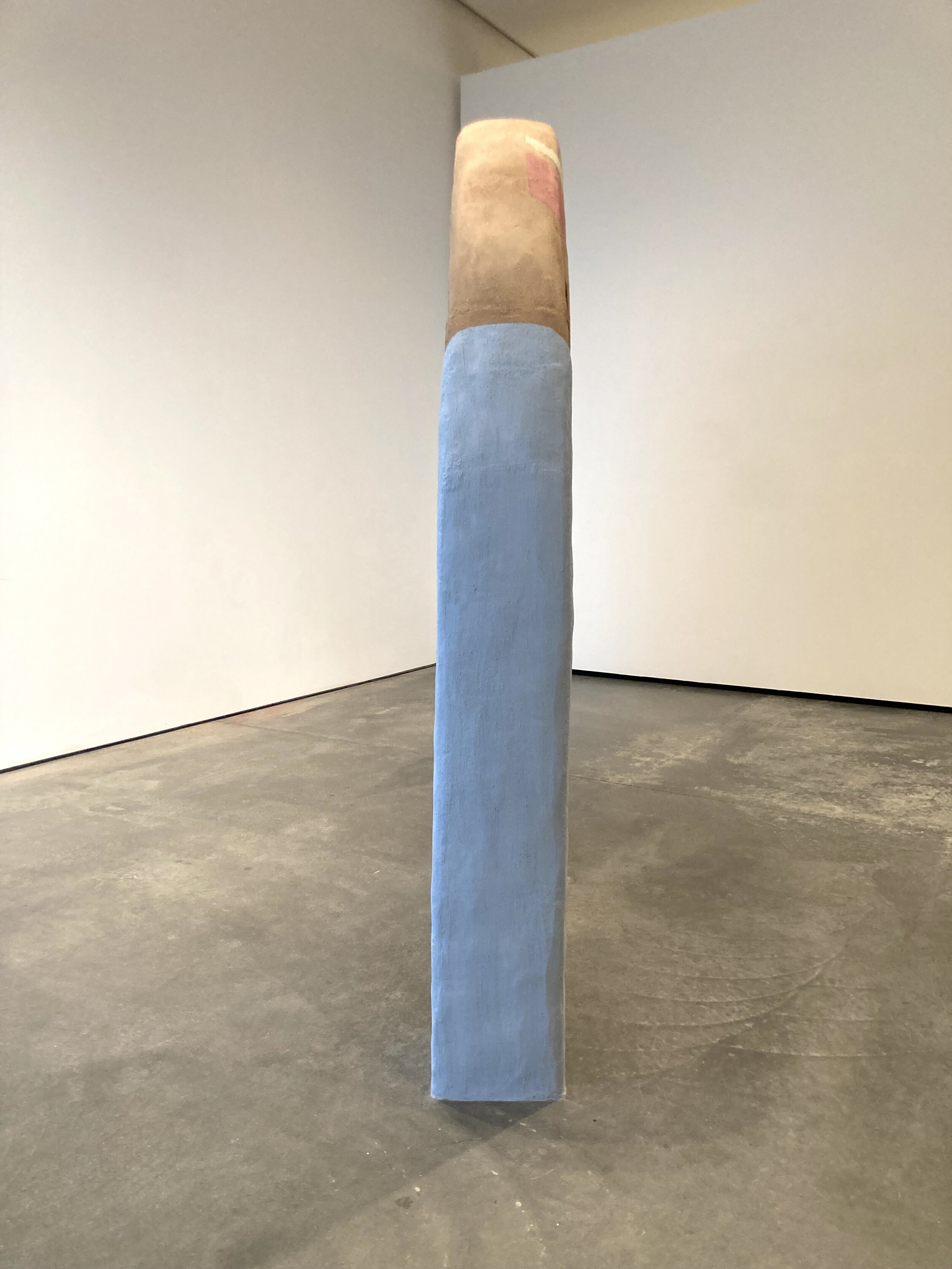
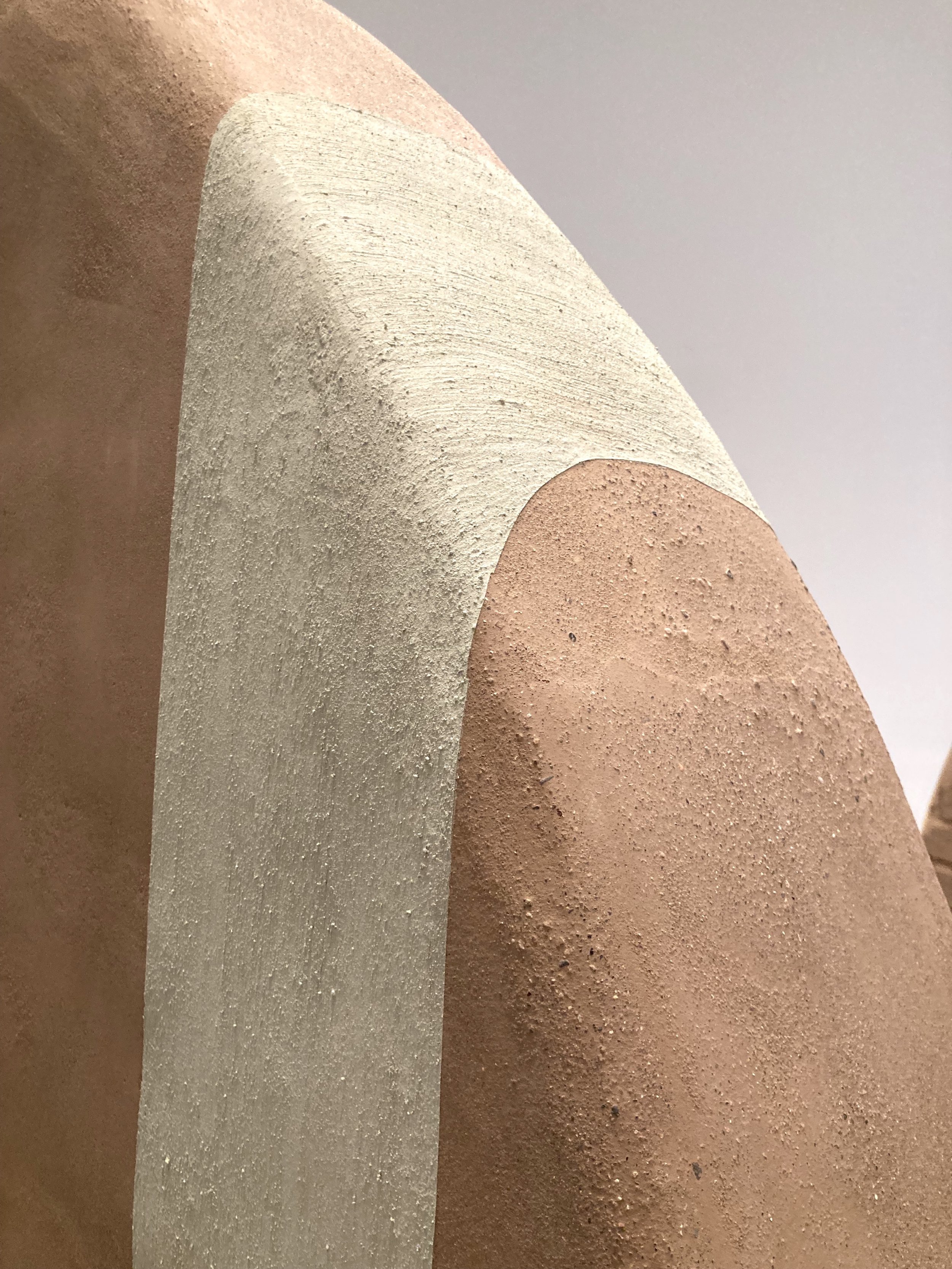
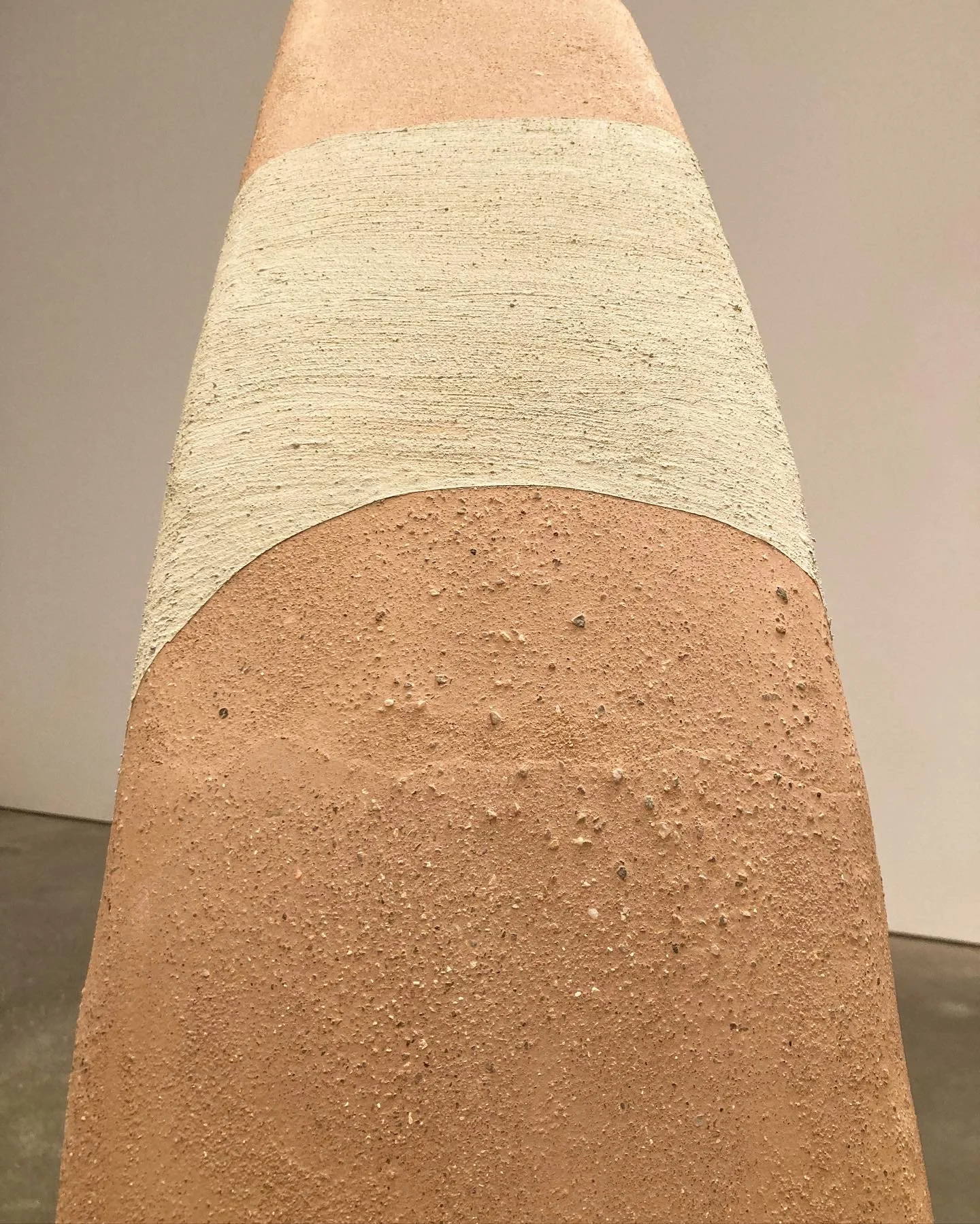
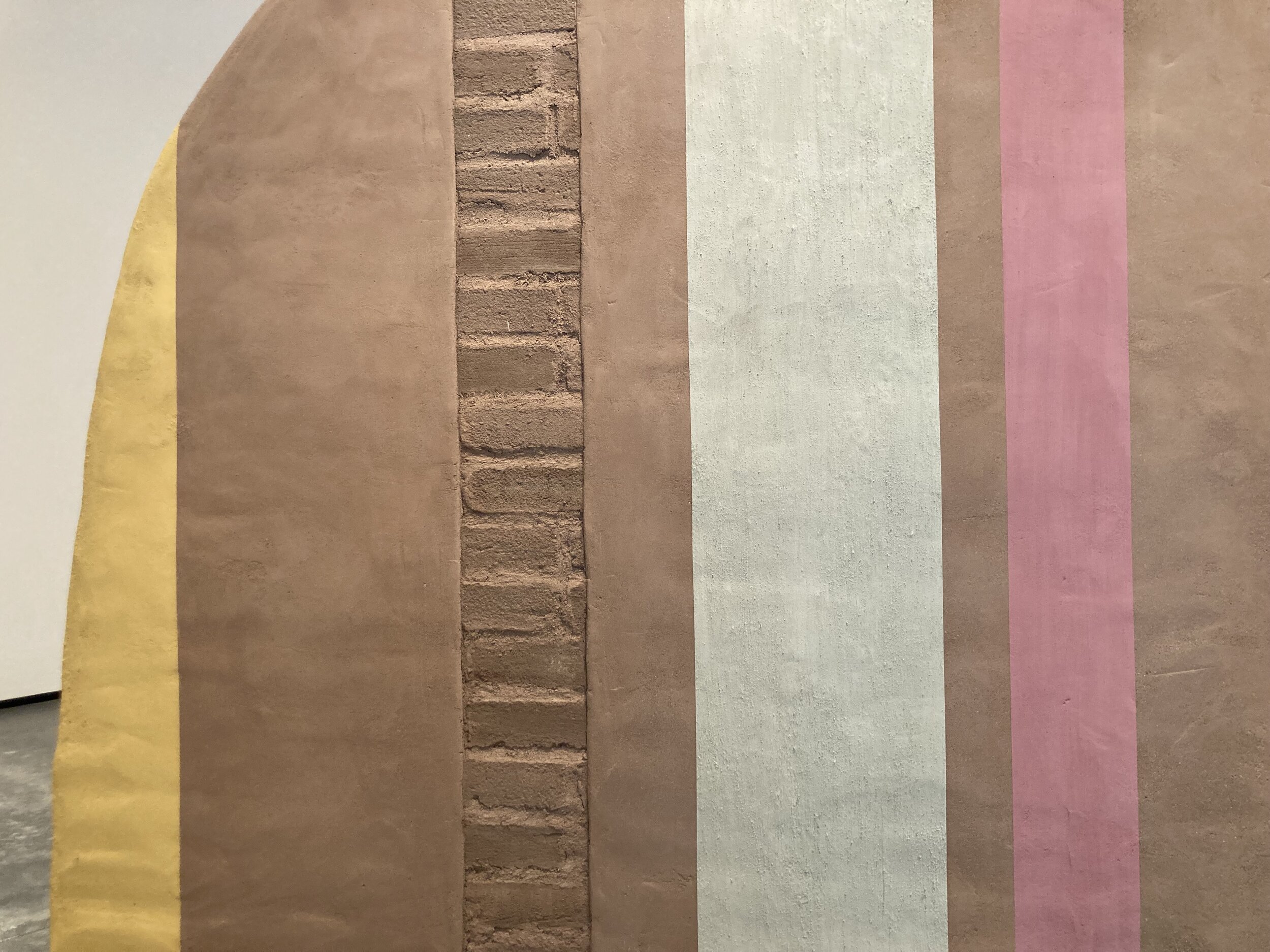
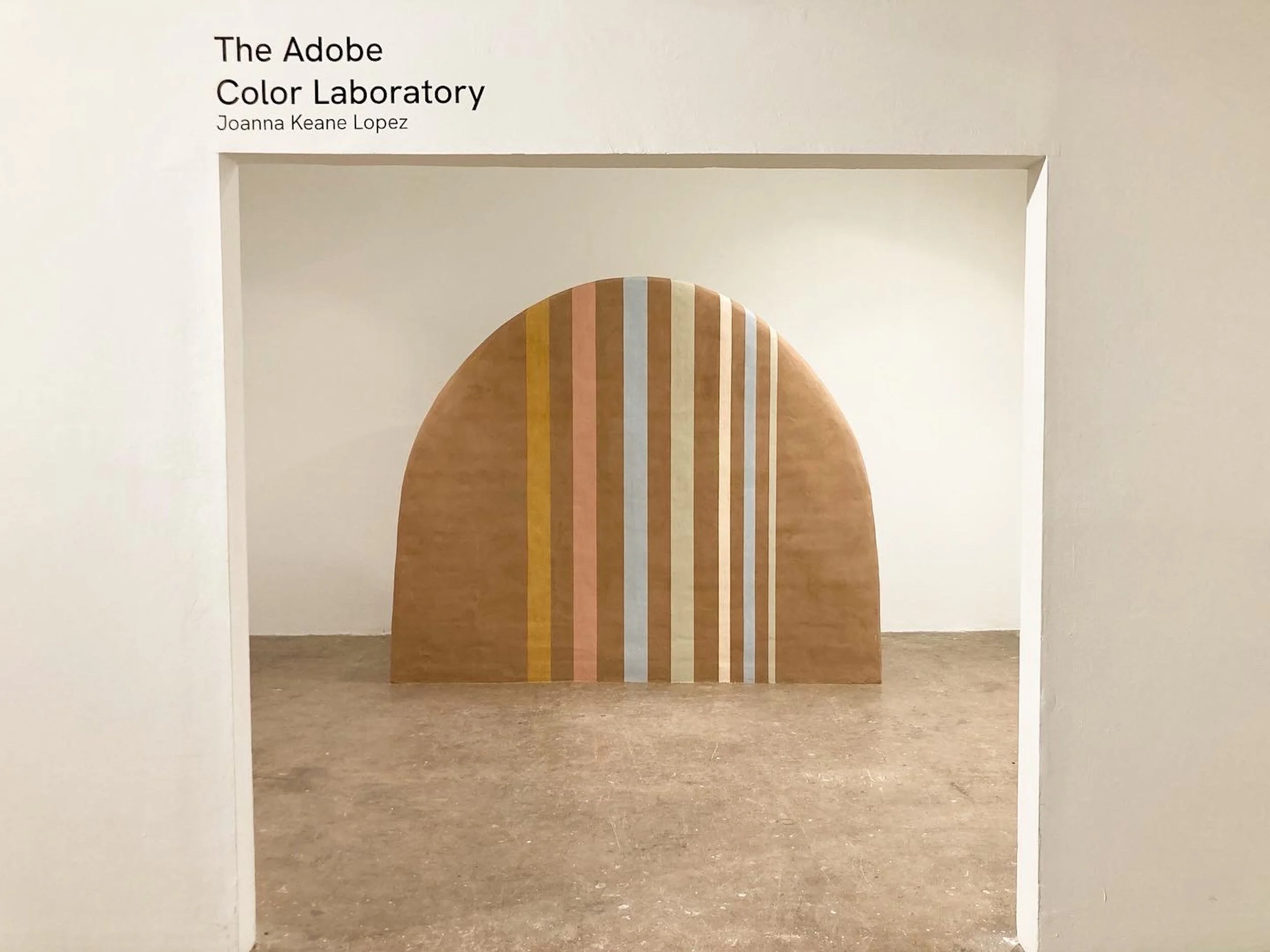
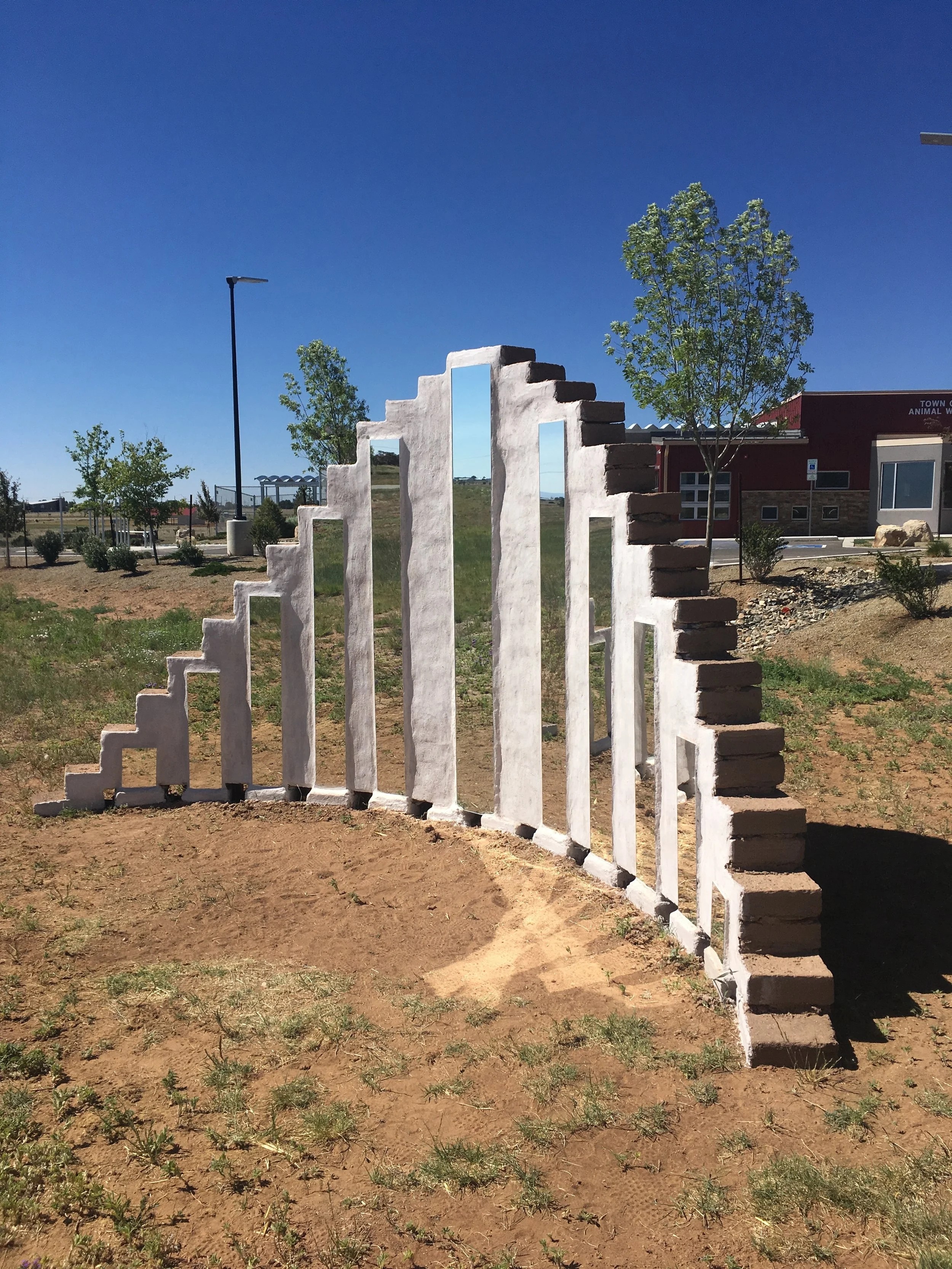
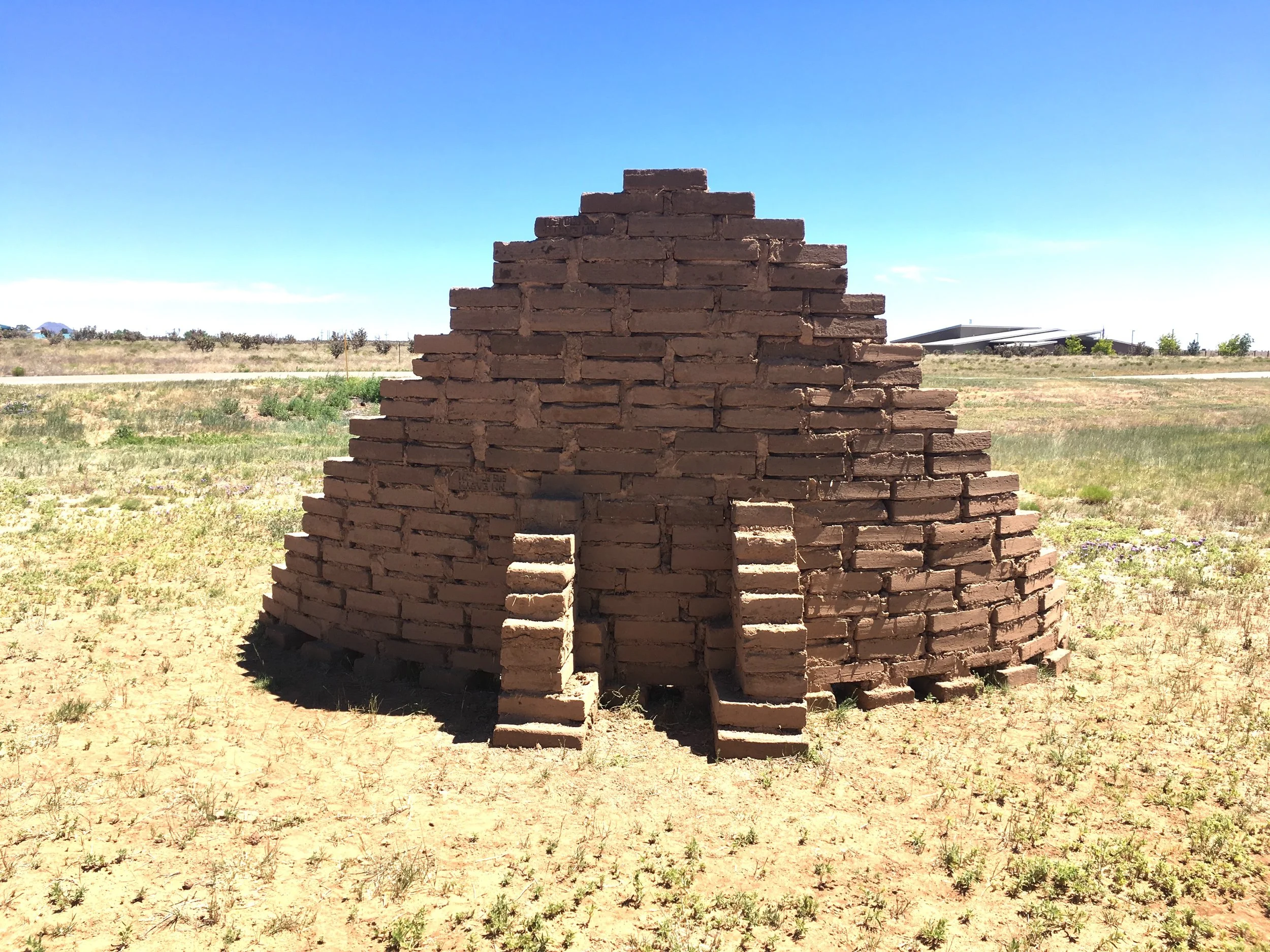
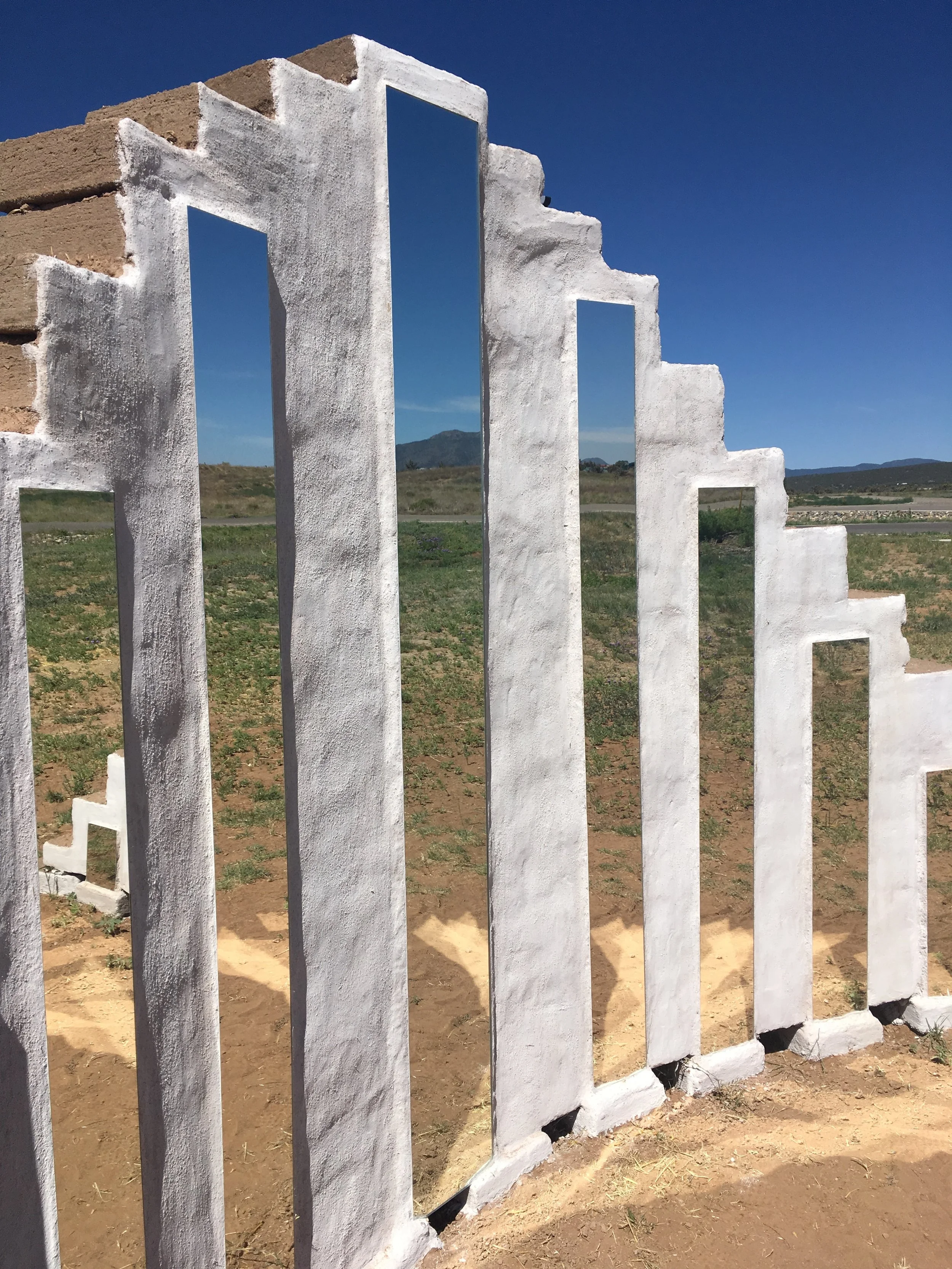
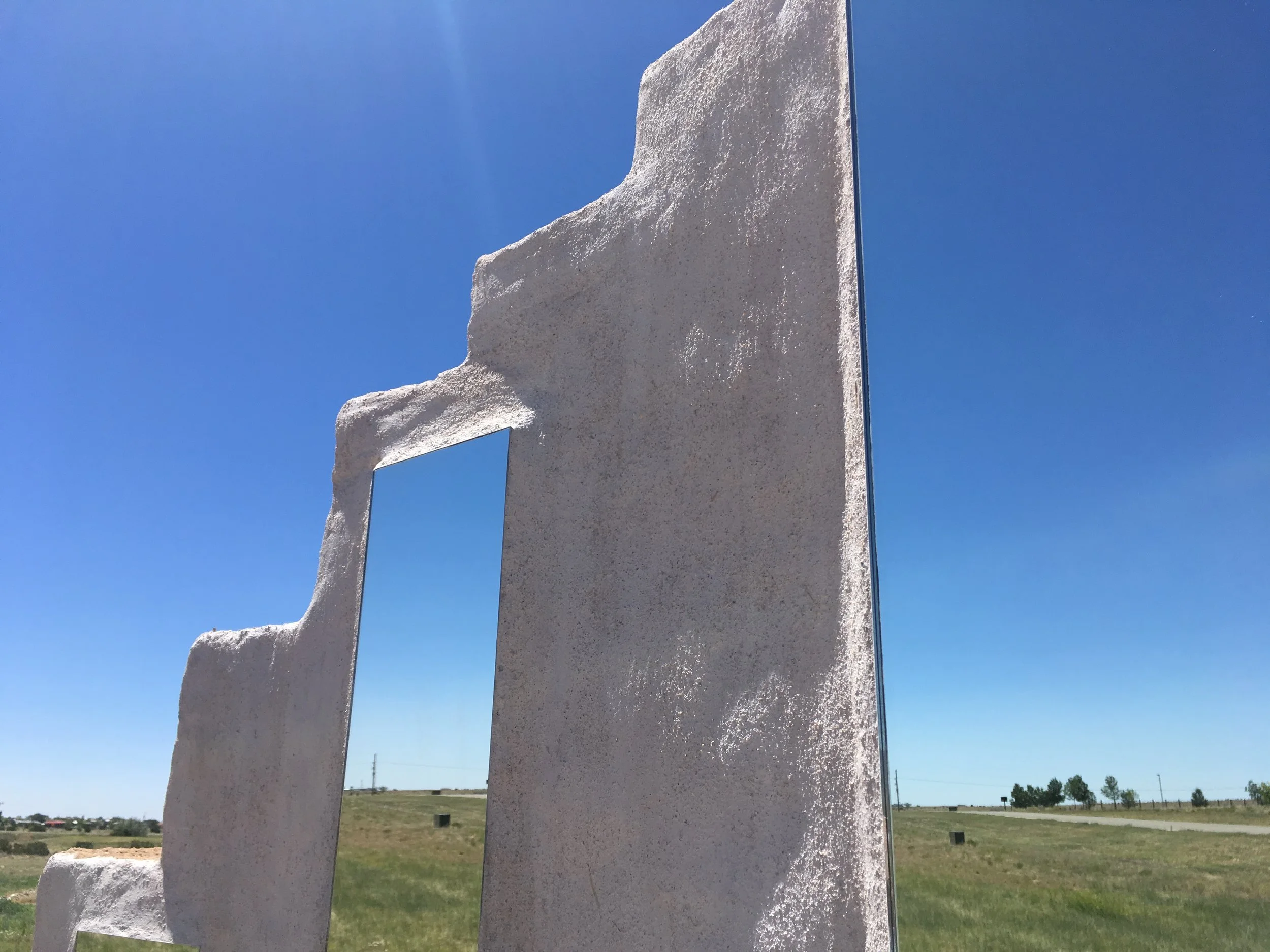
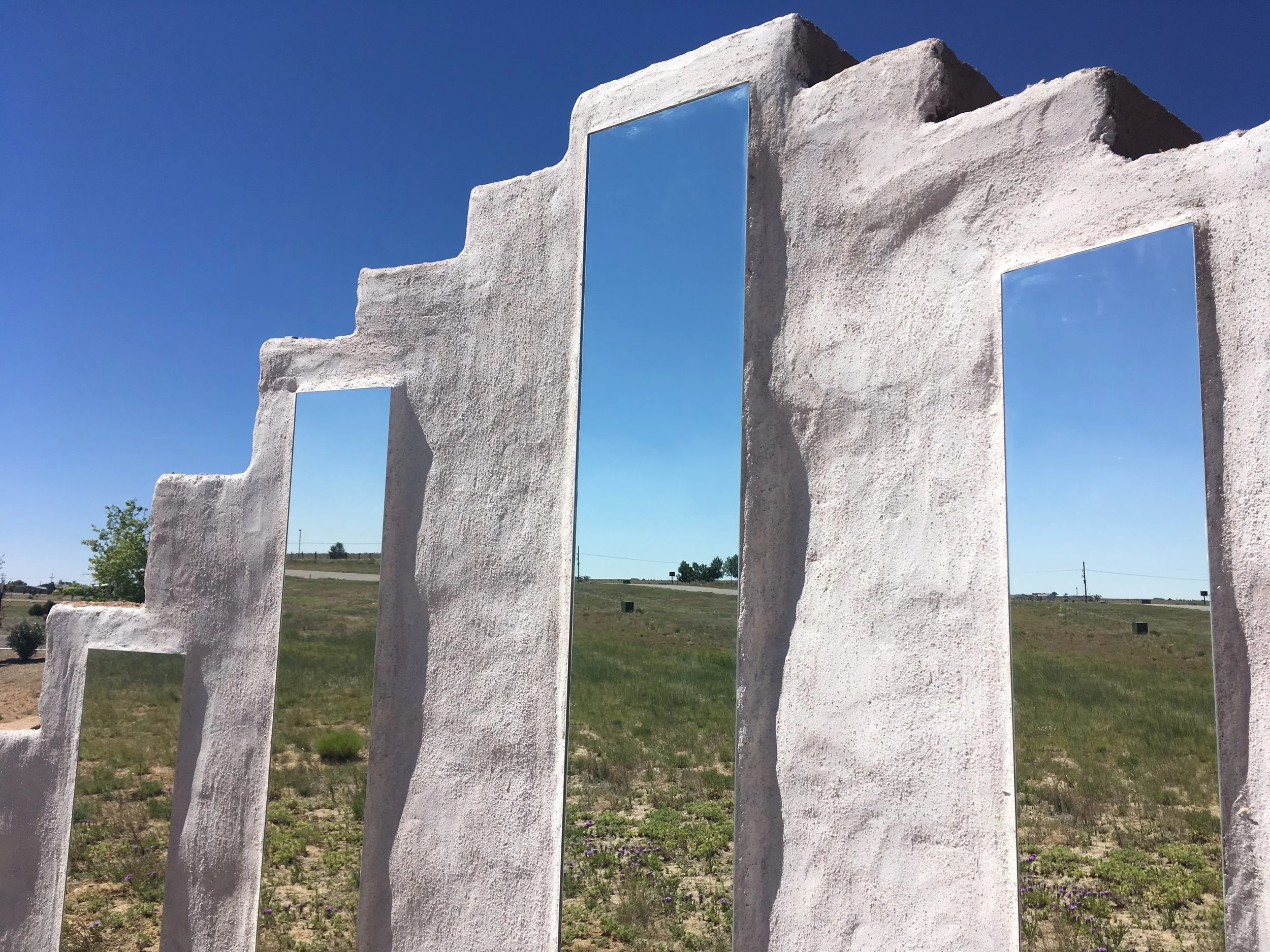
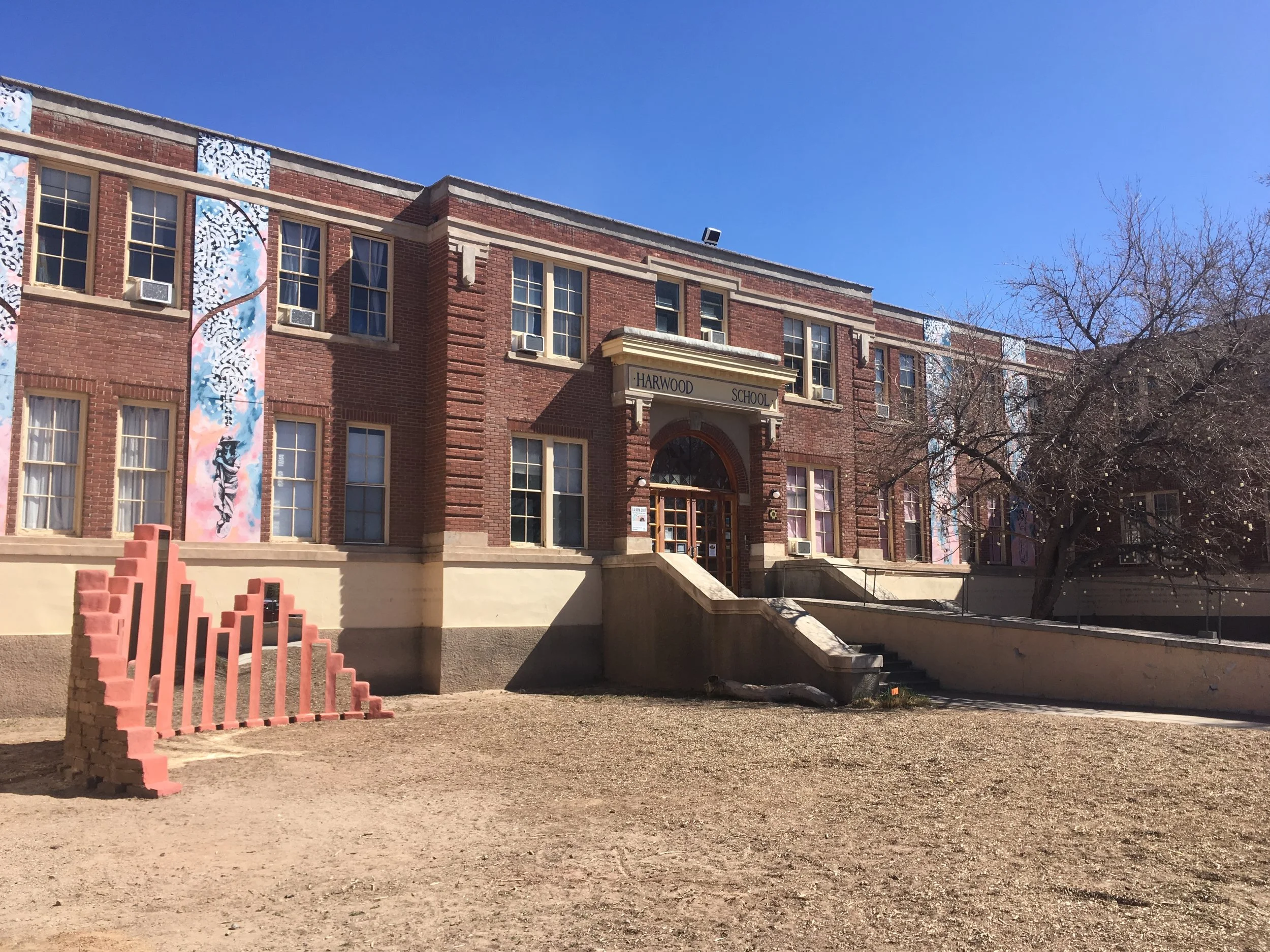
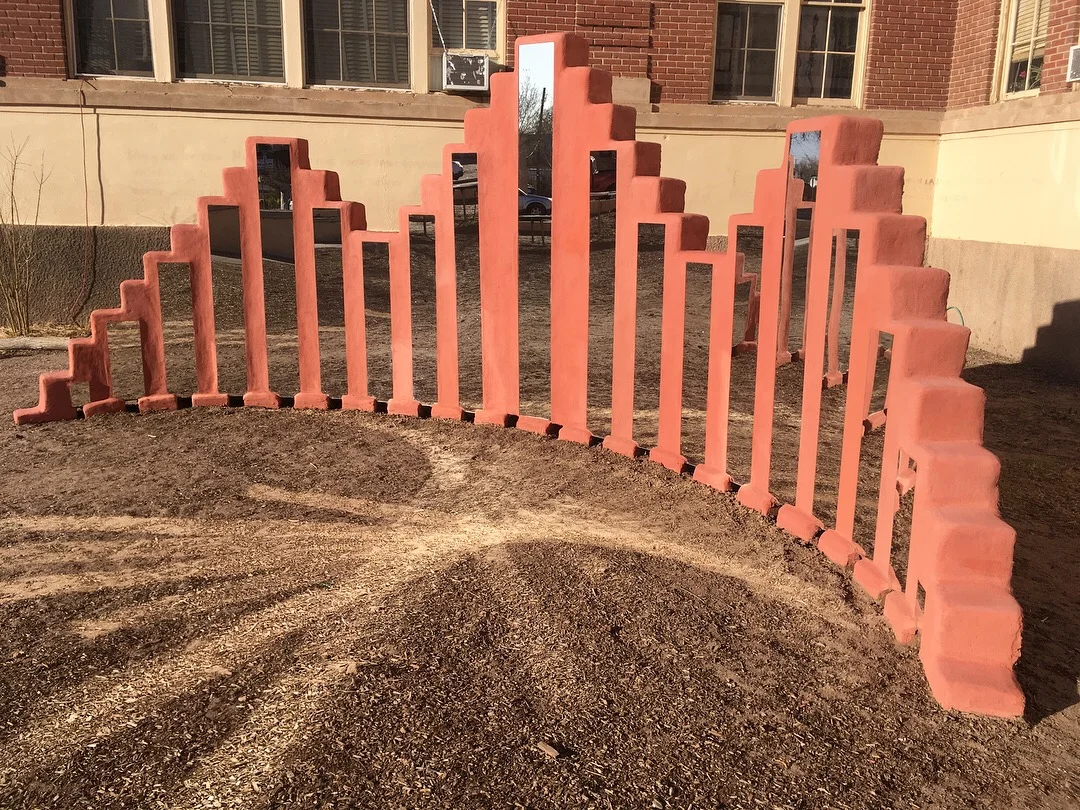
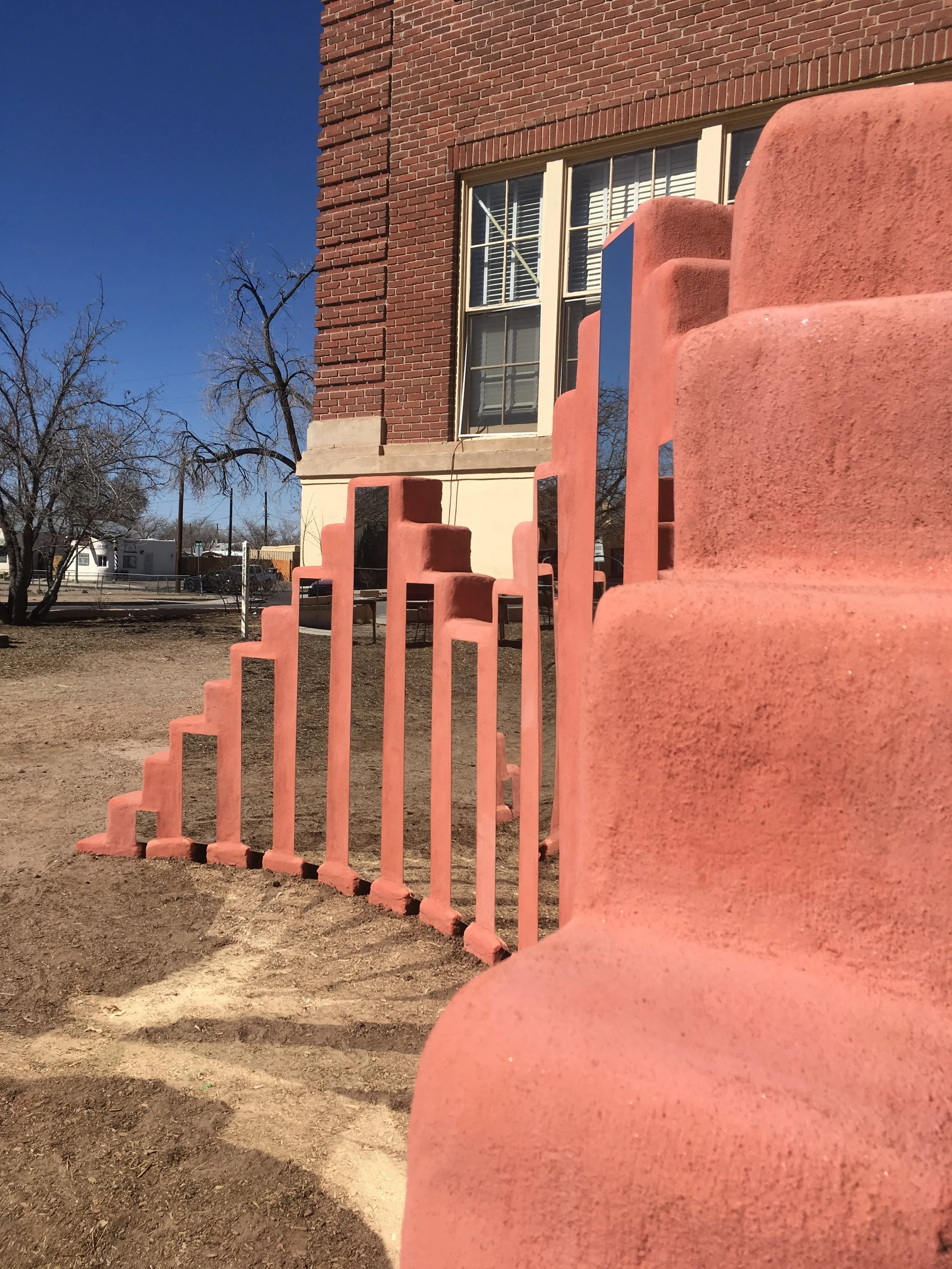
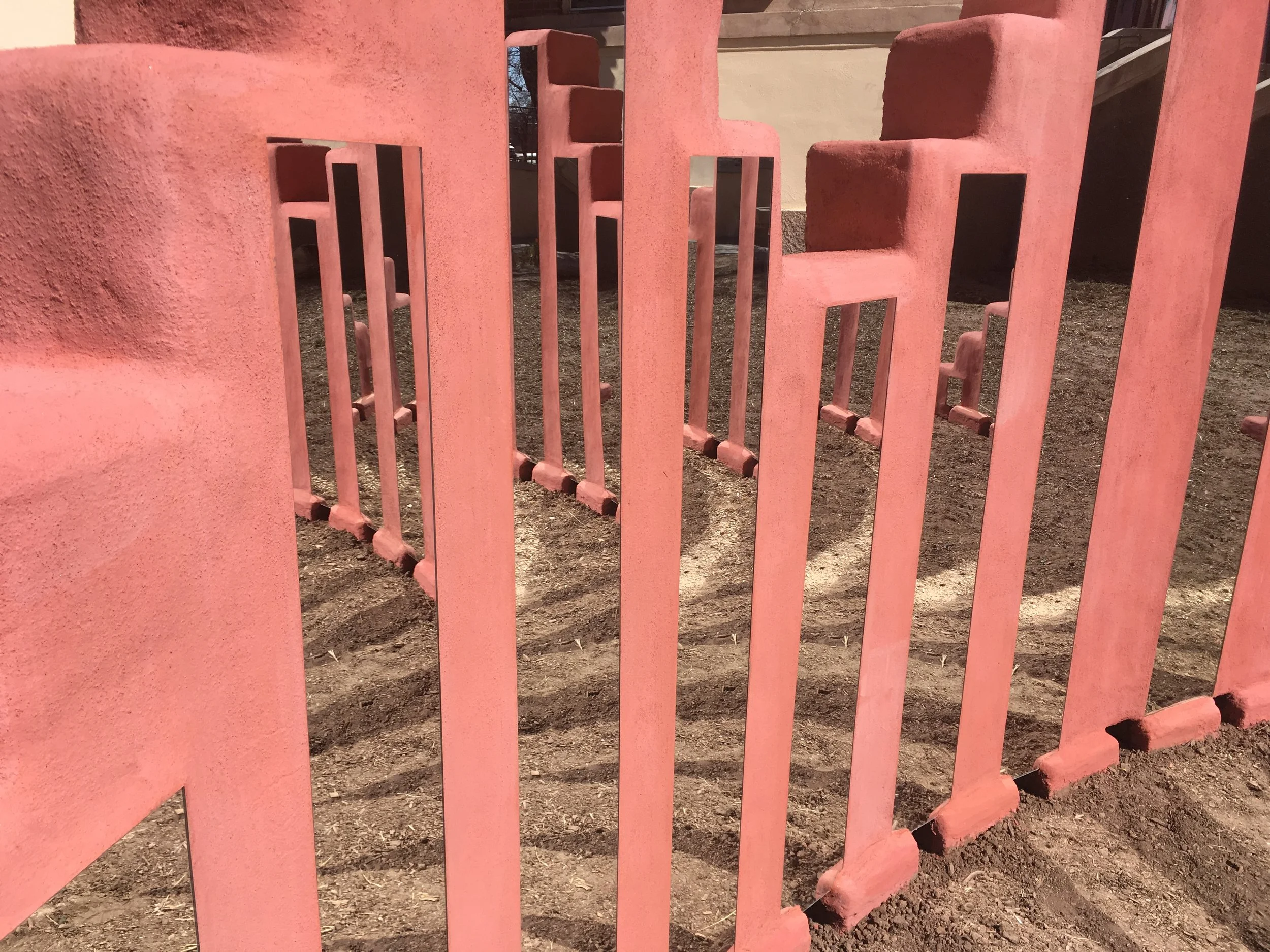
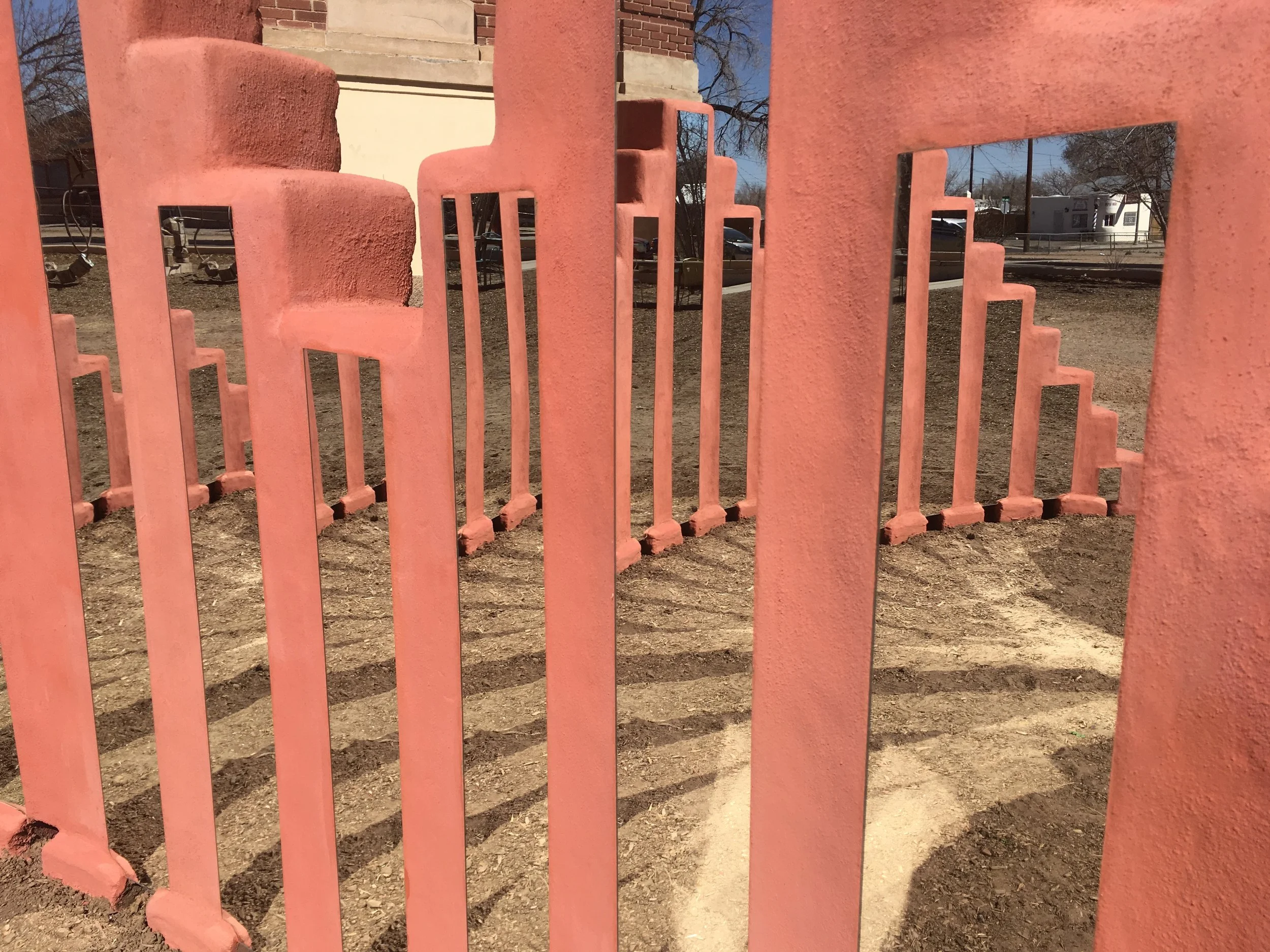
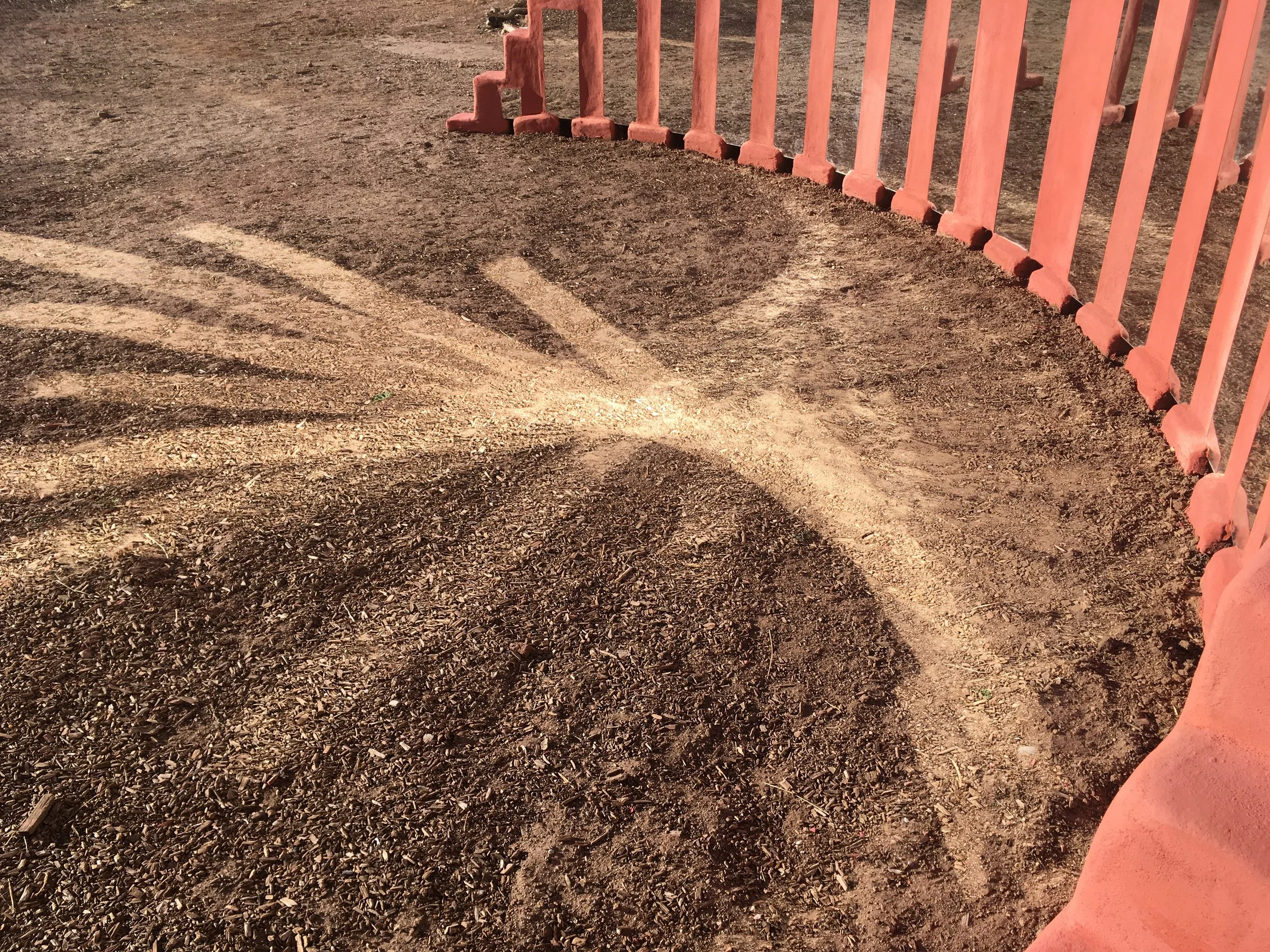
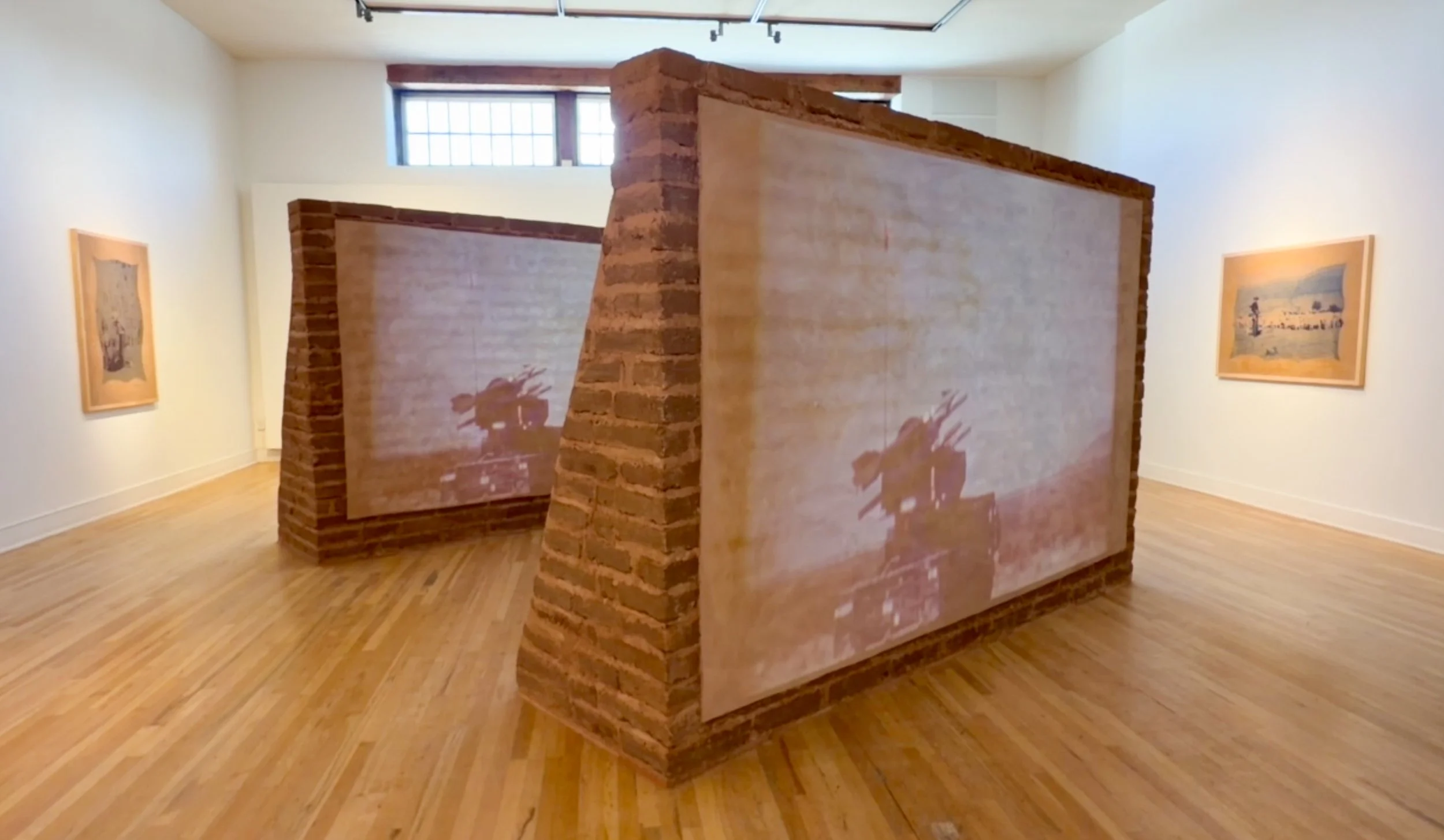
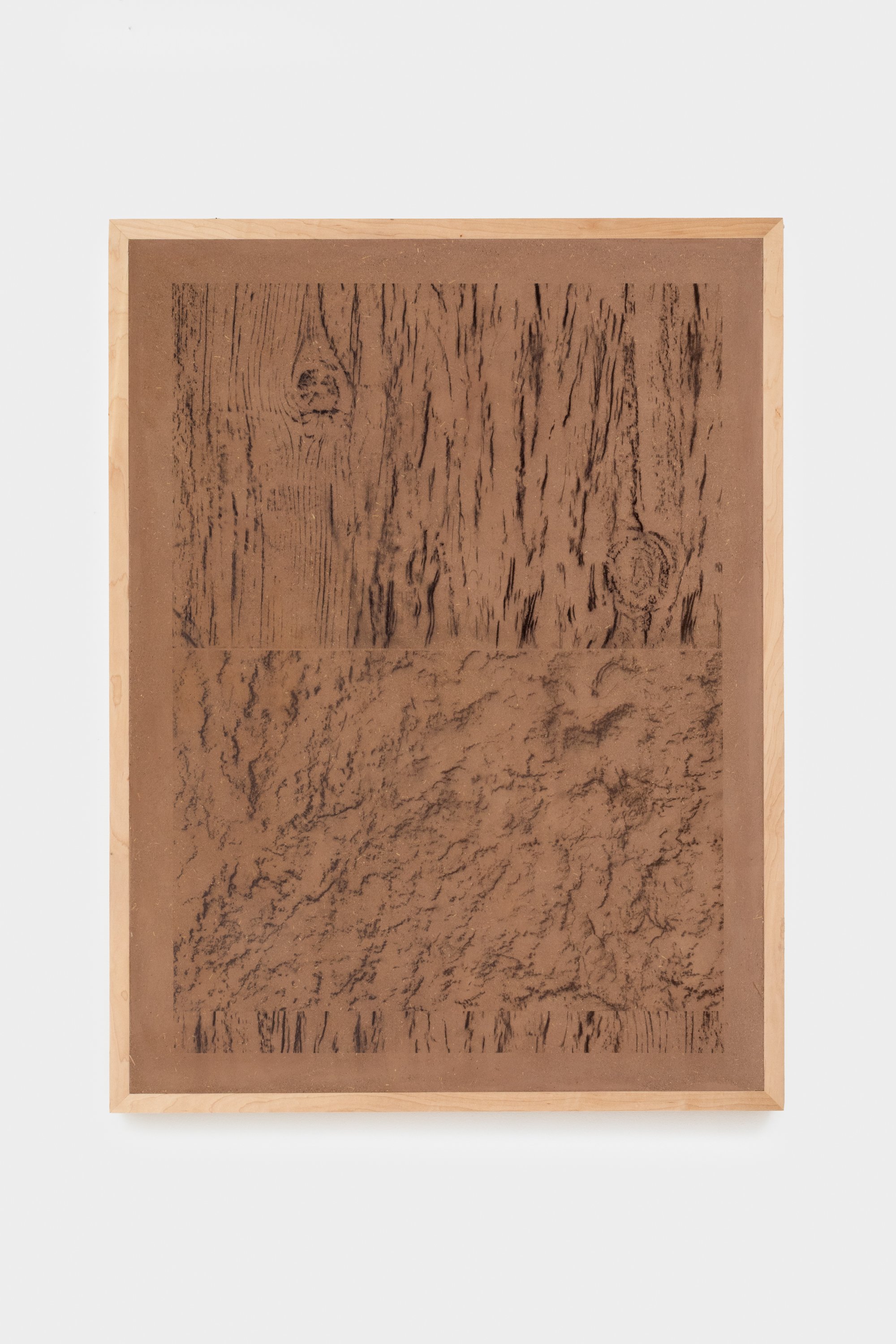
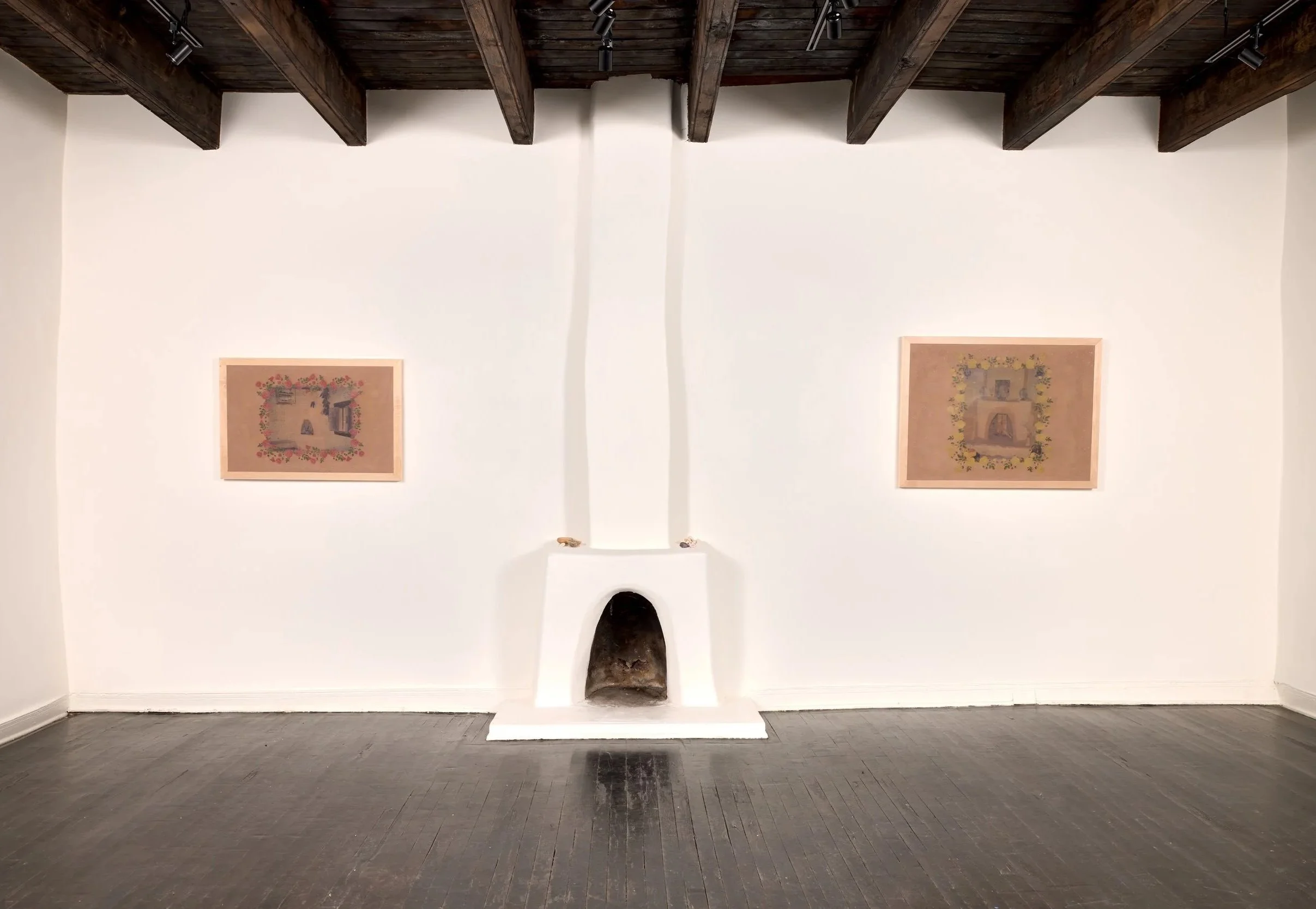
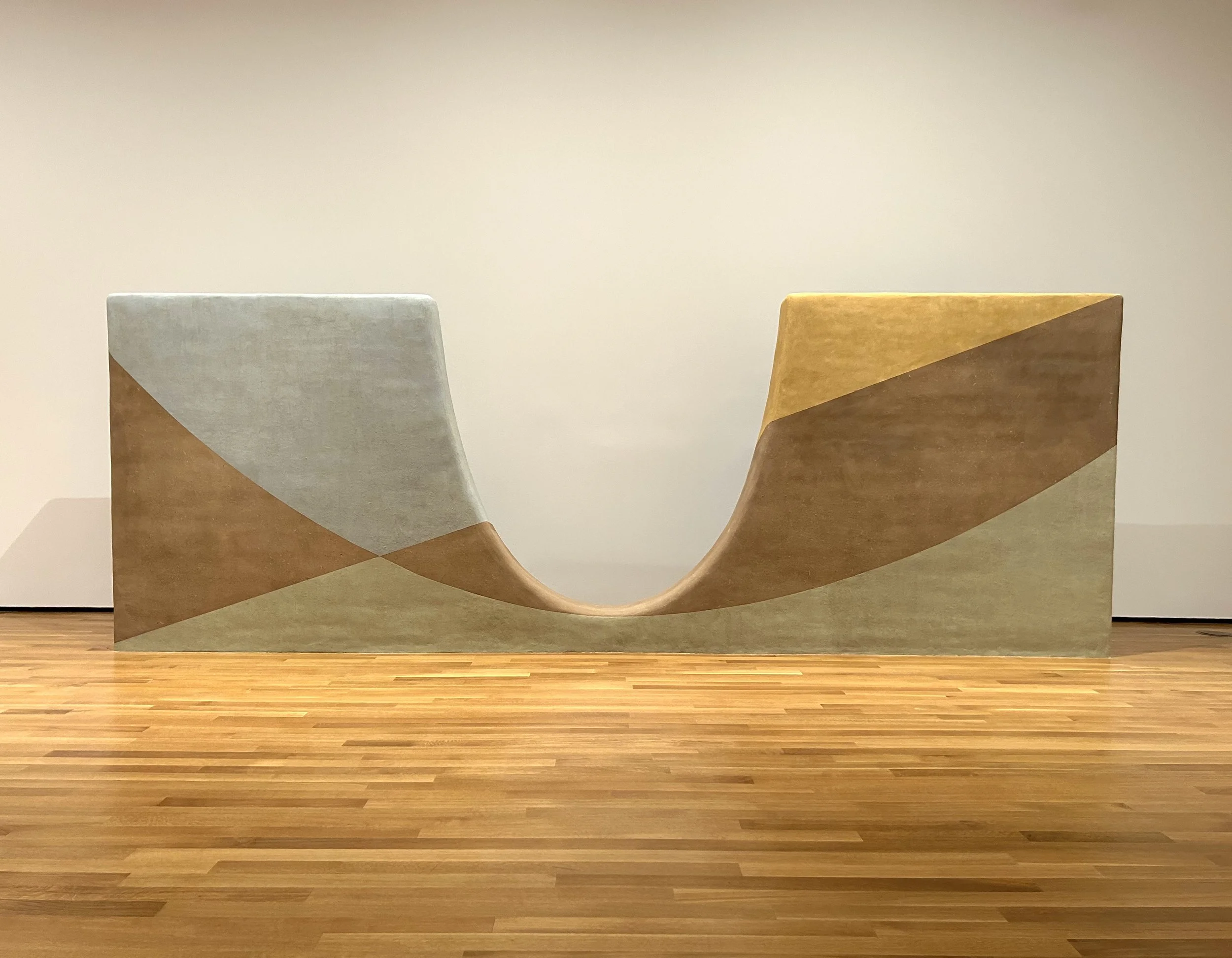
Adobe, UV cured acrylic pigment print, two channel video projection, 19:07 , min. 2026.
On view at the Harwood Art Museum, June 27, 2026 - February 28, 2027.
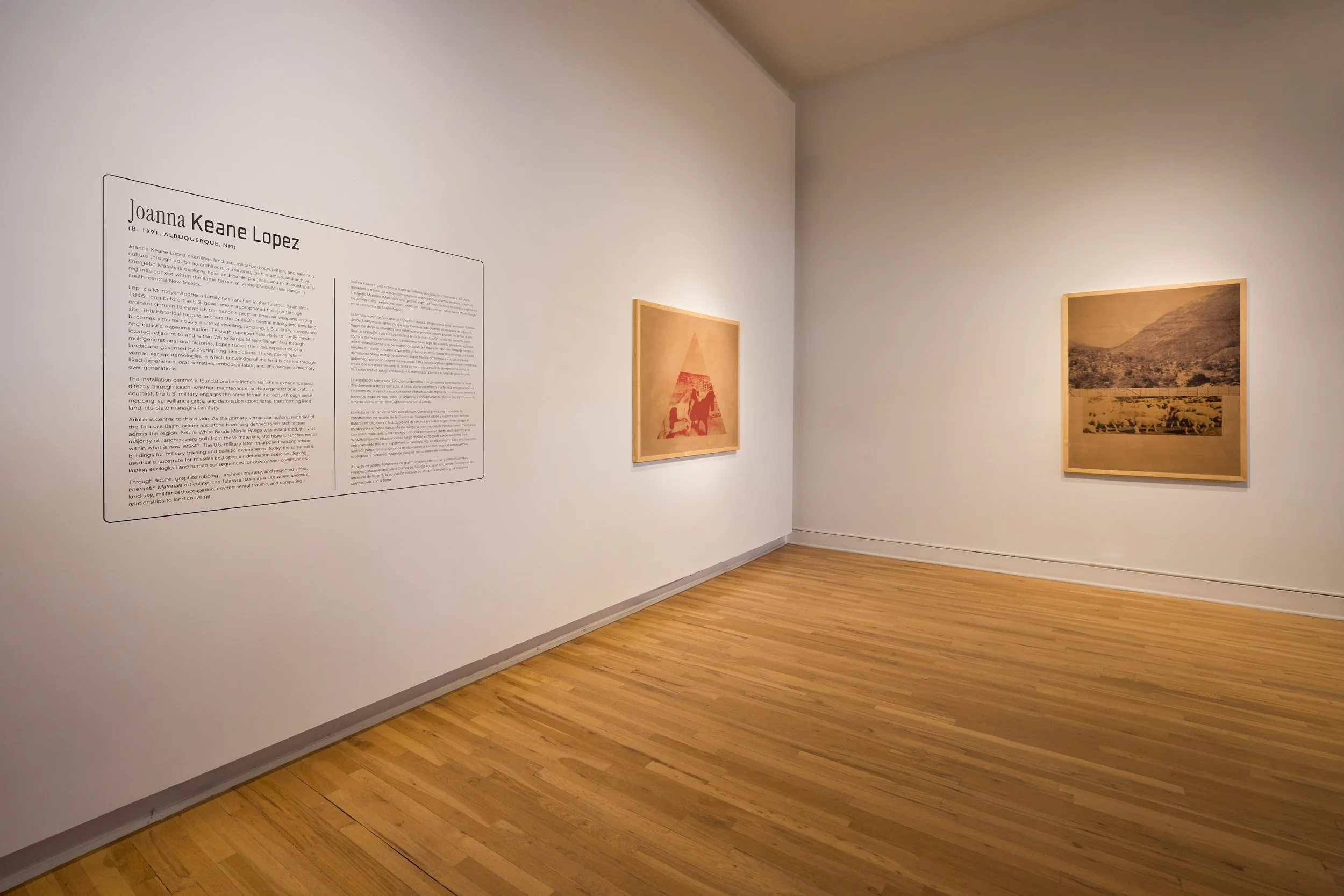
Joanna Keane Lopez examines land use, militarized occupation, and ranching culture through adobe as architectural material, craft practice, and archive.
Energetic Materials explores how land-based practices and militarized spatial regimes coexist within the same terrain at White Sands Missile Range in south-central New Mexico.
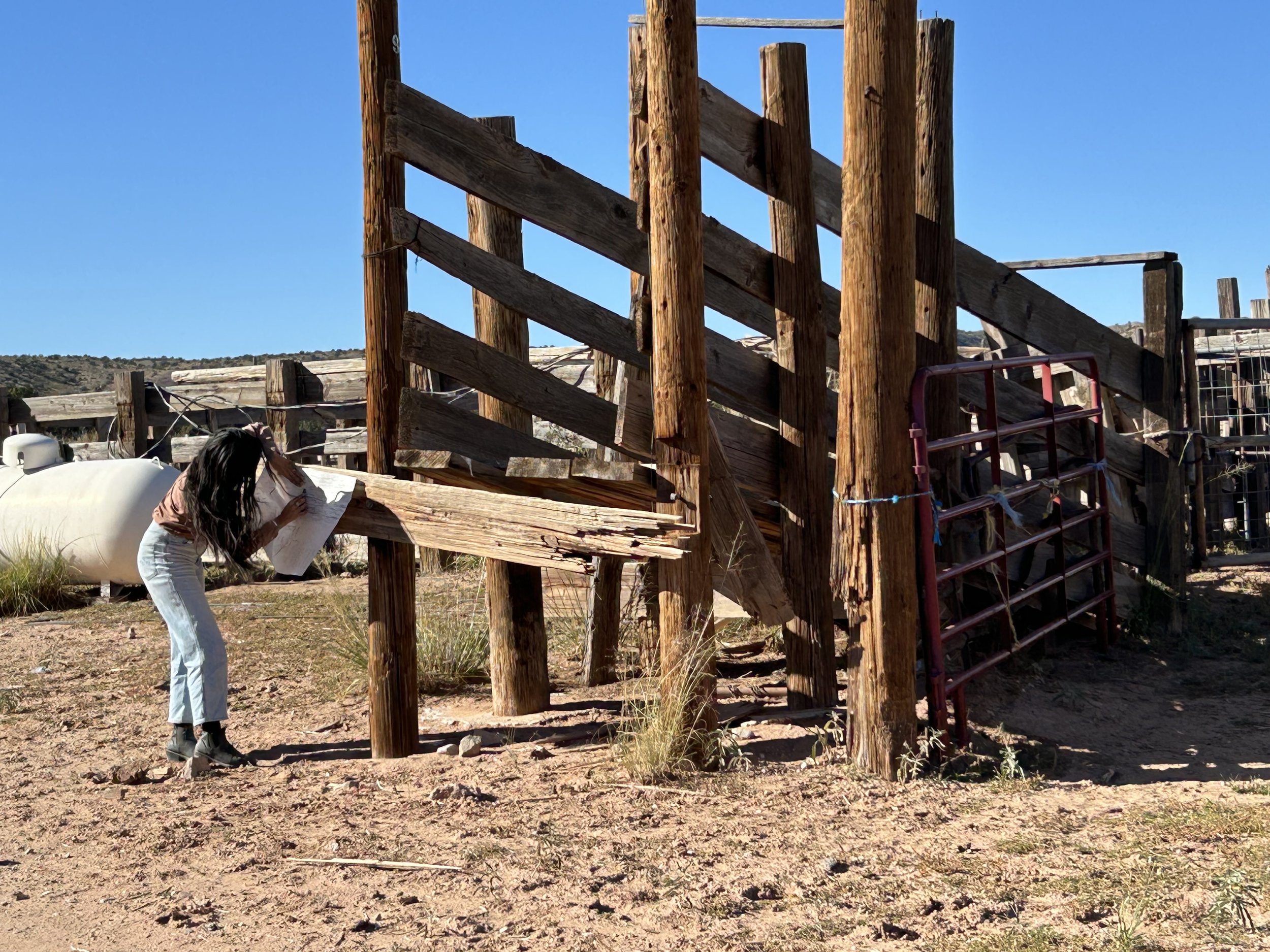
Lopez's Montoya-Apodaca family has ranched in the Tularosa Basin since 1846, long before the U.S. government appropriated the land through eminent domain to establish the nation's premier open air weapons testing site. This historical rupture anchors the project's central inquiry into how land becomes simultaneously a site of dwelling, ranching, U.S. military surveillance and ballistic experimentation. Through repeated field visits to family ranches located adjacent to and within White Sands Missile Range, and through multigenerational oral histories, Lopez traces the lived experience of a landscape governed by overlapping jurisdictions. These stories reflect vernacular epistemologies in which knowledge of the land is carried through lived experience, oral narrative, embodied labor, and environmental memory over generations.
The installation centers a foundational distinction. Ranchers experience land directly through touch, weather, maintenance, and intergenerational craft. In contrast, the U.S. military engages the same terrain indirectly through aerial mapping, surveillance grids, and detonation coordinates, transforming lived land into state managed territory.
Adobe is central to this divide. As the primary vernacular building materials of the Tularosa Basin, adobe and stone have long defined ranch architecture across the region. Before White Sands Missile Range was established, the vast majority of ranches were built from these materials, and historic ranches remain within what is now WSMR. The U.S. military later repurposed existing adobe buildings for military training and ballistic experiments. Today, the same soil is used as a substrate for missiles and open air detonation exercises, leaving lasting ecological and human consequences for downwinder communities.
Through adobe, UV acrylic pigment prints, archival imagery, and projected video, Energetic Materials articulates the Tularosa Basin as a site where ancestral land use, militarized occupation, environmental trauma, and competing relationships to land converge.
The Oral History Project of Early Ranch Life on White Sands Missile Range, originally collected in 1993 by Human Systems Research and now stewarded by the NMSU Library Archives and Special Collections, served as a foundational archive for the development of Energetic Materials. The archive contains oral histories, photographs, and historical documents documenting the lives of ranching families who homesteaded the Tularosa Basin prior to the establishment of White Sands Missile Range and were later displaced through eminent domain as the federal government assembled more than two million acres for military testing and weapons development.
These records provide rare firsthand accounts of a landscape transformed by militarization while preserving forms of knowledge rooted in ranching and land stewardship. The archive offered a critical lens through which to understand the human histories embedded within a landscape more commonly defined by military occupation, weapons testing, and scientific research.
The Tularosa Basin occupies a singular place in American history. It is the site of the Trinity Test in 1945, the world's first atomic detonation and the beginning of the nuclear age. It later became home to White Sands Missile Range, the largest overland military testing range in the United States and a central site for missile, rocket, and weapons development throughout the Cold War and into the present. At the same time, the basin represents one of the last regions settled during the westward expansion of the American frontier, where ranching communities established enduring relationships to land that continue today.
Within the Tularosa Basin, the histories of ranching, westward expansion, the nuclear age, and contemporary military testing converge upon the same landscape.